Our work on AI so far has equipped journalists to understand community needs and perceptions, be transparent about their own use of AI, and educate their communities about how AI works.
Focus group members indicated that encountering this type of coverage would motivate them to subscribe, become members, or even make financial contributions to mainstream outlets.
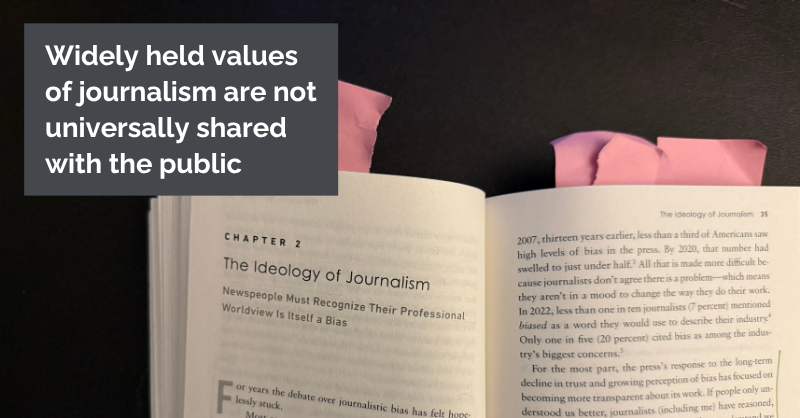
The powerful should be monitored? Society works better when more things are out in the open and transparent? Statements like these feel like common sense to journalists, but our neighbors do not all agree.
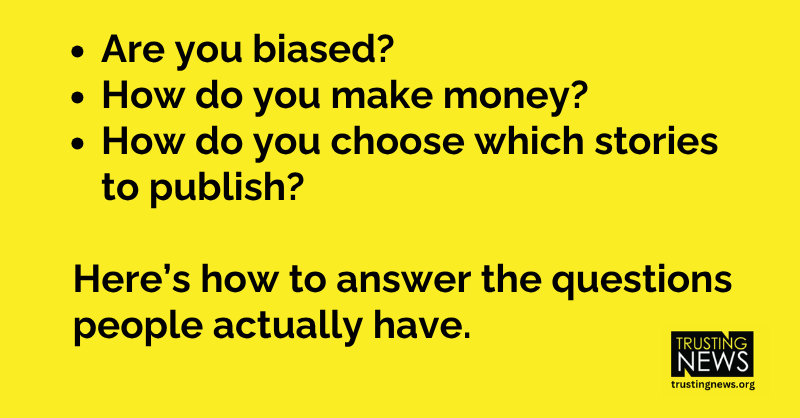
If you don't answer basic questions about how you operate, your audience will make their own assumptions — and they're likely to be inaccurate and unflattering.
If you don't answer basic questions about how you operate, your audience will make their own assumptions — and they're likely to be inaccurate and unflattering.
We’re working to create a framework to help creators decide how they want to be accountable to their audiences and partners — and we need your input to shape what we build.
Our work on AI so far has equipped journalists to understand community needs and perceptions, be transparent about their own use of AI, and educate their communities about how AI works.
Focus group members indicated that encountering this type of coverage would motivate them to subscribe, become members, or even make financial contributions to mainstream outlets.
The powerful should be monitored? Society works better when more things are out in the open and transparent? Statements like these feel like common sense to journalists, but our neighbors do not all agree.
If you don't answer basic questions about how you operate, your audience will make their own assumptions — and they're likely to be inaccurate and unflattering.
If you don't answer basic questions about how you operate, your audience will make their own assumptions — and they're likely to be inaccurate and unflattering.
We’re working to create a framework to help creators decide how they want to be accountable to their audiences and partners — and we need your input to shape what we build.