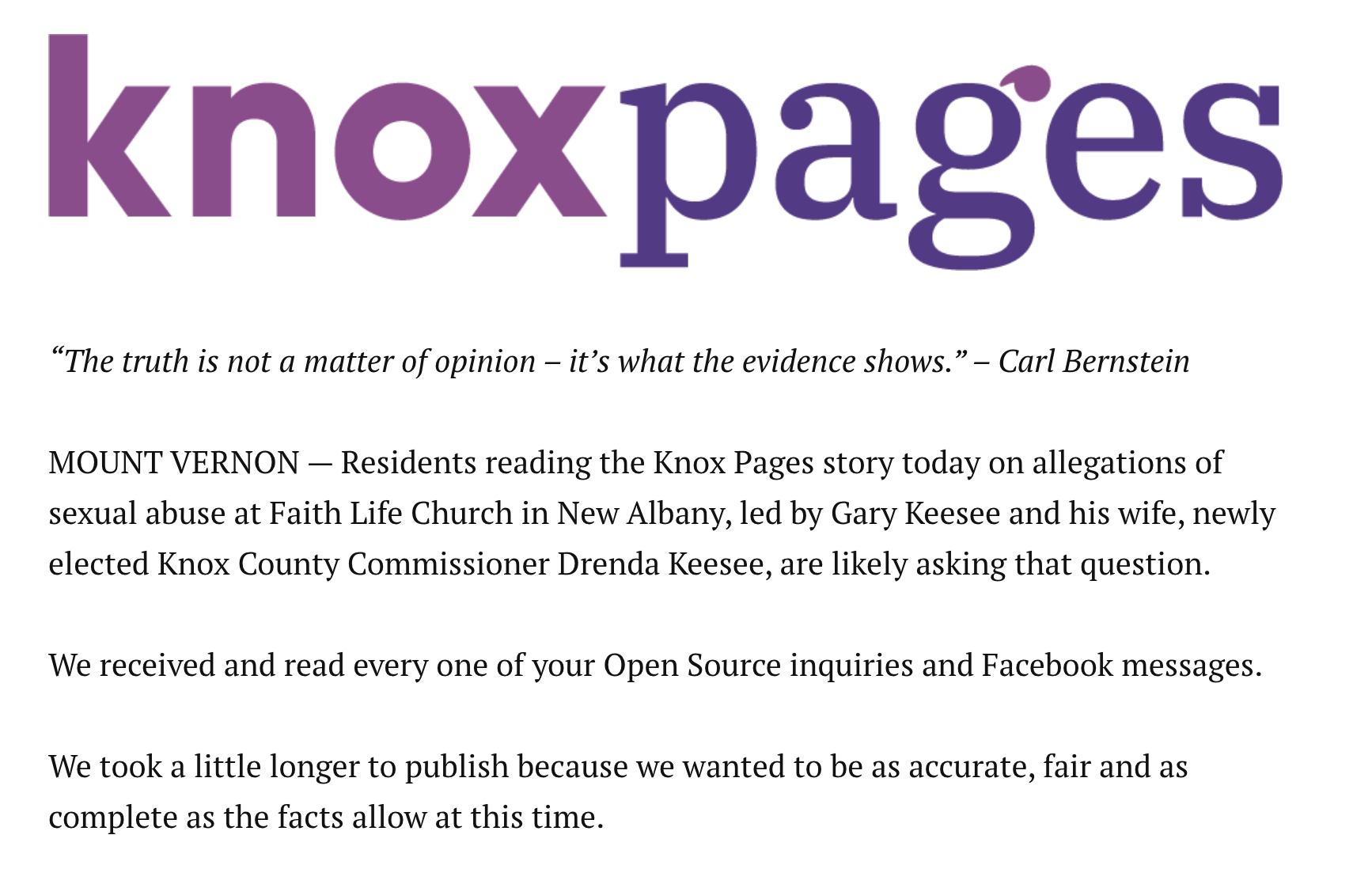
When covering a story about allegations of sexual abuse connected to a local church, the Knox Pages got on the record about why they took extra time before publishing saying they “wanted to be as accurate, fair and as complete as the facts allow at this time.”
Explain why you wait to publish information
Want to get this Trust Tips newsletter in your inbox each Tuesday? Subscribe here.
Explain why you wait to publish information
I used to cover breaking news, and one of the most common complaints I’d hear from readers would be: Why are you not covering this story when other news outlets are?
Of course my team wasn’t being lazy or ignoring big events, like so many people assumed. Usually, we were waiting to confirm information before publishing.
This is a fairly common situation journalists find themselves in, and also a fairly common response from the public. It’s valid that people might be curious about why they aren’t seeing your outlet cover a big breaking news story, especially when they see other outlets covering it. It’s also not hard to see why people might fill in their own blanks about the lack of coverage — whether that’s assuming you just don’t care or that you’re not covering something due to your own biases.
Let’s look at how one newsroom — the Knox Pages in Ohio — explained their process and got ahead of readers’ assumptions.
When covering a story about allegations of sexual abuse connected to a local church, the Knox Pages got on the record about why they took extra time before publishing. City editor Carl Hunnell wrote a column explaining why they waited to publish because they “wanted to be as accurate, fair and as complete as the facts allow at this time.”
We encourage you to take a minute and read through the whole explainer here, but here’s my favorite excerpt: “We could have published a poorly-sourced story last week that raised more questions than it answered. We chose not to do that because we take your trust seriously.
Instead, we chose to simply continue the reporting last week and over the weekend until we were satisfied that we’d met our standards. We chose to keep asking the questions. We reached out to trusted sources we have established over the years to provide you the best story we can produce today.”
A few ways an explainer like this builds trust.
- It makes the journalists’ motives clear. Instead of leaving people to make assumptions about their goals, they are clear in explaining that they approach their coverage this way because of their high standards for accuracy and clarity.
- It explains their reporting process. People are usually more invested in big breaking news stories, so those can be a good opportunity to explain all that goes into reporting — like how you sourced your story and verified information.
- It shows their mission in action. It’s one thing to say that you strive for accuracy and take people’s trust seriously, but it’s more effective to back that up with action like they’re doing here. (This could also be an opportunity to link to their About page, which clearly states: “We’d rather get the story right than get the story first.”)
- They prominently linked their example to the story itself, and the explanation published the same day. Remember that it’s far more typical for people to read the actual coverage of what happened than to read an explainer piece, and people have to see the transparency for it to be effective.
TRY THIS: The next time you or your team find yourselves waiting to publish information or comment on widespread rumors, think about how you can explain this decision to your audience. Imagine the specific questions and complaints someone might have and try to address those. Use it as a chance to explain your approach to coverage — whether that be why you cover something, or the mission and standards behind your coverage.
And importantly, say something sooner than later. If you’re waiting to publish information or confirm rumors that are spreading, let your audience know. It’s OK to let them know that you’re working to verify information and that you’re waiting to publish because of your commitment to accuracy. You can do that through a quick update in a newsletter or social post like this example from the Malheur Enterprise.
If you could use more help with this, our Explaining Coverage and Breaking News Trust Kits have more examples of what this can look like. And as always, we welcome you to reach out to us and ask questions by responding to this email!
At Trusting News, we learn how people decide what news to trust and turn that knowledge into actionable strategies for journalists. We train and empower journalists to take responsibility for demonstrating credibility and actively earning trust through transparency and engagement. Learn more about our work, vision and team. Subscribe to our Trust Tips newsletter. Follow us on Twitter, BlueSky and LinkedIn.

Project manager Mollie Muchna (she/her) has spent the last 10 years working in audience and engagement journalism in local newsrooms across the Southwest. She lives in Tucson, Arizona, where she is also an adjunct professor at the University of Arizona’s School of Journalism. She can be reached at mollie@trustingnews.org and on Twitter @molliemuchna.