The goal wasn’t to study LGBTQ+ audiences alone, but to understand how LGBTQ+ issues intersect with patterns of avoidance, harm, and mistrust. Illustration by Liam Porter
New research: News avoidance of LGBTQ+ communities and coverage
Want to get this Trust Tips newsletter in your inbox each Tuesday? Subscribe here.
What does it mean when people avoid the news, not because they don’t care, but because engaging with it feels unsafe or exhausting? And what happens when coverage of LGBTQ+ communities triggers that avoidance?
Those were two of the guiding questions behind a listening project we conducted alongside our research partner, Dr. Patrick Johnson at Marquette University in Wisconsin. We worked with a handful of journalists across the country to learn how coverage of LGBTQ+ topics and individuals affects disengagement from the news.
The research goal was not just to study LGBTQ+ audiences alone but to understand how LGBTQ+ issues affect people’s relationship to news overall. What emerged from this project were complex findings about how LGBTQ+ audiences feel harmed by news coverage and how those outside of the community perceive and interact with coverage about LGBTQ+ identities.
This post serves as a highlight of that research, providing a summary of key findings, as well as actions that journalists can take from the learnings. For those invested in this topic, we invite you to read Patrick’s full research report here (which includes original illustrations from one of Patrick’s grad students, Liam Porter).
The process
Over the course of two months, we deployed seven journalists across the United States to host listening sessions with people who are disengaged from the news. These journalists found people in their own communities to interview, and in total, conducted 50 interviews. Of that group, 31 of the interviewees identified as LGBTQ+, while 19 interviewees did not identify as LGBTQ+.
The data from this research comes from logs, notes and recordings of those 50 interviews, as well as a final focus group with some of the journalists involved.
Before we jump into what we learned from the research, we want to say a big thanks to the seven journalists who participated in this project. We know this type of work is never easy, especially with a project like this where we asked journalists to dive into challenging — and sometimes deeply personal — topics. This project asked more of them than we anticipated at the get-go. We’re so grateful for their investment in this work and for allowing us to learn alongside them in this process.
Note: We told journalists at the beginning of this project we wouldn’t name them unless they agreed to be named, which is why you don’t see all seven names listed here.
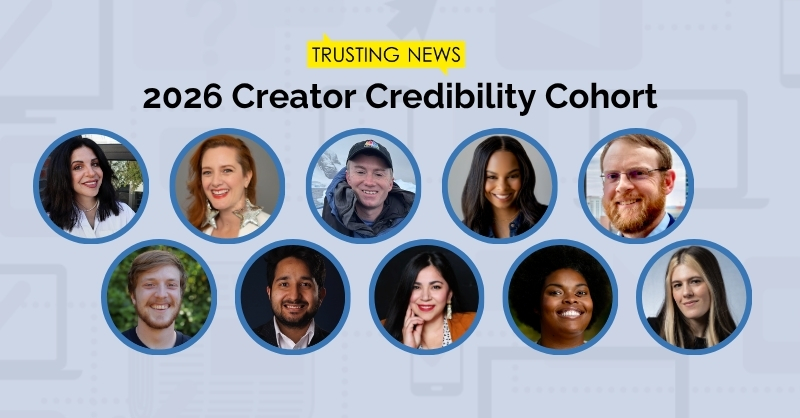
Thanks to: P. Kim Bui; Carrie Cochran; Michail Takach; Stephanie Toone
While our Trusting News team assisted Patrick with setting up the project, finding participating journalists, and coaching journalists through the process of listening, Patrick gathered and analyzed the data from all these reports. So a big thank you to Patrick for investing in and collaborating on this work! We love getting to work with researchers who care about learning how journalists can better reach audiences, and care about making sure those learnings are useful for the industry.
Why does this work matter?
At Trusting News, we’re always eager to help journalists understand what their audiences perceive and need from the news. Part of our core mission is to identify what journalists can do differently to better reflect and serve their communities.
This is especially true when examining communities that have historically been harmed, disregarded and underserved by news coverage
In this project, this goal was two-fold: We know many marginalized communities feel underserved by mainstream news coverage, and we want journalists to better understand the nature of that experience.
We also know that journalism plays an important role in helping shape conversations and engagement, and we want wider audiences to be invited to that conversation. For journalists and news outlets who claim to serve a wide geographic audience, that includes people those who may not come from a deep well of understanding of LGBTQ+ communities. For example, if people don’t understand why a reporter would put their pronouns in their bio, or understand a term like gender-affirming care, what on-ramps can journalists provide to help those people get caught up? And how can journalists do this in a way that doesn’t continue to marginalize or perpetuate harm and violence toward LGBTQ+ audiences? (Related content: We wrote about broadening the accessibility of coverage of trans communities in a recent Trust Tips newsletter.)
While this research didn’t lead to many easy answers, it did lead to a better understanding of what LGBTQ+ audiences and those outside of those audiences want from the news.
How the project shifted
The focus of this project shifted as we started talking directly to journalists and audiences involved.
In previous research done jointly by Patrick and Dr. Sue Robinson, they found that many disengaged news consumers actively reject LGBTQ+ content in news coverage. Coverage of LGBTQ+ issues was seen as partisan and often led to negative reactions, including news avoidance, subscription cancellations, and increased distrust in journalism.
The initial goal of this project was to interrogate why LGBTQ+ content sparks avoidance among audiences who don’t understand or always affirm LGBTQ+ identifies, how journalists can navigate these challenges and what strategies journalists can implement to better engage diverse audiences without compromising ethical, accurate, and inclusive reporting.
But as we talked with journalists and they talked to the public, it was clear there needed to be a widening of the project not only to avoid an unnecessary amount of emotional labor for journalists but also because there is also a need for journalists to better understand how they can serve LGBTQ+ audiences who are tuning out from the news.
What we learned
Here are the key themes and learnings that emerged from the interviews with news consumers, both those who identified as LGBTQ+ and those who did not. Note: These findings and this section are synthesized from Patrick’s full research report.
- Anticipatory harm causes LGBTQ+ audiences to avoid the news. LGBTQ+ interviewees often described avoidance as a decision made before they even click. They expect misrepresentation, hostility, or a familiar story frame that turns their rights into a debate. Over time, that expectation becomes a learned warning system. Certain headlines, outlets, or story topics signal “this will cost me,” and disengagement becomes the safer choice. This is why avoidance shows up as routines, not exceptions. People scan rather than read, skip entire news brands, and step away during major cycles when coverage becomes relentless and conflict-heavy. For newsrooms, the takeaway is blunt: Distrust is not only about factual mistakes. It is also about whether audiences expect the story structure itself to treat them as human.
- Emotional overload leads to selective news consumption. Interviewees described needing to set boundaries around how much news they can consume before it becomes destabilizing, exhausting, or numbing. LGBTQ+ interviewees often linked this overload to identity-based threats and recurring crisis narratives, especially when coverage feels like an unending series of attacks, losses, and debates about the legitimacy of their own identity. Some non-LGBTQ interviewees described a different but related fatigue: a sense that the news is always conflict, always anger, and rarely oriented toward clarity or resolution.
- Trust breaks through patterns in framing. When discussing trust in news, interviewees did not mainly describe a single piece of coverage that went wrong. They described patterns: sensational headlines, conflict-first framing, thin sourcing, and “balance” structures that elevate hostility as a legitimate viewpoint.
- Non-LGBTQ+ interviews shed light on the broader climate. Non-LGBTQ+ interviewees cannot speak to LGBTQ+ lived experiences, but they do clarify how LGBTQ+ topics move through public life and how LGBTQ+ coverage often lands in a contested environment. Some non-LGBTQ+ interviewees described concern for loved ones, anxiety about policy impacts, and frustration with misinformation that spreads faster than corrections. Others described low awareness and disengagement, which helps explain why shallow narratives of LGBTQ+ audience can persist unchallenged.
- Representation in newsroom staffs matters. LGBTQ+ interviewees described trust rising when coverage demonstrates basic competence: accurate terminology, relevant sourcing, and an understanding of community context beyond stereotypes or sensational narratives. They described trust dropping when stories signal that journalists do not understand the topic well enough to avoid common pitfalls, especially in coverage involving trans identities, policy threats, or moralized “debate” framing.
- People wanted clear language and definitions. Interviewees repeatedly described jargon, euphemisms, and vague wording as barriers to understanding the news. LGBTQ+ interviewees often read vagueness as avoidance or minimization, while some non-LGBTQ+ interviewees also wanted clearer explanations because ambiguity makes it harder to correct misinformation in families, workplaces, and communities.
- News consumers want utility — not urgency. A common thread across audiences is that people wanted journalism that helped them live with the information, not just react to it. When coverage repeatedly raises alarms without offering context or direction, interviewees described disengaging as a way to conserve energy and avoid feeling powerless.
- Transparency helps signal credibility. Interviewees described trust rising when newsrooms show their work: explaining decisions, correcting errors publicly, and being clear about how information was verified. For LGBTQ+ interviewees, transparency often functioned as a safety signal, suggesting seriousness and responsibility in coverage.
- Neutrality can undermine trust. Trust decisions were shaped not only by factual claims but also by perceived intent. Many argued that refusing to take a stance on clear harm is itself a moral and political choice. The people interviewed for this research said trust collapses when journalists refuse to identify discrimination, authoritarian behavior, or organized hate.
Recommendations for journalists:
The research report includes an extensive list of ideas for how journalists can act on the learnings. Here, we summarize those recommendations into six suggestions.
- Ask your audience about their news needs. Listening is the foundation of everything we do at Trusting News. As journalists, we can’t effectively reach and serve audiences (especially ones who have been historically underserved) without first understanding who we are serving and how well we are doing it. That often means making time to hear from people who aren’t regularly tuning into your news coverage. We have an interview guide published here to help journalists interview news avoiders in their own community. This guide was very similar to the interview guide journalists in this research project used. Imagine how helpful it would be if you or one person in your newsroom took time each month to talk to someone who didn’t trust your coverage solely for the purpose of better understanding their perspective of the news.
- Provide nuance instead of perpetuating stereotypes. This is one we’ve heard across the board from underserved communities: Stereotypes and catch-all framings of certain groups or communities can make people feel tokenized and misunderstood. This project reinforced that LGBTQ+ communities don’t want to be treated as “a monolith,” although they often felt the media portrays them that way. For journalists, ask yourself how you might provide more nuance of these communities in your coverage. Some things directly mentioned in this research were not letting one person or spokesperson speak for an entire community; avoiding sensationalized or misleading headlines; and ensuring you’re framing people’s identities as a lived reality not a cultural debate. This also included some basic care when it comes to citing sources, including being careful to use proper pronouns and ensure coverage accurately reflects sources’ self-described language, as well as providing wider coverage of these communities than just bathroom debates.
- Make the news feel more accessible, actionable — and solutions-oriented. Like we’ve heard from many news avoiders, those who avoided the news wanted content that felt easier to understand on the platforms they are spending their time, and they also wanted content that felt more hopeful and included tangible next steps. This research found that engagement is strongest when stories include information about community services, legal rights, ways to participate in civic life, and resilience and community success. Positive coverage balanced the weight of harmful news and signaled care for the community’s well-being.
- Be mindful of terminology. In this research group, confusion and mistrust were highest when stories relied on shorthand or assumed insider knowledge. If you use language or terms that will be unfamiliar to parts of your audience, take time to explain it. In practice, this means using plain language and explaining what a bill or policy change does and who it affects, rather than treating language disputes as the story. It could also look like providing context, definitions, and other on-ramps for people who might not be up to speed on the language or concepts a story includes. We recently wrote more about this.
- Use transparency to show you’re doing things differently. People in this research expressed deep skepticism about the intentions and integrity of news organizations and journalists. They shared that their trust increases when journalists make their processes visible and acknowledge mistakes openly. That means making your corrections clear, disclosing funding and any possible conflicts of interest, and explaining the reporting decisions and process. And, like we so often tell journalists who tune into our work, if you’re trying to do something differently or offer a unique value to your community, make that abundantly clear in day-to-day content.
- Invest in more holistic coverage. The people interviewed for this project believed that those “living it” were better able to capture nuance and avoid common inaccuracies about the community than people who were outside of it. We know that as journalists, our lived experience, worldview and values all impact how and what we cover. That’s why it’s crucial for newsrooms to not only invest in hiring people with diverse experiences and views, but also for newsroom leaders to invest in fostering a culture safe enough for people to speak up about their lived experiences and push back against coverage that feels inauthentic or disrespectful. We share more about how newsrooms can do this in our Dimensions of Difference guide. This also is needed on a content level, too: Coverage of communities needs to go beyond just Pride month coverage or coverage of legal debates over LGBTQ+ rights. For these communities to felt seen and understood, there needs to be a larger content-based investment as well.
Read the full research report
If you’re interested in digging into this research more and developing a deeper understanding of what we learned in these interviews, you can access and download Patrick’s full research report here. It includes more findings and Patrick’s own takeaways on what journalists can do.
At Trusting News, we learn how people decide what news to trust and turn that knowledge into actionable strategies for journalists. We train and empower journalists to take responsibility for demonstrating credibility and actively earning trust through transparency and engagement. Learn more about our work, vision and team. Subscribe to our Trust Tips newsletter. Follow us on Twitter, BlueSky and LinkedIn.

Project manager Mollie Muchna (she/her) has spent the last 10 years working in audience and engagement journalism in local newsrooms across the Southwest. She lives in Tucson, Arizona, where she is also an adjunct professor at the University of Arizona’s School of Journalism. She can be reached at mollie@trustingnews.org and on Twitter @molliemuchna.