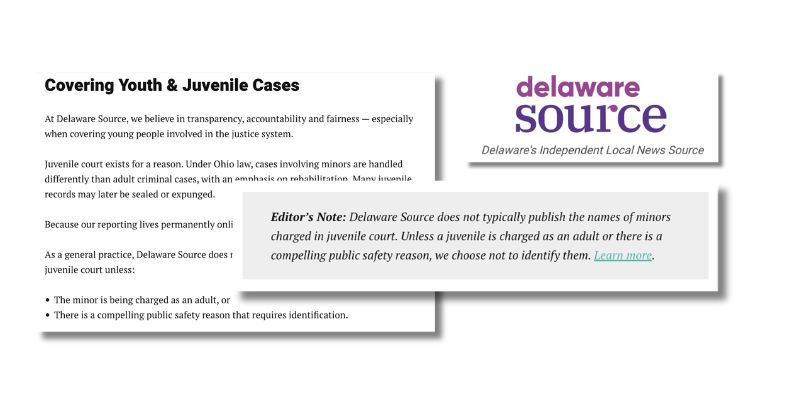
See how local newsroom the Delaware Source included transparency in the middle of a story
Don’t overthink day-to-day transparency
Want to get this Trust Tips newsletter in your inbox each Tuesday? Subscribe here.
“Building trust in news” can feel like such a big, ominous task. But the good news is, it doesn’t always have to be.
There are actually lots of opportunities for journalists to build trust in their day-to-day coverage that don’t take major overhauls to the editorial process or a newsroom’s workflow.
Take this example from Brittany Schock at Delaware Source, a new independent newsroom covering Delaware County, Ohio.
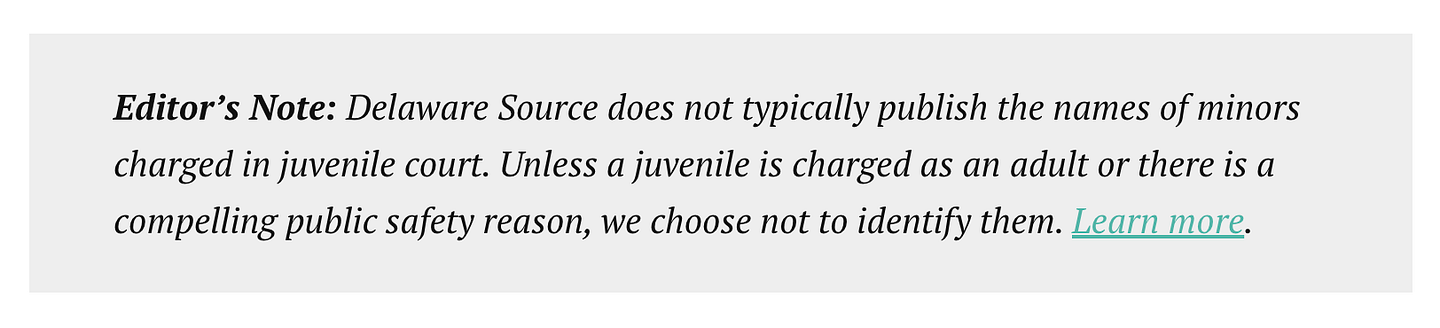
Their team was covering a story about a student who brought a gun to school. Because the student was a minor, they elected not to publish his name. Instead of leaving their audience to wonder why, they explain quickly within the story itself why they made the decision.
Brittany says the thought process behind adding it to the middle of the story was that they wanted to include the information right at the point in the story where people might be questioning why they didn’t include the suspect’s name.
And bonus: They also used this as an opportunity to create and publish a newsroom policy about naming juveniles, which they linked to from the in-story explainer. (The newsroom’s whole About page is really great if you need inspiration.)
As often happens when journalists do this type of day-to-day transparency, the response from the audience was positive, with even a local judge thanking them for their thoughtful coverage.
Research shows this is effective
Hearing positive responses from people in our community is a great signal that your coverage is resonating. But research also shows that this type of transparency is an effective strategy for journalists trying to build trust with their audiences.
Three research points to highlight.
- Transparency boosts people’s trust in the content. This research study we did with the Center of Media Engagement, has become a foundation of our work at Trusting News because it so clearly shows that providing explanations and insight into the reporting process can improve people’s perception and trust of content.
- The same is true for TV audiences. In another study, we partnered with station WCPO and the Center for Media Engagement and found TV viewers’ perceptions of news organizations also improve when journalists explain why a story is being done.
- Transparency is most effective within the content itself. We teamed up with researchers at the University of Georgia and found that people prefer transparency elements most when they are woven into the story itself, or when they are in a box within the content, like the Delaware Source did in the above example. (Although important to say that any effort to be transparent with your audience should be considered a win!)
Other day-to-day decisions to explain
There are so many things people don’t understand about how and why journalists operate, and we wish more journalists had a habit of explaining them clearly to their audience.
Here are just a few that come up often for journalists, with some examples of what it can look like to address them in day-to-day content.
- Why you are and aren’t covering something. We wrote about an example from Shawnee Mission Post about why they decided to cover something outside of their normal coverage area. Or, you could also explain why you’re not covering something, like the Burlington Free Press did here.
- Why you’re waiting to publish information. Here’s a great example from the Knox Pages team (which is owned by the same local company as the Delaware Source) explaining why they waited for more information before reporting.
- How you picked which sources to include in the story. Duplicate what the NYTimes did here explaining how they vet sources — both people and research.
The goal with transparency is to answer people’s questions (or correct any sort of misassumptions they may have about your journalism). So, when thinking about which story to add transparency elements to, think about what a user may be curious about or have questions about related to the story. Then address those in the story.
Here’s a good resource for knowing when you should include transparency elements in your coverage.
Send us examples!
If you try this out in your reporting, or have in the past, we’d love to see and will potentially highlight them in upcoming newsletter editions!
Reply to this email or submit any examples here.
At Trusting News, we learn how people decide what news to trust and turn that knowledge into actionable strategies for journalists. We train and empower journalists to take responsibility for demonstrating credibility and actively earning trust through transparency and engagement. Learn more about our work, vision and team. Subscribe to our Trust Tips newsletter. Follow us on BlueSky and LinkedIn.

Project manager Mollie Muchna (she/her) has spent the last 10 years working in audience and engagement journalism in local newsrooms across the Southwest. She lives in Tucson, Arizona, where she is also an adjunct professor at the University of Arizona’s School of Journalism. She can be reached at mollie@trustingnews.org and on Twitter @molliemuchna.