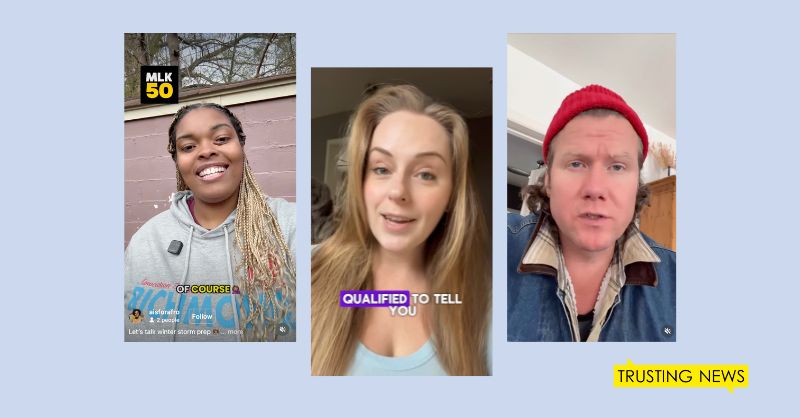
We worked with three creator journalists to add different transparency elements to their content and, when possible, get a sense of how their audiences responded.
How 3 creator journalists used transparency to signal credibility
What would it look like for creator journalists to use transparency to signal credibility to their audience?
That’s what we set out to learn through some pilot creator journalist coaching this past winter. We worked with three creator journalists to add different transparency elements to their content and, when possible, get a sense of how their audiences responded.
Part of our aim was to help these creators get on the record about who they are, why they are a credible source and what their goals are — which we hope ultimately helps them demonstrate why their content is worthy of their audience’s attention and trust.
A huge thanks to the three creator journalists for their time and for workshopping these ideas with us: Amber Sherman, Ashlyn Lipori-Russie and James Cave. We wouldn’t be able to do our work as an organization without journalists who are willing to experiment and try new ideas.
Why we’re tackling this
As trust in traditional news sources declines and general news avoidance increases, more and more people are turning to content creators as a main source of information.
In these online spaces, news consumers can find ethical, fact-checked information in authentic, personal styles. But they can also find misinformation, propaganda and hidden agendas.
At Trusting News, we believe that no matter where people turn for information, they should be able to easily identify if information is factual and credible. But in this era of information overload and ever-advancing AI technologies, it’s only becoming more and more challenging to discern what information is true.
We believe it’s up to journalists to step up to the challenge of helping their audience better navigate the changing news landscape. Our hypothesis, and hope, is that creator journalists who make their ethics clear will not only help audiences more easily access good, accurate information, but also help creators stand out in a sea of informers.
Examples: How three creators used transparency
We worked with three different creators across a variety of platforms. Here’s a bit about how each creator deployed transparency in their work .
James Cave, The Jiffy
James Cave is a creator journalist behind The Jiffy, covering life in upstate New York. Since this area has no shortage of influencers and content creators, James wanted to explain his unique approach to coverage and highlight his brand’s deep investment in the community.
As part of the coaching project, James developed an FAQ to articulate the mission behind The Jiffy and highlight some basics of how he operates — what you can expect from his coverage; what he will and won’t cover, how the project is funded; why he relies on reader support.
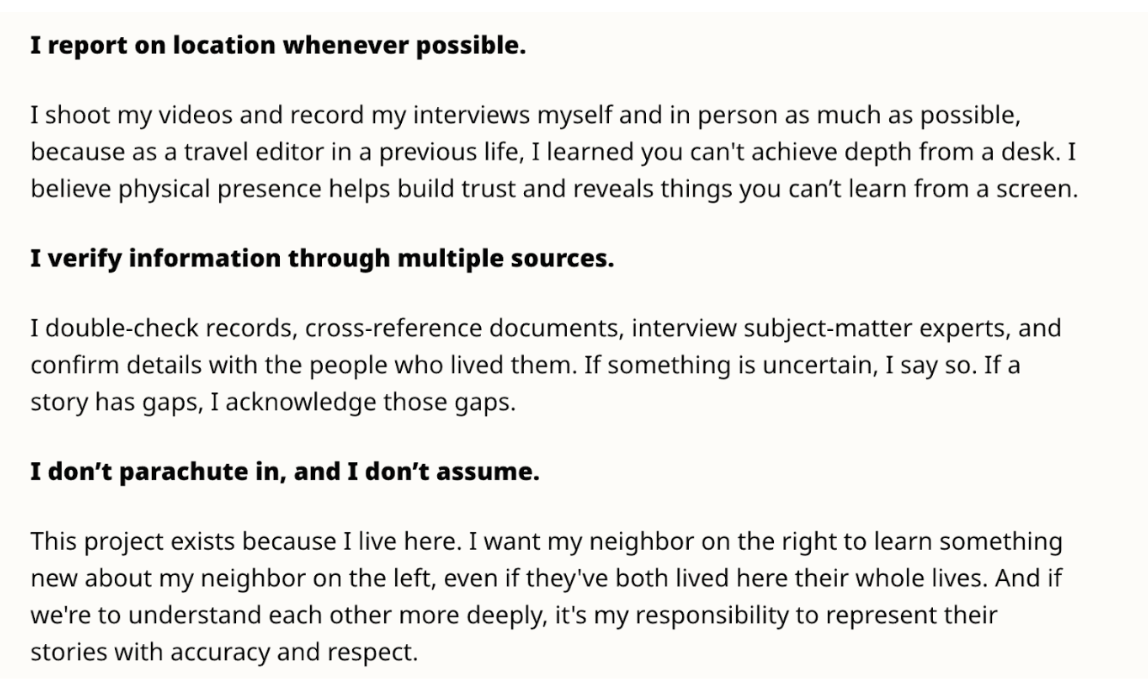
He also included a great “How I report” section in the FAQ, where he shares his approach toward coverage. It shows not only his process, but also highlights his values as a reporter.
James also took pieces of this FAQ to social, where he made a social video introducing himself, his brand, and what people could expect from this reporting.
James said he didn’t notice much of a difference with how his audience responded, but that the project did help him internally articulate the goals and mission behind the project. Plus, it did lead to a few new donations to the project.
Read more about how you can duplicate this strategy in your own work.
Ashlyn Lipori-Russie, Ask Ashlyn
Ashlyn Lipori-Russie is the CEO and Founder of Ask Ashlyn, a text-message-based news service for people who feel overwhelmed or disconnected from the news. Her work is rooted in helping people stay informed without contributing to stress, burnout or doomscrolling.
As part of this coaching, Ashlyn focused on more clearly explaining who she is, her expertise and the values behind her approach to journalism. This resulted in videos that introduced her background in political science and journalism, explained how she vets information, and articulated how her work differs from traditional and social media news environments.
She also worked on sharpening her mission and positioning in a crowded social media landscape. Rather than trying to keep up with the constant pace of breaking news, Ashlyn intentionally created content that encourages people to consume less, but more meaningfully. Her messaging emphasizes analysis over immediacy and helping audiences understand what actually matters, not just what’s trending.
As part of the coaching, Ashlyn also experimented with batching content and testing different video formats and hooks, which helped her build more consistency while staying aligned with her goal of not overwhelming her audience.
We wrote more about how you can duplicate Ashlyn’s strategies here.
Amber Sherman, A is for Afro
Amber Sherman is a policy organizer and creator journalist behind the social accounts A is for Afro. Part of Amber’s goal with her content is to help everyday Memphians understand and navigate public policy. (Amber also launched the incredibly successful Creator Residence withMLK50: Justice Through Journalism, which you can read more about in Project C.)
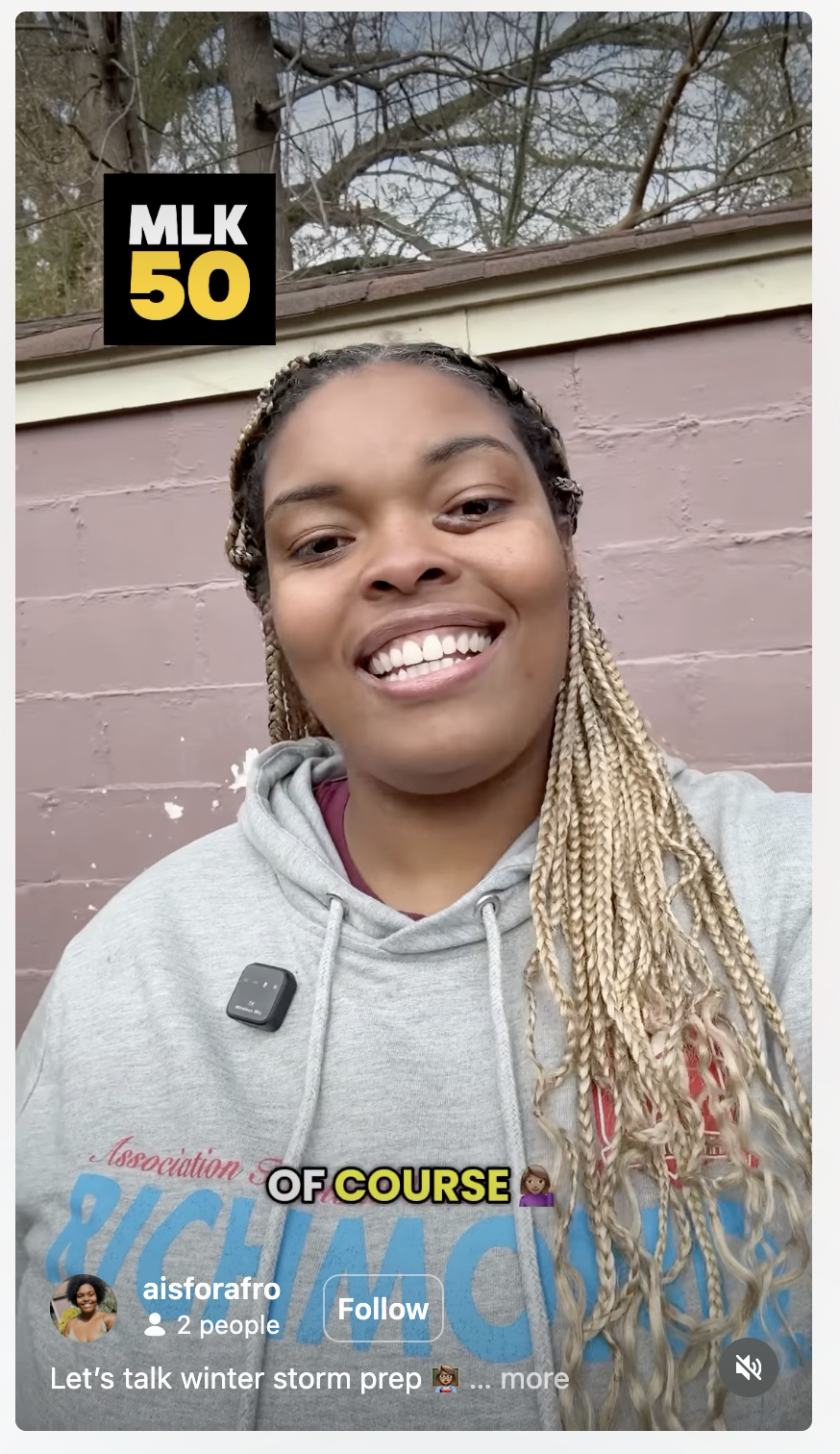
As part of the coaching, Amber added in mission language to videos that explained a bit about the goals behind her coverage.
Here are three examples of what that looks like:
- In this video about an upcoming winter storm, Amber shared tips for how people can prepare and be safe. She included the mission statement: “I make content to provide accurate information so you can feel empowered to make decisions.”
- In a video about deaths in county jails, Amber included the line: “I cover these topics to help keep you all in the know and feel more empowered.”
- In a video about the mayor and sheriff’s riff over the deaths in the county jail, Amber added: “One of the reasons I started creating policy content is to hold public officials accountable in this way … I hope y’all feel more empowered [to act].
Amber said she noticed a positive audience response overall in the videos where she added this type of mission language.
More research is coming soon!
We did not collect nearly enough data to be able to say with any sort of certainty which types of signals the public noticed or preferred. That was not the goal of this coaching. However, we were encouraged to see that these creators did not see any negative impact on their audience, and in one case, anecdotal findings that audiences liked the added transparency in the content.
There is so much more in this area we need to learn, and we are thrilled to say we’ll be investing in more research and work around this topic soon. Two ways we’ll be doing that this year:
1. Research into creator credibility. We see a real need to invest more deeply in how the public responds to various signals of credibility. We plan to test different signals across different platforms to help creator journalists not only deepen the level of trust and engagement they have with their audience, but also make it easier for everyday news consumers to find and access credible news. We’re excited to announce more about this soon!
2. Resources around creator ethics. We know there is a clear hunger and need for guidance and standards when it comes to ethics and transparency for creator journalists. At ONA this spring, we hosted a workshop with Ryan Kellett at Independent Journalism Atlas and heard more from creator journalists about what type of guidance would be most helpful. We’re excited to continue building off this work and will have more details to share soon.!
If you’re a journalist or collaborator interested in this work, or someone interested in funding this work, please reach out to mollie@trustingnews.org.
Resources for creator journalists
Our goal at Trusting News is to ensure the public has access to ethical, accurate and helpful information. That’s why, over the past year, we’ve been investing in helping independent creator journalists clearly communicate their credibility and what sets them apart from other information online.
This past year we have:
- Created a toolkit in partnership with Lenfest and Project C to provide guidance to newsrooms and funders about how to identify credible independent journalists to support and partner with.
- Created a creator ethics checklist to help guide creators through ways they can get clear about the ethics behind their work.
- As part of a great guide from the American Press Institute, we created an ethics checklist to help newsrooms determine who would be a good creator and community messenger to partner alongside.
Stay in touch!
To learn about new opportunities or research cohorts, subscribe to our weekly Trust Tips newsletter.
At Trusting News, we learn how people decide what news to trust and turn that knowledge into actionable strategies for journalists. We train and empower journalists to take responsibility for demonstrating credibility and actively earning trust through transparency and engagement. Learn more about our work, vision and team. Subscribe to our Trust Tips newsletter. Follow us on Twitter, BlueSky and LinkedIn.

Project manager Mollie Muchna (she/her) has spent the last 10 years working in audience and engagement journalism in local newsrooms across the Southwest. She lives in Tucson, Arizona, where she is also an adjunct professor at the University of Arizona’s School of Journalism. She can be reached at mollie@trustingnews.org and on Twitter @molliemuchna.