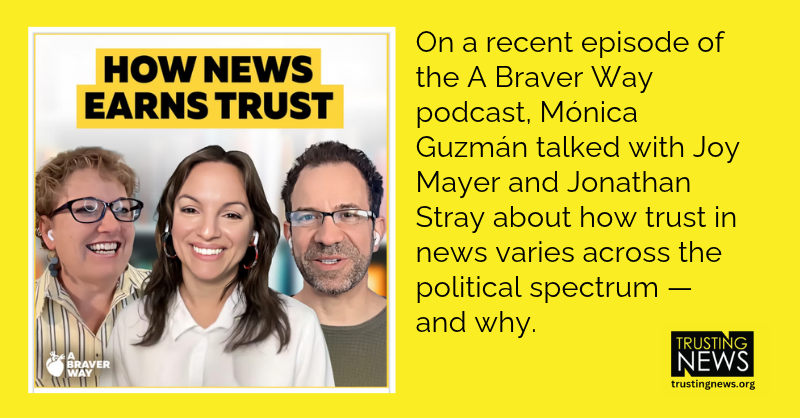
What would it look like to have journalism that serves everyone in a divided time? And what would it take for journalists to lean into curiosity around that question?
Podcast episode: Political journalism is broken. What should we do about it?
What should journalists do about the low levels of trust in their work from people who lean right politically?
That complicated question is something I have a lot of thoughts about, and I’m always eager to talk to people who both understand the goals and challenges of journalism AND spend significant time in conversation with people who don’t trust the news.
My top choice for those conversations is author, bridge-builder and journalist Mónica Guzmán. She and I had our first conversation about how news could better serve people across the political spectrum in 2021. We’ve had two more of those public discussions this year, and I want to pull together some themes in this post.
For a recent episode of her podcast, A Braver Way, Moni and I were joined by Jonathan Stray, a data journalist turned conflict scholar at UC Berkeley. The three of us have spent hours in calls and Google Docs wrestling with thorny questions like:
- What would it take to have journalism that serves everyone in a divided time? And that truly equips people to better understand each other?
- How do we address the goal of making diverse views feel seen while also not platforming misinformation or hateful views?
- How can we talk to people about what’s concerning them and reveal their important truths, even if the facts driving their fear are factually untrue?
- How should journalists be held accountable for staying curious about different arguments — for “open-minded inquiry” (as Tom Rosenstiel recently wrote) across a range of views?
Jonathan brought data about the political leanings of journalists and audiences. He talked about our mission as journalists: Unless we’re aiming to only serve liberals, then we need to acknowledge there’s a problem and do something about it. He suggests hiring more conservatives as an obvious step.
Watch the whole conversation here, or find it in your podcast feeds.
Moni and Jonathan took on some of those conversations at the Newsgeist gathering in 2025. Then in March 2026, Moni and I were on stage together at the Online News Association conference in a session called How Journalism Can Model Curiosity, Confront Bias and Reduce Polarization.

The hundreds of journalists in the room submitted dozens of questions. Here are some (lightly edited for length) that have informed our work ever since.
Several addressed concerns about what happens when journalists intentionally seek more right-leaning views.
- Today there are people debating other people’s humanity. Whether we understand someone or not, left or right, their *humanity* doesn’t change. So, how do you reduce polarization in situations where a person’s humanity is at the forefront of a story.
- How do you balance the language preference of a marginalized group (e.g. immigrants, trans people) with the language that works best for people across the political spectrum?
- How does this change for identity based newsrooms that serve women, immigrants, or queer people specifically? I feel it might be unfair to have reporters covering gender to get people from the manosphere to feel seen. How is that the mission of the newsroom when their duty is to better the civic engagement of their readers who already have the full weight of the government against them?
- Is it our job to tell both sides of an argument, even when doing so amplifies an argument that is likely untrue or runs counter to science?
Others delved into the culture and values of newsrooms:
- Monica gave a great framing earlier about how the people who are most overrepresented in our minds often are those who are most underrepresented in our actual lives. In an age where journalism jobs are being cut and the jobs that *do* exist are being clung to like debris from a shipwreck, how can the industry ever stand a chance of representing people with other backgrounds and experiences and concerns?
- How do we approach journalists who may believe it’s ok to have a left-leaning slant (even if they won’t even admit it to themselves)?
- Do you think there’s a place for journalists to be open about their views and opinions while still maintaining trust that we report impartially?
How we’re approaching this at Trusting News
None of these questions have easy answers, but we’re continually unpacking them on our team — in our research, in what we write and in our work with newsrooms. Here are some relevant links:
- Three strategies for responding to accusations of bias
- Are you impartial? Independent? How would your audience know?
- Provide on-ramps to terminology describing trans people
- Connect immigration coverage to democratic principles
- Yes, you should interview Trump voters. And the Beyond MAGA research from More in Common is useful reminder of the range of views within the Trump coalition.
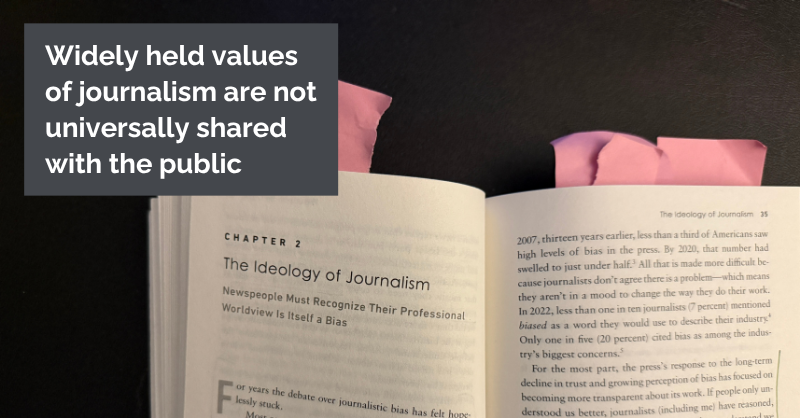
- Be more aware of your ‘professional ideology’
- Our Anti-Polarization Checklist suggests questions to ask about sourcing, word choice and story framing to make it relevant to and hearable by a wide range of people.
- Our guide to Hiring for Dimensions of Difference suggests interview questions editors can ask job candidates to encourage more diverse perspectives getting represented and shared on staff.
- Be honest about how journalists are different from their communities
What we want to do next
We’re available to work directly with journalists and newsrooms on ways to be more hearable by and relevant to people with diverse values and views. And we have specific programs we’re fundraising for, including topic-oriented trainings. Journalists have a goal of serving as a town square — providing facts that fuel conversation on issues of collective importance. How could we be more effectively getting facts heard and inviting people to the conversation on topics like public health, abortion and immigration?
We also have a long list of research paths we’re eager to explore, including experimenting with how different story frames, language choices and transparency elements are perceived by people across the political spectrum.
If you are a researcher, journalist or funder who would like to talk about partnering on any of this work, please reach out at joy@TrustingNews.org.
At Trusting News, we learn how people decide what news to trust and turn that knowledge into actionable strategies for journalists. We train and empower journalists to take responsibility for demonstrating credibility and actively earning trust through transparency and engagement. Learn more about our work, vision and team. Subscribe to our Trust Tips newsletter. Follow us on BlueSky and LinkedIn.
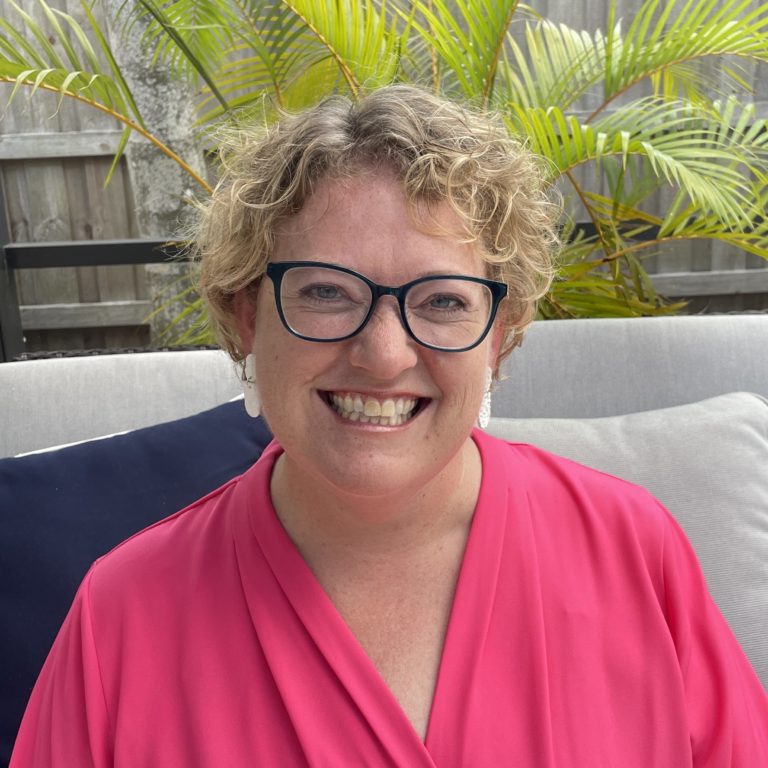
Executive Director Joy Mayer (she/her) founded Trusting News in 2016 after a 20-year career in newsrooms and teaching. She lives in Sarasota, Florida, and can be reached at joy@TrustingNews.org.