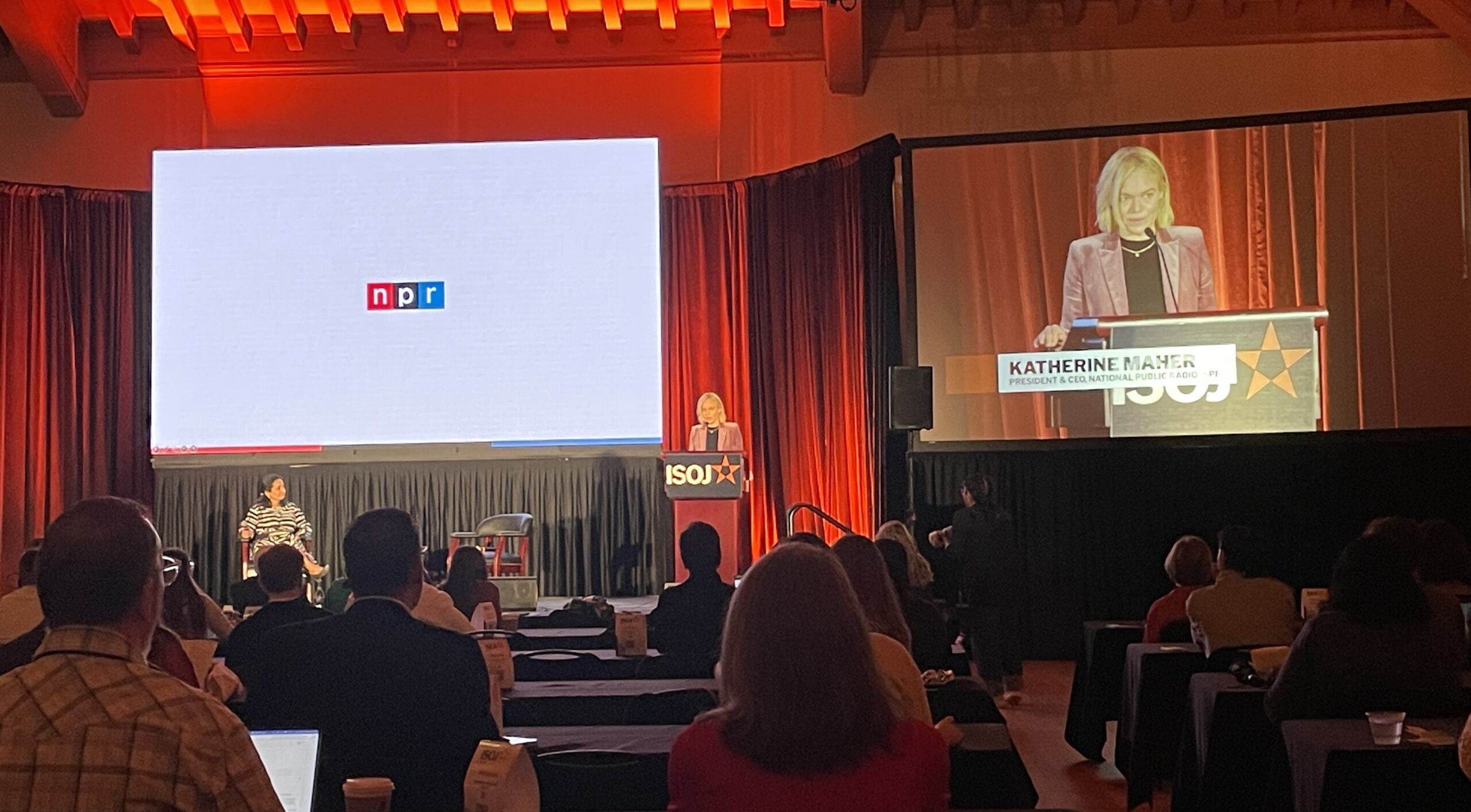
NPR CEO Katherine Maher said at the ISOJ conference in 2025 that the public doesn’t automatically understand how often Trump administration officials were asked for interviews but declined to come on air. Journalists need to use that situation as a chance to explain their process and integrity.
When public officials won’t talk, do these 3 things
Want to get this Trust Tips newsletter in your inbox each Tuesday? Subscribe here.
We often hear from frustrated journalists that reporters get frozen out by public officials who refuse to be interviewed. In fact, the topic came up at the most recent meeting of our Journalist Advisory Committee.
You know who else is frustrated? The public. Research shows routinely that people feel news stories are lopsided. And they’re not wrong, of course — stories typically reflect the voices of people who agree to be interviewed, and that self-selection does not always lead to balanced coverage.
But here’s the real problem: Some people assume journalists are favoring one side and choosing whose voices deserve to be included based on personal preference. And journalists aren’t doing much to correct that assumption.
Here are three strategies for this tricky situation.
1. Do what you can to earn the interview.
Some public officials have determined they don’t need to talk to journalists, and they prefer to be in control of their own message. While our team at Trusting News usually leads with deep empathy for wary sources, we have less patience for unavailable public servants than we do for the general public. However, our main goal is for the public to get the information they need. And that means we need to keep trying to get officials on the record.
So, try to anticipate the source of the official’s wariness. Or if you get the chance, ask why they don’t want to talk. Be ready with reasons why they are in good hands with you.
- What is the goal of your story? What types of questions are you trying to answer?
- How are you working to be fair and nuanced with the story? Whose perspectives are you going to represent?
- What examples of past reporting could you have on hand as examples of your approach?
- Let them know you’ll give them ample time to respond, or at least be clear about your deadline.
Sometimes they won’t engage at all, I know. But we should still make the effort.
2. Represent their views anyway.
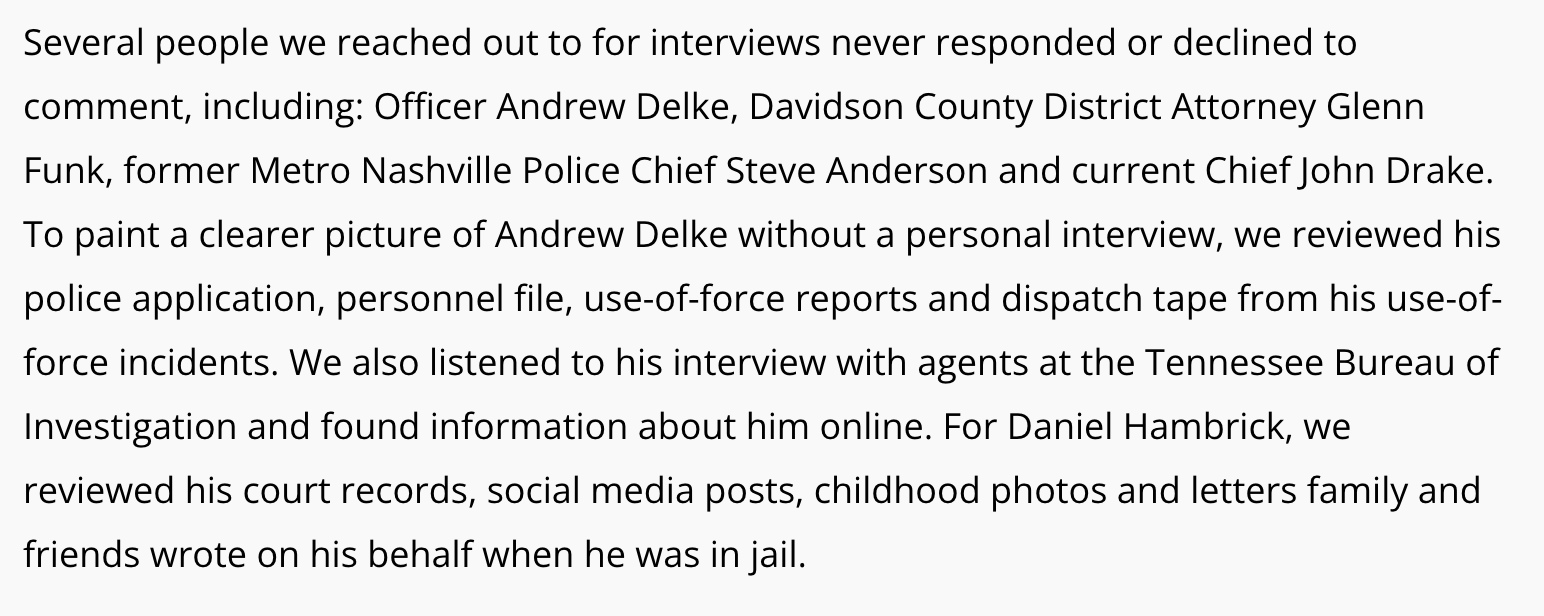
If they really won’t talk, do the best you can to represent them in the story — out of your commitment to the public, and to fairness. Comb other public comments. Link to coverage from other news outlets. And be sure to explain those efforts in your story. Don’t assume they’re obvious.
Here’s an example from WPLN in Nashville.
And if you’re denied access to an event, try what Katelyn Vue at Sahan Journal did after election night: Write about what happened and how you won’t let it stop your coverage. Then don’t forget to link to that explanation from all related coverage.
3. State your values clearly, and leave the door open.
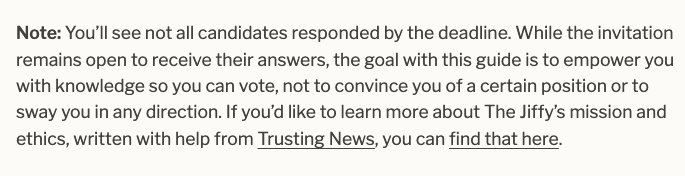
Make it clear to the public that it’s important to you to reflect the source’s views, and you gave it a good faith effort. Anticipate any suspicion that the source might be left out because of your own preferences (often partisan ones) about whose voices should be included, and meet that suspicion with explanation.
Try saying that the invitation remains open for the source to comment, and that you’ll either update this story if they get back to you or will include them in future coverage.
And please: Do this near the top of the story. Acknowledge what/who is missing at the spot in the story where you would have liked to include their view. Don’t tack it onto the bottom like an afterthought.
James Cave at The Jiffy tried this when fewer conservative candidates submitted information for his recent election guide.
Why not take every opportunity to remind people of your goals and values?
More sample language
I’ve written before about that last point, referencing something I heard NPR CEO Katherine Maher say — that NPR bookers had reached out more than 100 times to Trump administration officials over a specific time period, and only twice had one of them come on air. And most people would have no idea that’s the case. Instead, the newsroom’s continuous effort should be made crystal clear to listeners as a matter of routine.
As I wrote in that previous post, many stories will include language like “her office refused to comment” or “we reached out and have not heard back.” What if we got a lot more specific, such as:
“We know you’re eager to hear multiple viewpoints on this issue, and that includes the mayor’s office. We know from public statements the mayor has made that she believes x, y, and z about this, and we will continue looking for signs of how she plans to move forward. We have requested an interview this week by calling or emailing her office three times and by trying to talk to her after this week’s Council meeting. She has so far declined to talk to us, as she often has since she took office. That won’t stop us from asking.”
At Trusting News, we learn how people decide what news to trust and turn that knowledge into actionable strategies for journalists. We train and empower journalists to take responsibility for demonstrating credibility and actively earning trust through transparency and engagement. Learn more about our work, vision and team. Subscribe to our Trust Tips newsletter. Follow us on Twitter, BlueSky and LinkedIn.

Executive Director Joy Mayer (she/her) founded Trusting News in 2016 after a 20-year career in newsrooms and teaching. She lives in Sarasota, Florida, and can be reached at joy@TrustingNews.org.