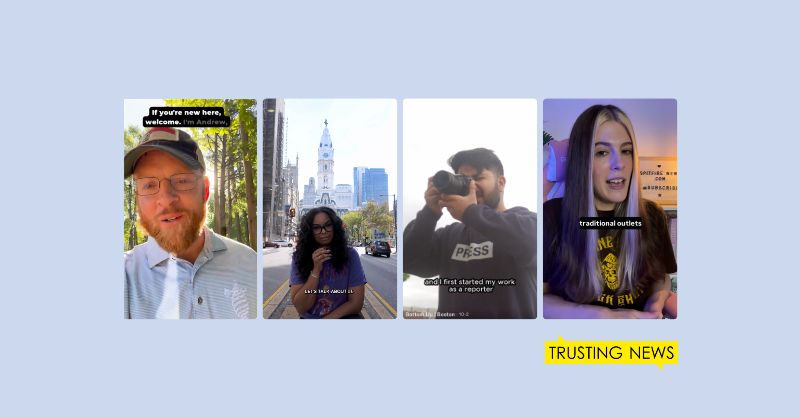
How 10 creator journalists got on the record about their mission, goals and approach to their work
Use social video to show your credibility
Want to get this Trust Tips newsletter in your inbox each Tuesday? Subscribe here.
Why should someone trust the content you’re sharing over everything else in their feeds?
With journalism showing up alongside so many other types of information, it’s important for journalists to be able to clearly answer this question.
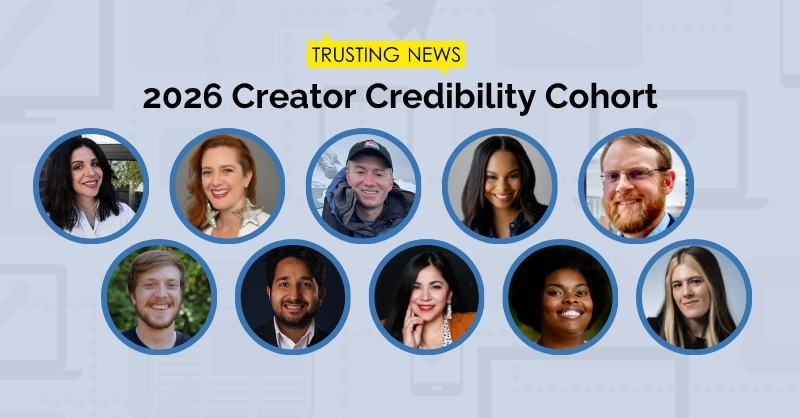
It’s also a driving question behind our Creator Credibility cohort. We’re testing strategies with 10 independent creator journalists to see: What transparency will help their content stand out as trustworthy and credible?
The first video these creators produced as part of the cohort was based on a strategy we’ve long taught: Explaining your goals and mission.
Why focus on this? Through our 10 years of work at Trusting News, we’ve seen that when journalists get transparent about their ethics and how they approach their work, it helps audiences view them as more trustworthy. Plus, as more AI content enters the scene, sharing the humanity and authenticity behind your work seems like an increasingly important aspect when it comes to connecting with audiences and building trust.
We’re in the middle of this program and will have a lot more to share in a few months. But we’ll share examples as we go because the work is so timely and important for all journalists to learn from, whether they’re independent or working in a newsroom.
How journalists are doing this
Each of the journalists in the cohort created a short-form video explaining what makes their content trustworthy. Specifically, they each talked about their background and experience, their goals and mission behind their content, and the lens through which they share information.
I’ll link to all 10 examples below because they are fantastic, with each creator taking a different approach to getting on the record about this.
I’ll highlight just a few and share how you can replicate this work.

- Andrew Dunn, Longleaf Politics: Andrew, a journalist who covers politics in North Carolina, focused his video on explaining the personal drive behind his content. What I especially appreciated about his video is how he explains how he works to be fair even as a journalist who often shares his perspective, and that his loyalty isn’t to a specific party but with the people of North Carolina. The audience seemed to also resonate with the video: Andrew said he gained hundreds of new followers after posting the video, and most people who viewed the reel on Facebook weren’t already following him.
- Chelsea Cox: Chelsea, a creator in Philadelphia who focuses on making complex topics more accessible, based her video on explaining the mission behind her content. She talks about how her approach isn’t to convince people what to believe, but to empower them with information so they can make decisions for themselves. Chelsea also gets really clear about how she gathers information and fact-checks the work. And if you browse through the comments on Instagram, you’ll see loads of support and appreciation for the work Chelsea is doing.
- Rahim Jessani, Bottom Up Media: Rahim, who reports on Boston, used a grabby hook to bring people into this video: “I’ve been offered thousands of dollars to tell you what to believe, but I said no to all of it.” He goes on to explain the background of how he got into doing this type of reporting, the mission behind his content and explains what being independent means to him — working in service of his audience. And the audience response has been great: Rahim said he gained hundreds of new followers from the video and that it’s been performing above average on his accounts.
- Kat Tenbarge, Spitfire News: Kat, who shares insights and reporting on internet culture and politics, used her video to share her journey of how she got into journalism and why she shifted to being an independent creator. Kat gets into the ethics and mission that drive her work: Holding powerful people accountable and centering people who have been harmed. Kat said her video performance was average on Instagram, but the comments were very affirming of her work, with comments like “This is why I love following you” and “I trust your voice.”
Do yourself a favor and watch the rest of these creators’ videos here: Becky Bullard/Democrasexy; Amber Sherman; Chase Cain; Celia Montoya; Kevin Foster; and Natalie Bencivenga.
Just as each creator’s approach differed, so did their audience response. Some creators saw a surge in views and followers, while others’ videos didn’t perform nearly as well as their normal content. We can’t say whether a similar video would or wouldn’t increase your engagement or followers, but I believe it’s always worth getting transparent about these things. Not only does getting on the record about your mission, goals and approach help you stay accountable to your audience, but it’s also handy to have this information in one place so you can easily link back to it in the future if someone has questions or challenges your work.
How to replicate this work
Any journalist could create a similar “Mission and goals” video. Think about how you can explain yourself, your values and what makes you and your work trustworthy.
You might include:
- Who: Your background, training and other relevant information. What makes you qualified to tell these stories or share this content?
- What: Your coverage area, beat or approach. What are you providing to your audience and the larger information ecosystem?
- Why: The reason you do what you do. Are you trying to inform your community? Combat fear? Making information more entertaining and easy to access? Drive civic action?
- How: How you conduct your work (any ethics and standards) and what people can expect from your coverage. Also: Identify if you report through a specific lens (ideology, identity, centering specific voices, etc.)
- Perspective: These videos can also be helpful places to get clear about any point of view, even if your stance is independent. Many people are NOT independent, so if you are aiming to be, explain that and get specific about what that means to you.
What newsrooms can do
This isn’t just something independent creator journalists can or should do — this approach could work really well for journalists working in newsrooms as well. I could see it working especially well if a specific newsroom team or a beat reporter created one of these quick videos.
You could:
- Publish short reporter-introduction videos, like the ones above
- Create “How we report this” explainers
- Clarify editorial standards and guardrails in easy-to-understand language
- Share why certain stories and topics are prioritized
- Point to the ethics of how you operate (that you care about getting it right, that you fact-check)
- Explain your independent approach to coverage
If you could use more help with this, check out our Trust Kit on talking about who you are as a journalist, which includes strategies and more examples of what this can look like.
What this cohort is up to next
I’m lucky I get to keep working with this amazing group of creators and independent journalists through the end of this year, testing strategies including getting on the record about funding and sourcing. If you’re interested in this work, stay tuned for more examples.
We are also working alongside a stellar team of researchers at the University of Michigan and the University of Minnesota to test these creators’ audience responses and gain a better understanding of which strategies move the needle when it comes to building trust. Next year we’ll be able to share more of those findings, but in the meantime, the best way to stay updated is to continue engaging with this newsletter and to follow us on LinkedIn.
At Trusting News, we learn how people decide what news to trust and turn that knowledge into actionable strategies for journalists. We train and empower journalists to take responsibility for demonstrating credibility and actively earning trust through transparency and engagement. Learn more about our work, vision and team. Subscribe to our Trust Tips newsletter. Follow us on Twitter, BlueSky and LinkedIn.

Project manager Mollie Muchna (she/her) has spent the last 10 years working in audience and engagement journalism in local newsrooms across the Southwest. She lives in Tucson, Arizona, where she is also an adjunct professor at the University of Arizona’s School of Journalism. She can be reached at mollie@trustingnews.org and on Twitter @molliemuchna.