Could sharing AI literacy content serve as a form of public service journalism? Could it help audiences feel more informed? And most importantly, could it help strengthen trust in news organizations?
Are you impartial? Independent? How would your audience know?
Want to get this Trust Tips newsletter in your inbox each Tuesday? Subscribe here.
Would you say your news coverage is impartial? What about independent?
The annual Reuters Institute Digital News Report was released last week, and there were two points from the findings that really jumped out to us related to the above questions.
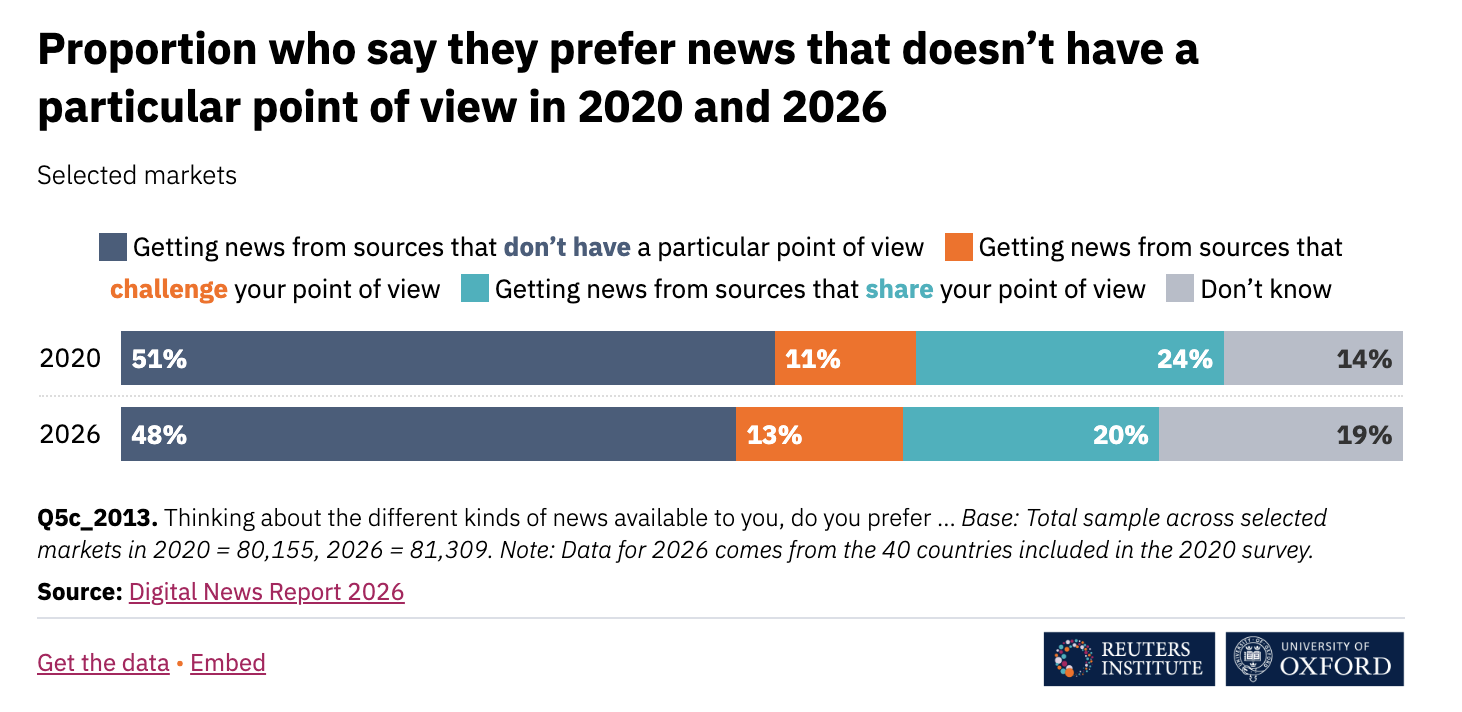
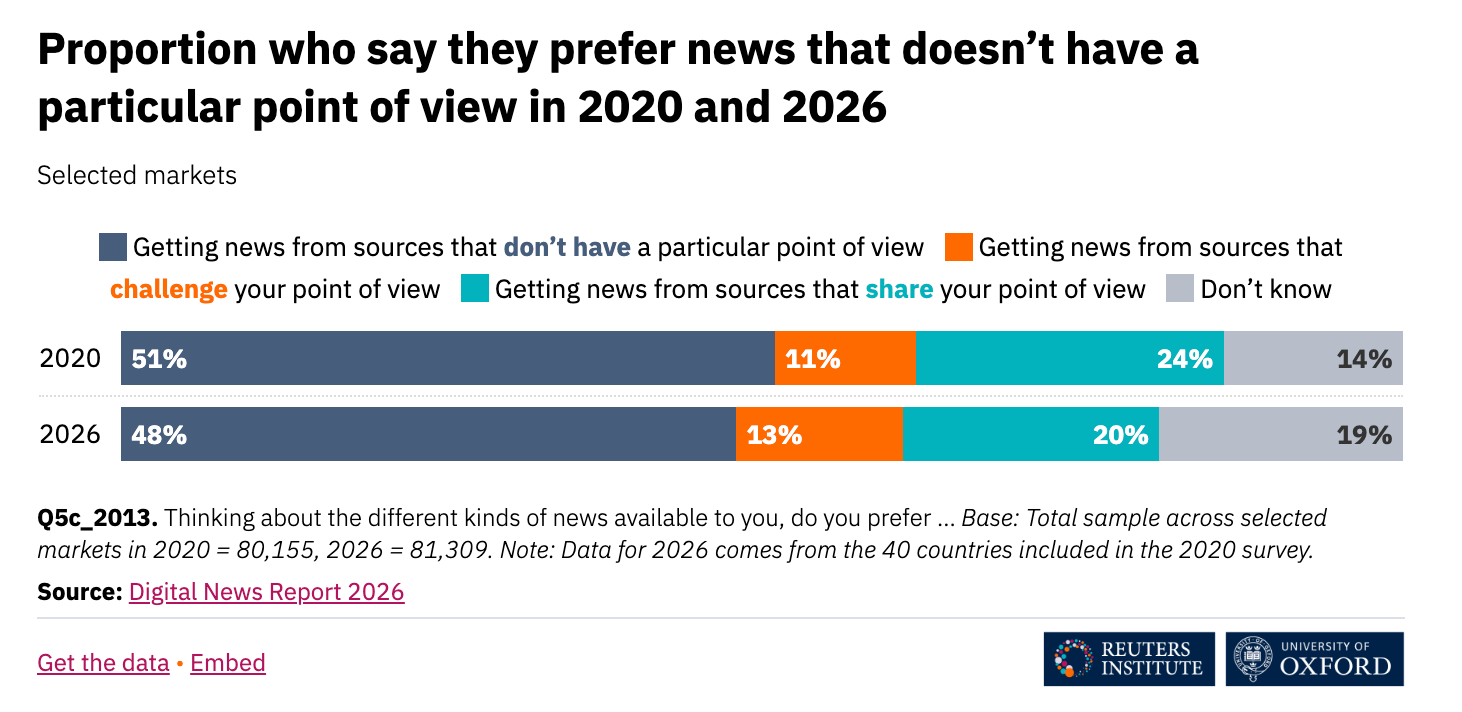
- People say they prefer impartial news. Almost half of respondents still prefer news that does not take sides, and a similar size group believes consuming news that doesn’t take sides is best for others in society. (In last year’s report, impartial reporting was one of four things people said journalists could do to earn trust.)
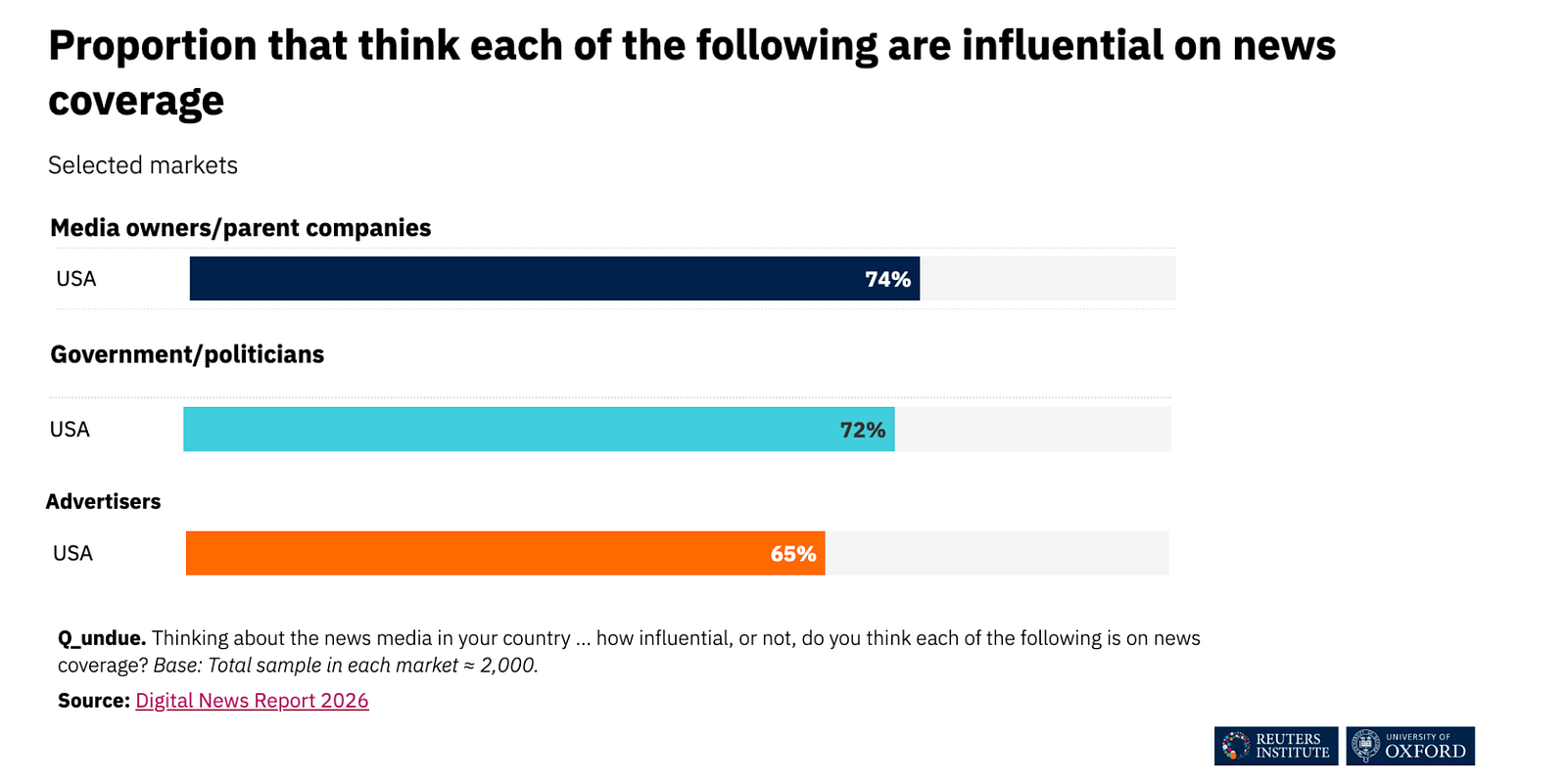
- People think there is a lot of outside influence on the news. In the United States, 74% of respondents think media owners and parent companies influence coverage. Also, 72% of respondents in the US think the government and politicians play a role in influencing coverage, and 65% say advertisers do.
Those two points highlight the perception gap we so often talk about at Trusting News: As journalists, you may view your news as independent or impartial, but that may not be how your audience is seeing it.
Now, impartiality may not be a goal for your coverage — you may present news from a specific point of view (if that’s the case, I hope you make that clear to your audience!). But I would guess that most of you care a lot about being seen as independent — and wouldn’t want the majority of your audiences thinking your content is swayed by outside factors like government, advertisers and ownership.
And we can all easily think of recent examples of outside forces inappropriately influencing journalists — cases that are a vital reminder of how reasonable it is for the public to assume it’s happening for all of us. This research is a good reminder that many people don’t believe journalists are striving to meet these core journalistic principles — and it’s a good nudge to look for opportunities to get on the record about it in coverage.
As journalists, we often take for granted that our content will speak for itself. And too often we’re not investing in signaling our credibility and really articulating to our audience that we’re working to be fair and independent — and then pointing back to evidence of that in our coverage.
Let’s dive in more to each question.
Impartiality
Start by really examining what the perception of the coverage might be by people who see the world in diverse ways. Don’t focus on extremes — the people who are unlikely ever to trust you. Think about more nuanced views. What feedback might you get from those audiences? Where might people detect the values or perspectives that frame your work, and is it intentional on your part that they’re coming through?
Then think about what you could make visible. If a skeptical news consumer sat alongside a reporter to scrutinize their process, what evidence of fairness do you hope they would find? How could you back up your impartiality with receipts? Identify those elements of your work, then talk about them with the audience. (Note: If “impartial” and “fair” don’t feel like the right words for you, what does? Balanced? Unbiased? Objective? What are you aiming for?)
- If you could use help doing this, our Trust Kits around Ethics, Sourcing and Explaining Coverage are good places to start, and the Transparency Trust Kit shows you how to get these types of explanations into your daily reporting.
Independence
Newsrooms often throw around the word “independence” without much explanation. If you use that word to describe how you approach coverage, try to get more specific about what that means to you or your outlet. Are you financially independent? Do you disclose any potential conflicts of interest? Do you make your own coverage decisions without outside influence? Think about how you’d explain it to someone who might be critical of your coverage.
Articulating your independence is a great first step. Once you’ve done that, assess which coverage might cause people to be skeptical of that independence. What sort of evidence could you include to demonstrate how you’re working to be independent? Just like we mention above, what receipts can you bring to back up your claims of being independent?
We also know it’s not always so cut and dry when it comes to outside influence from a corporate owner. Sometimes your parent company does dictate some of your coverage. If that’s the case for you, we have strategies for how to articulate that in our Funding Trust Kit.
Other Reuters data worth highlighting
Here are a few other data points worth noting. If you’re a research nerd like us, you can download the entire report here.
- Trust in news keeps dropping. This unfortunately isn’t surprising but worth noting — people’s trust in news dropped both when looking at it globally and within the US. In the US, just 25% of people say they have trust in the news. Globally the levels of trust fell to 37%. As you might imagine, we have A LOT to say about this. But we hope this decline in trust helps motivate you that trust-building strategies (like the ones we often recommend in this newsletter) are worth the investment. And we know they work.
- There’s a growing preference for creators and social media. For the first time, social media and video networks are the №1 place people turn to for news globally. (In the US, social media became the top news source in 2025 and remained in the №1 slot again this year.) Additionally, 32% of US respondents surveyed said they encountered news content from news influencers or creators in the past week, with 15% saying they get all or most news needs met by creators. As more people turn to creators and social media for news, the more crucial it is they know when they’re encountering credible, accurate news. (We have an exciting new opportunity around this — learn more at the bottom of today’s newsletter!)
- Avoidance is high, and interest in news is down. News avoidance is now at 45% in the US, while globally the number of people saying they are ‘extremely’ or ‘very’ interested in the news has fallen. This just makes the case for journalists doubling down on ensuring their content is useful and relevant to their audiences, as we so often talk about.
If you could use help with any of the strategies we talk about in today’s newsletter, please let us know! You can respond to this email or get in touch with us at info@trustingnews.org.
At Trusting News, we learn how people decide what news to trust and turn that knowledge into actionable strategies for journalists. We train and empower journalists to take responsibility for demonstrating credibility and actively earning trust through transparency and engagement. Learn more about our work, vision and team. Subscribe to our Trust Tips newsletter. Follow us on Twitter, BlueSky and LinkedIn.

Project manager Mollie Muchna (she/her) has spent the last 10 years working in audience and engagement journalism in local newsrooms across the Southwest. She lives in Tucson, Arizona, where she is also an adjunct professor at the University of Arizona’s School of Journalism. She can be reached at mollie@trustingnews.org and on Twitter @molliemuchna.