With more influencers and news sources emerging each day, it’s becoming harder and harder to tell what’s true.
What information from independent creators can you trust? This checklist will help
There’s a ton of information online, and not all of it is from people who want to share factual news. As more and more Americans get their information from influencers and online content creators, the more important it is to pay attention to where you (or your teens) are getting news.
But knowing what’s actually true online isn’t always that simple. That’s why we created this checklist — it’s a series of questions to help you assess the credibility and accuracy of the content you or your teen is consuming.
If you’re a journalist, the questions below are ones we encourage you to share with your own audience. Be a resource that equips people to navigate the news — and helps them make more educated decisions about who to trust for information. And if you’re a creator, here is our ethics checklist for creator journalists. We welcome you to re-publish this with your own introduction and credit us for the checklist.
➡️ Check out this News Literacy Project infographic for more tips on how to check if sources are sketchy or legit.
1. Do they cite their sources?
Some online personalities do their own reporting while others aggregate content, meaning they gather information from other reputable sources and news sites and share summaries of the news. Both are valid ways to report the news. But either way, credible creators will be clear about where they get their facts. That might mean naming or showing the news outlet where they got the information, or giving the name and credentials of people interviewed in a story.
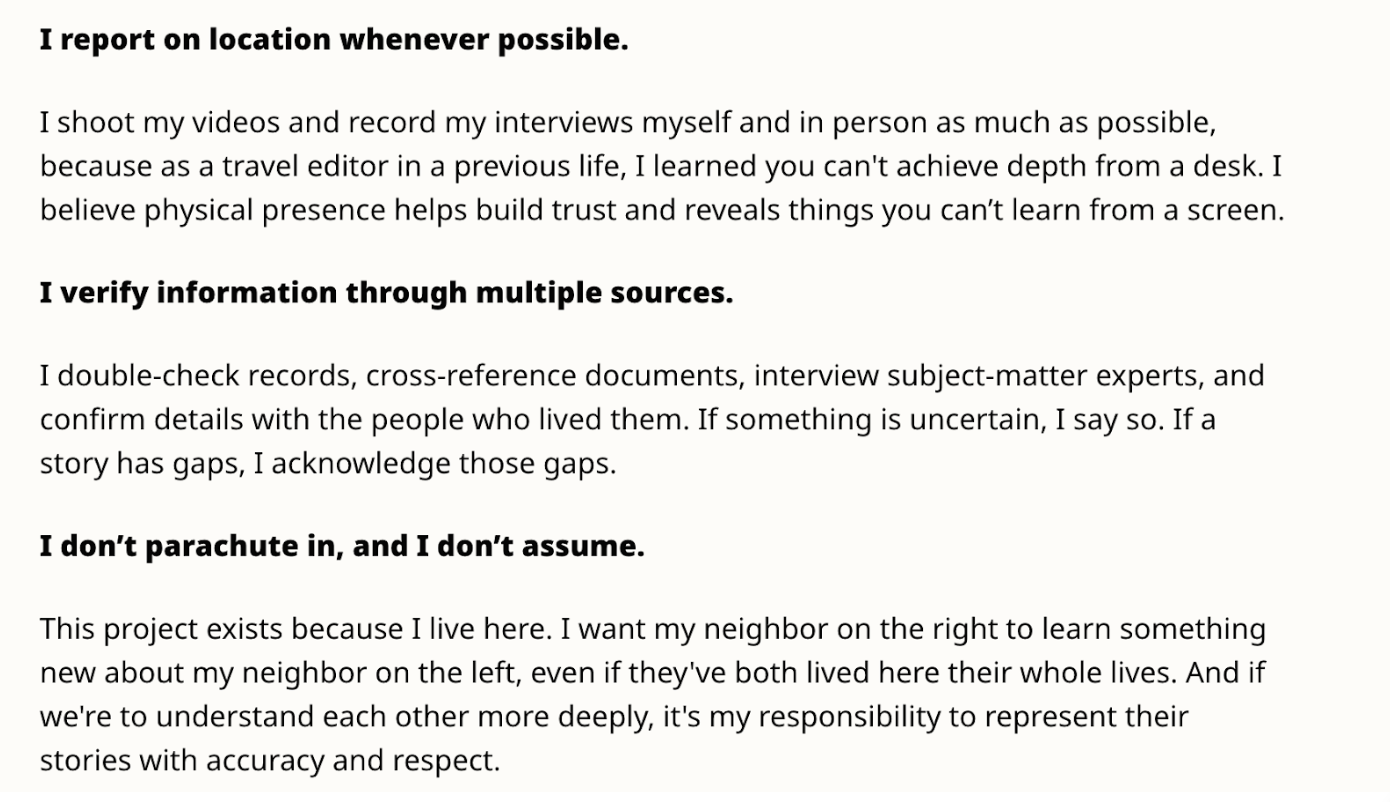
- Sophia Smith Galer includes screenshots of the sources where she gets information in her video and includes a list in the caption as well.
2. Do they use multiple sources?
Sometimes people will report stories and base the whole story on a single anecdote, or they will simply report what one institution says. Look for creators and influencers who draw from multiple reputable institutions or people. Look to see if they include multiple perspectives or context as to what people with different beliefs or expertise are saying.
- When reporting on the killing of Minneapolis resident Alex Pretti, PolitiFact shares the Federal Government’s response and also shares that the news analysis of the video does not match the government’s reporting.
3. When they make a mistake, do they publicly correct it?
Everyone makes mistakes, sometimes even well-known journalists. But when errors happen, or information needs an update, credible informers should publicly acknowledge the mistake and correct it.
- Isaac Saul, who runs the Tangle News newsletter, puts corrections at the top of his daily newsletter.
4. Do they talk about how they make money?
Many people are skeptical about whether online content is authentic — or just a marketing ploy. While many creators rely on advertisements and sponsorships to stay in business, credible creators should get clear about these funding sources and share any potential conflicts of interest. On a basic level, this looks like disclosing ads, gifts and sponsorships. But it could also look like creator journalists sharing more details about how they are funded and how they maintain independence in their reporting.
- In this video, Becca Farsace adds a quick disclaimer when she’s promoting a product from someone who sponsors her work.
5. Is it clear that their goal is to inform?
Or does it seem like they have another agenda or motive behind their coverage? Some online creators don’t have good intentions and are trying to persuade you of a certain viewpoint — or spread misinformation. Less credible informers might focus on one angle or side, while ignoring or misrepresenting other perspectives. Credible creators will be clear that their purpose is to share responsible information with their communities, even if they do so through a certain point of view.
- Example: In this TikTok video, Lisa Remillard shares details about a DHS funding bill, including the impact of the bill and how people can have their voice heard no matter how they feel about it.
More tips for navigating information (adapted from News Literacy Project)
- Check if an image of video has been manipulated by doing a quick reverse image search or checking to see if RumorGuard has debunked it.
- Do a quick Google search of the account or person’s name, or the news event itself, to make sure no red flags pop up showing they are unreliable or sharing misinformation.
- Watch for dangerous, offensive and malicious content, that include discriminatory language, unverified pseudoscience, or content that promotes violence.
At Trusting News, we learn how people decide what news to trust and turn that knowledge into actionable strategies for journalists. We train and empower journalists to take responsibility for demonstrating credibility and actively earning trust through transparency and engagement. Learn more about our work, vision and team. Subscribe to our Trust Tips newsletter. Follow us on Twitter, BlueSky and LinkedIn.
Project manager Mollie Muchna (she/her) has spent the last 10 years working in audience and engagement journalism in local newsrooms across the Southwest. She lives in Tucson, Arizona, where she is also an adjunct professor at the University of Arizona’s School of Journalism. She can be reached at mollie@trustingnews.org and on Twitter @molliemuchna.