Explain how yo work to be ethical to build trust
Listen to what the public says about journalism ethics
Audiences may not always know the details of journalism’s ethics, but they have clear expectations for ethical journalism. New research I led for the Society of Professional Journalists (SPJ) shows people value the ethical decisions journalists make and want to see more visible signs of upholding those ethics in the content that is produced and shared.
SPJ’s Code of Ethics is one of the most widely recognized ethical frameworks in journalism, and the organization is currently considering updates to that code. As a member of the SPJ Ethics Committee (the committee leading the code revision process), I believed it was important the revision process begin with listening — not just to committee members, but to the people who actually use the code and the people journalism is meant to serve.
Here’s what the surveys showed
Through parallel surveys, SPJ heard from 361 journalists and 367 news consumers. While the surveys were not nationally representative, the survey found broad agreement from the public on core journalistic values like accuracy, transparency and accountability.
At the same time, almost 70% of the news consumers who responded said they had seen or experienced journalism they considered unethical or misleading in the past year. The most common concerns were perceived bias or unfairness, inaccurate or incomplete information, and sensational or misleading headlines.
If you follow this newsletter and trends in trust in news, this may not be surprising. The good news is the responses from the public also offered a roadmap for improvement. According to the survey, they want journalists to:
- Make ethical decisions more visible
- Explain why they make those decisions
- Be more transparent when things go wrong.
This is good news because we know journalists can do this! At Trusting News, we have been helping journalists do this work for 10 years. And even better news: We know this work can build trust.
While this survey was a small sample of news consumers, I find some comfort in knowing there are proven strategies and examples of how journalists can make their ethics more visible for their communities. We do not have to start from scratch. A lot of what the public says they want really means getting back to basics: correcting mistakes, labeling content, explaining ourselves and getting out to talk to our communities.
Looking at what news consumers said they wanted more of in this survey, below is a list of tools, worksheets and examples to help journalists do just that. Read more about the full survey findings here. And if you have examples to share of how you’re doing any of this work, please let me know: Lynn@TrustingNews.org.
And people seem to be noticing them! Since introducing the boxes, Prince says they’ve seen a boost in engagement, both in terms of the number of submissions they’ve received as well the number of visitors to their standards page.
How to help the public see you are ethical and care about getting it right
Make ethical decision-making visible. If you are spending time discussing difficult editorial choices, verifying information or weighing ethical dilemmas, talk to your audience about it. So much of this work remains invisible to audiences. Ethics should be reflected in the journalism audiences see every day, not kept inside internal handbooks or private newsroom discussions.
Use our Daily Transparency Trust Kit to see how you can do this and examples from newsrooms who have done this
Use our Explain Your Sources Trust Kit to provide transparency around the sources you use and why
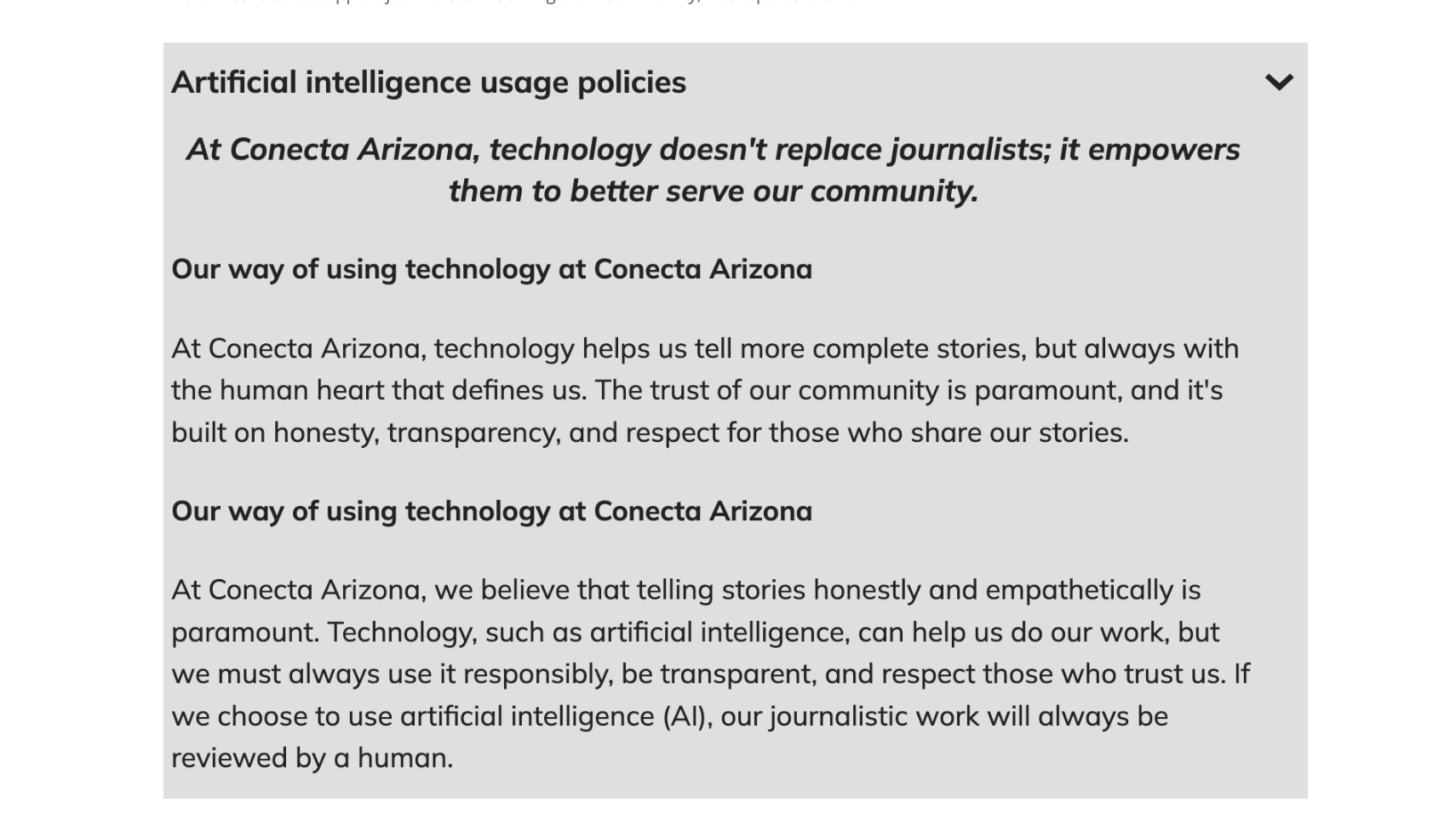
Use our AI Trust Kit to get transparent about your use of AI with in-story disclosures and AI use policies (According to the survey, journalists not disclosing the use of AI was something at least 80% of the survey respondents said they would consider to be unethical in journalism.)
We also have advice on making other elements of your ethics visible to your audience in our Ethics Trust Kit and tips on how to explain coverage decisions in our Explaining Coverage Trust Kit
Clearly label opinion content. Audiences want a clearer distinction between news reporting, opinion, analysis and sponsored content. Consistent labeling and visual cues can reduce confusion, set expectations and help people better evaluate the information they are consuming. In our work, we always recommend using the word “opinion” instead of other common journalism terms. Why? Those terms made more sense when reading a printed newspaper but aren’t as easily recognizable or understood in today’s digital information ecosystem.
Use our Opinion Trust Kit for more tips and newsroom examples of how to do this.
Use our Opinion Audit to get a better sense of what words you are using to describe your content and how they could be improved
Have a corrections policy, make corrections and make it easy for people to request corrections. Audiences overwhelmingly said they want mistakes to be corrected visibly and quickly. News organizations should have a clear corrections policy, make that policy easy to find and provide straightforward ways for people to report errors or request clarifications.
Use our Corrections Trust Kit to create or improve your current corrections policy and remember to make it public!
Treat audience feedback and listening as part of the regular workflow. Audience concerns should not be dismissed simply because they are critical. Looking for patterns in feedback can reveal misunderstandings and recurring frustrations but they also identify opportunities to improve communication, transparency and coverage decisions.
Use our Engagement Trust Kit to learn how to get feedback
Use our Engaging through comments Trust Kit to turn social media feedback into actionable and useful ways to better serve your audience
Avoid sensational and misleading language and add context to stories. The public cited sensational headlines, perceived bias and incomplete information as reasons they viewed journalism as unethical. Headlines should accurately reflect the substance of a story rather than prioritize clicks or engagement. Providing context with stories and not just covering breaking news and the bare minimum facts of a story can help audiences better understand complex issues.
Use our Anti-Polarization Checklist, designed to help journalists eliminate polarization in their political and election coverage, to help you frame stories in less polarizing ways and think carefully about word choice and the sources you use
At Trusting News, we learn how people decide what news to trust and turn that knowledge into actionable strategies for journalists. We train and empower journalists to take responsibility for demonstrating credibility and actively earning trust through transparency and engagement. Learn more about our work, vision and team. Subscribe to our Trust Tips newsletter. Follow us on Twitter, BlueSky and LinkedIn.

Assistant director Lynn Walsh (she/her) is an Emmy award-winning journalist who has worked in investigative journalism at the national level and locally in California, Ohio, Texas and Florida. She is the former Ethics Chair for the Society of Professional Journalists and a past national president for the organization. Based in San Diego, Lynn is also an adjunct professor and freelance journalist. She can be reached at lynn@TrustingNews.org and on Twitter @lwalsh.