When journalists label someone an expert, they send a signal about who they trust, and who they expect the audience to trust as well.
Diversify who you frame as an ‘expert’
Want to get this Trust Tips newsletter in your inbox each Tuesday? Subscribe here.
In trying to explain complicated issues and situations, reporters are always asking: Who knows more about this than anyone else? Who can I trust to break it down for me, and therefore for my audience?
When journalists decide who has the credibility to play that role, we are assigning authority.
It’s natural that we would turn to specific kinds of expertise, like academic degrees and job titles. Those indicators are longstanding signals of a person’s depth of knowledge. They serve as efficient proxies or benchmarks for our own vetting.
We also know, though, that many people have become more inclined to trust individuals than institutions and more skeptical of traditional expertise.
When looking at trust in scientists, for example, Pew found in November 2024 that trust had not reached pre-Covid levels. And it differs by both education levels and political leanings. See how perceptions of research scientists differ in this chart for traits like honesty and moral superiority.
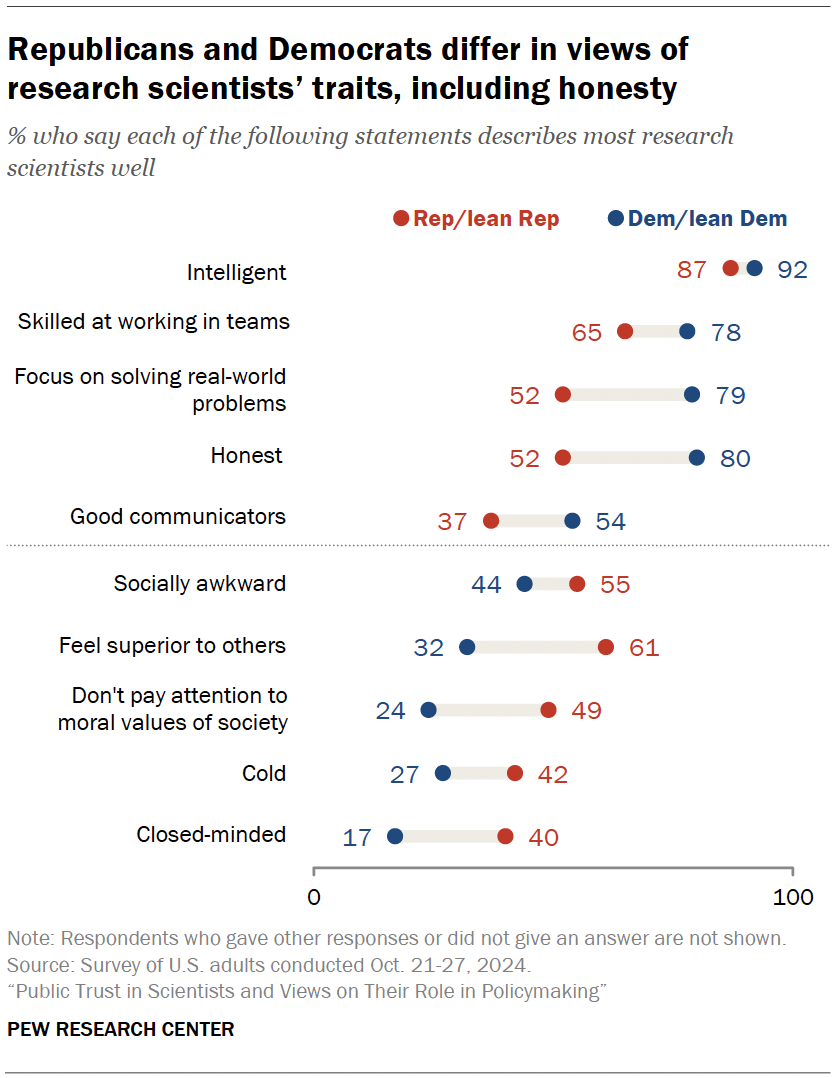
It’s not just science, of course. In general, trust is down in many types of institutions. Some people are more inclined to trust individuals than institutions or brands, as we’re seeing play out in news consumption patterns.
When we call someone an expert and expect that the public will automatically have the same trust in them that we do, we’re missing an opportunity to demystify our own process and standards — and to back up the word expert with receipts.
What makes someone an expert?
I’m not here to tell you to stop quoting people with a PhD behind their names. I would like to recommend, though, that journalists consider what makes someone an expert and how that expertise is communicated.
Consider these types of expertise often obvious in journalists’ sourcing:
- Credentials & degrees (formal education or certification, professional affiliation)
- Knowledge & experience (depth of understanding and context, history or track record)
Then consider these other factors that contribute to making someone feel like a credible expert:
- Experiential expertise (knowledge gained through lived experience, a participant’s perspective)
- Communication and accessibility (clarity and responsiveness to different audiences, connecting ideas to real life)
- Transparency & evidence (sources and methods, acknowledging uncertainty and willingness to change)
- Integrity (motivations and independence, ethics)
Considering these factors can be useful if you would like to make a PhD source more relatable. Ask them why they became interested in a topic or how it affects them personally. Ask them what they know for sure and what they don’t know, or where they’ve changed their mind.
These factors can also be useful when highlighting non-academic sources. Establish the credibility of the person who has deep lived experience with a neighborhood or job skill or family role. Frame their contribution as expertise, so the tone of the story fully values their contribution.
Example: Two perspectives on the government’s response to Covid
I’ll share one Jedi-level example of this strategy. Mónica Guzmán’s podcast, A Braver Way, talks to people about how to have conversations across political divides. In a 2024 episode, she brought together two guests with drastically different perspectives on the government’s response to Covid. One was Dr. Francis Collins, who served as director of the National Institutes of Health from 2009–2021. The other? Travis Tripodi, who was not a scientist and not a public official but a New Hampshire resident who disagreed with and felt harmed by the government’s response to Covid.
The two men, who had first connected at a Braver Angels event, shared their experiences and asked each other questions. Their two types of expertise — one professional and one experiential — were not presented as the same. They were not fact-checking each other or debating. But their perspectives were in dialogue with each other. Mónica’s brilliant hosting offered respect to both guests and highlighted healthy tensions between their views.
This can play out in a lot of lower-stakes, less dramatic ways, too, of course! When walking through a new elementary school approach to teaching math, be mindful of how you frame the perspectives offered by the district curriculum specialist, the classroom teacher, and the parent of three students. Establish each their expertise by walking through why they are valuable, credible voices on the topic.
As you think about various types of expertise you could highlight, here’s one final tip: Don’t overuse the word expert, or expect it to do too much heavy lifting for you. Instead, describe the nature of someone’s expertise. What does it rest on? What have they done or experienced? Bring the receipts for that expertise.
Speaking of talking across divides …
Thank you to the dozens of you who submitted questions during the fireside chat Mónica Guzmán and I held at ONA in Chicago last week on how journalism can model curiosity, confront bias and reduce polarization. There is so much we want to keep talking about, and we’re working on the best way to do that. Stay tuned!
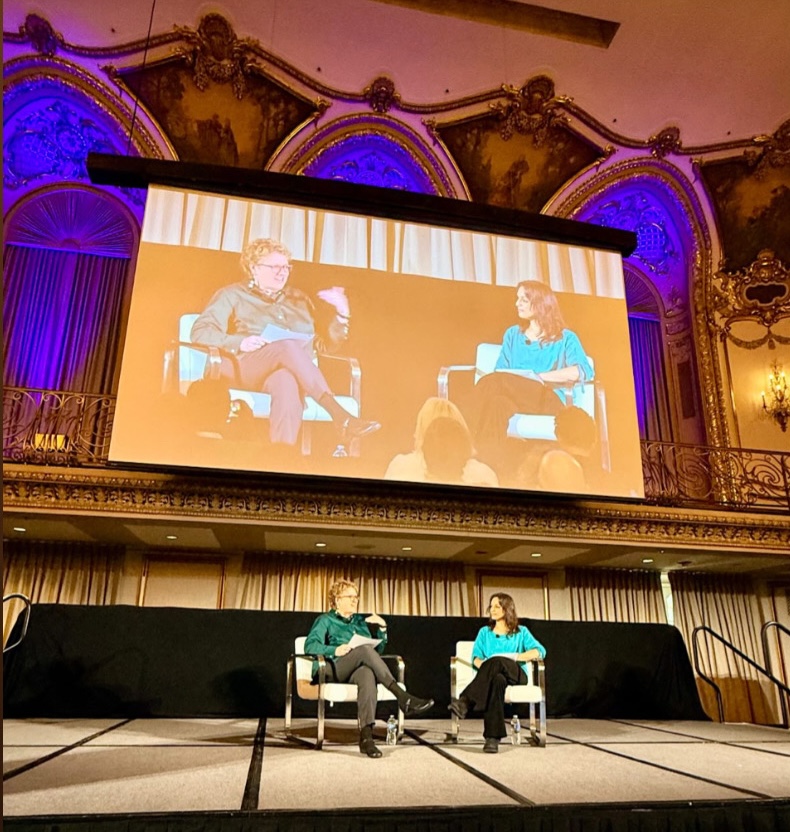
At Trusting News, we learn how people decide what news to trust and turn that knowledge into actionable strategies for journalists. We train and empower journalists to take responsibility for demonstrating credibility and actively earning trust through transparency and engagement. Learn more about our work, vision and team. Subscribe to our Trust Tips newsletter. Follow us on BlueSky and LinkedIn.
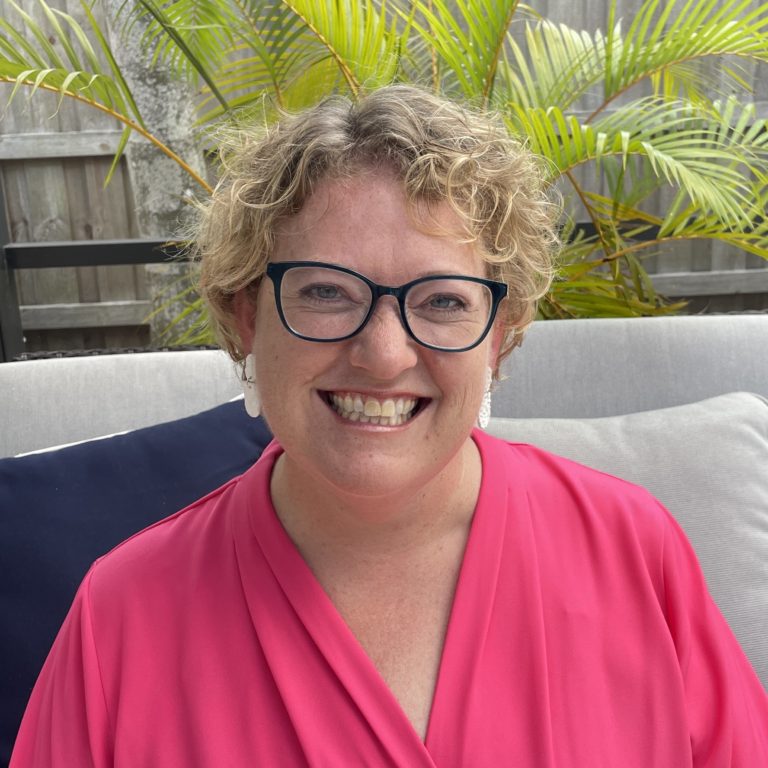
Executive Director Joy Mayer (she/her) founded Trusting News in 2016 after a 20-year career in newsrooms and teaching. She lives in Sarasota, Florida, and can be reached at joy@TrustingNews.org.