Journalists could better equip people to investigate the facts and differentiate trustworthy news from misinformation. Find out how.
Help people ‘do their own research’
Want to get this Trust Tips newsletter in your inbox each Tuesday? Subscribe here.
It’s become a sort of punch line, or at least it’s eye-roll worthy: People say they want to “do their own research” rather than trust what they’re told.
Journalists are tempted to reply: Okay, but that’s literally our job! We did the research!
And yet … of course we wouldn’t suggest people should believe everything they see, read or hear, right? Of course skepticism is warranted. Of course facts and ideas should be verified.
And let’s also say this, please: Of course it’s reasonable that people don’t automatically know what makes our work credible and other information less credible.
In the context of the news, the experience of people doing their own research can look like:
- They’re consuming your news and want to double-check elsewhere that you’re accurate.
- They see information elsewhere, want to verify it, and land on your news as part of that quest.
Either way, how can you equip them to be more effective? How can you reward their skepticism by making your trustworthiness more obvious?
First: a look at new research
The Pew-Knight Initiative released research this month about Americans’ Complicated Relationship with News. It includes a section on how people check the accuracy of news. Almost all Americans agree that it is “at least somewhat important for people to do their own research to check the accuracy of the news they get (94%).”
What does that mean to them? Let’s look.
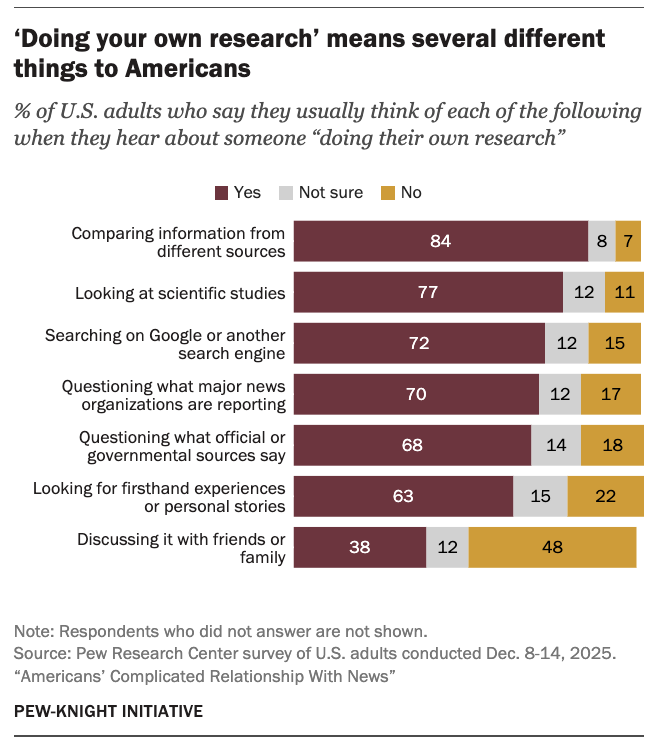
People say comparing information from different sources is their top research method. Seven in 10 say the same thing about questioning what major news organizations (70%) or official or governmental sources (68%) say.
These are healthy practices, right? Don’t automatically believe what the government tells you, or what you see in a headline? We agree!
(Side note: Our team got a good chuckle out of 77% of people saying that doing their own research involves “reading scientific studies”? OKAY, FRIENDS. Let’s be real. That’s aspirational, not realistic, right?)
When Pew’s Katerina Eva Matsa presented this research at the Knight Media Forum in Miami, I was especially interested in these points:
- The responsibility to sort through a continual stream of information rests on the person encountering it.
- Individuals are in the position to decide what is true, and how much trust, money or attention something is worth.
- And Matsa put a finer point on it. “The power to define what news is and how it’s distributed has shifted: from institutions to individuals, from editors to platforms, and from intentional seeking to incidental exposure.”
And this call to action for information providers: “The challenge ahead is how to support people navigating that reality rather than expecting them to swim alone.”
What journalists can do
So, how are we rewarding people’s skepticism and desire to be informed? How are we helping them on that mission rather than expecting automatic trust based on our credentials or brand awareness? (Quick reminder: Many people likely aren’t familiar with your news outlet or at least couldn’t say how it’s different from others. And they’re definitely not giving you the benefit of the doubt.)
Put yourself in the shoes of someone who’s not sure what to believe and is using your coverage to do their own research. How can they know that what you’re sharing is worthy of their trust?
How do you know what you know? Here are three steps to take:
- Be aware of what else people might be seeing. What are they trying to fact-check?
This can be counterintuitive. We’re taught to focus on what we know and not to repeat misinformation. But data voids are real. Sometimes people search for answers and find plenty of links validating conspiracy theories or misinformation and hardly any pointing to the truth. If journalists are unaware of those search terms and theories, it’s hard to either capture the search traffic in a way that’s useful or structure coverage in a way that speaks to them.
Maybe what you’re offering isn’t a direct fact-check, but it should exist in the same information ecosystem as the misinformation.
- Link to and cite sources, and explain what makes those sources credible
Our Sourcing Trust Kit walks through how to do this step by step and includes examples of the strategies in action. (Have you done this? Please send us more examples!) It recommends journalists consider addressing things like:
- How do you decide who to interview?
- How do you work to be mindful of source diversity?
- How many people do you interview?
- How do you make sure your sources don’t have conflicts of interest or hidden agendas?
- How do you work to be fair to sources, and what if you don’t hear back from them?
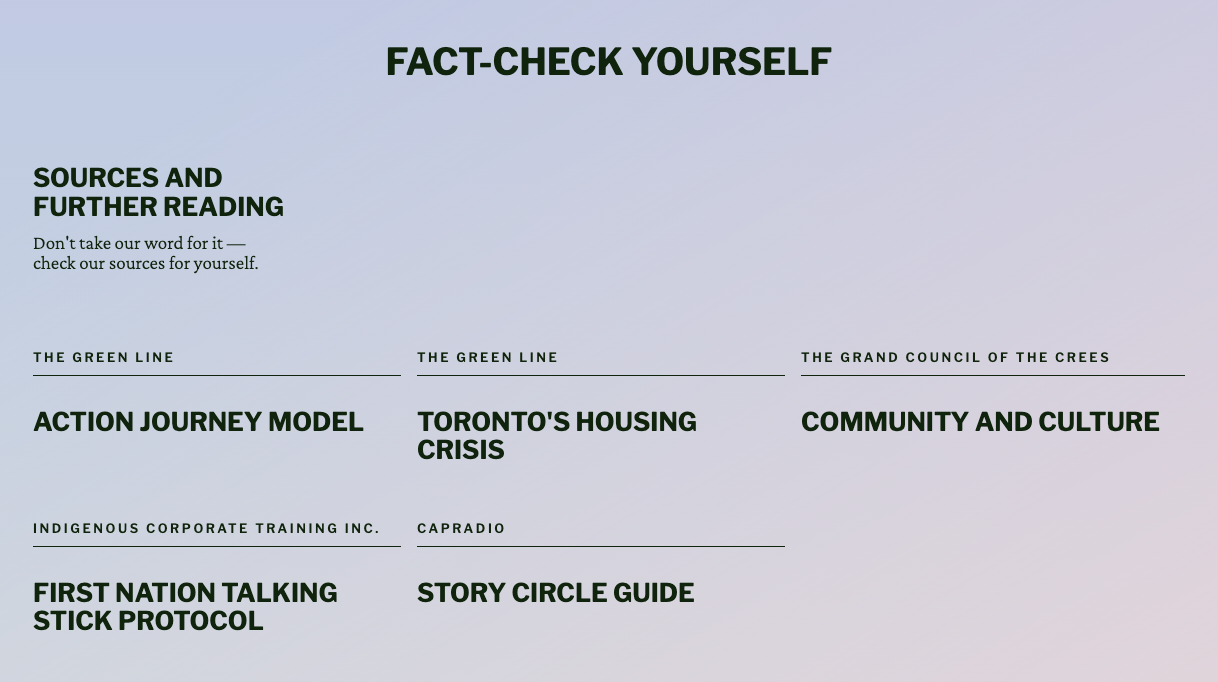
Here’s a great example of what this can look like in action from the Green Line. In their news stories, they routinely include a section at the bottom where they invite people to fact-check the sources themselves.
- Include context or background.
Trust Tips a few weeks ago had this headline: How do you know something is true? Bring your receipts.
The gist is this: Journalists often accept something as true and then behave as if everyone else has also accepted it as true. We might have a definitive piece of journalism where we lay out that it’s true, or we might look at coverage in its entirety and decide something is no longer up for debate. That could be about the shooting of Alex Pretti, the safety of vaccines or the fairness of an election.
But unless we invite the public into that decision, we’re asking them to take a big leap. Or to automatically trust us. Not very friendly to independent research, right?
Refer back to point 1, and imagine someone researching Alex Pretti or vaccine safety — or something else you’re actively covering. How would you like your journalism to show up in those search results?
Even more basic: Don’t assume people have seen *any* previous coverage. Link thoughtfully and thoroughly. Make it easy to follow your breadcrumbs and your coverage history.
The bottom line: Journalists would be more useful to information seekers if they were more aware of and responsive to the ecosystem their coverage is a part of.
At Trusting News, we learn how people decide what news to trust and turn that knowledge into actionable strategies for journalists. We train and empower journalists to take responsibility for demonstrating credibility and actively earning trust through transparency and engagement. Learn more about our work, vision and team. Subscribe to our Trust Tips newsletter. Follow us on BlueSky and LinkedIn.
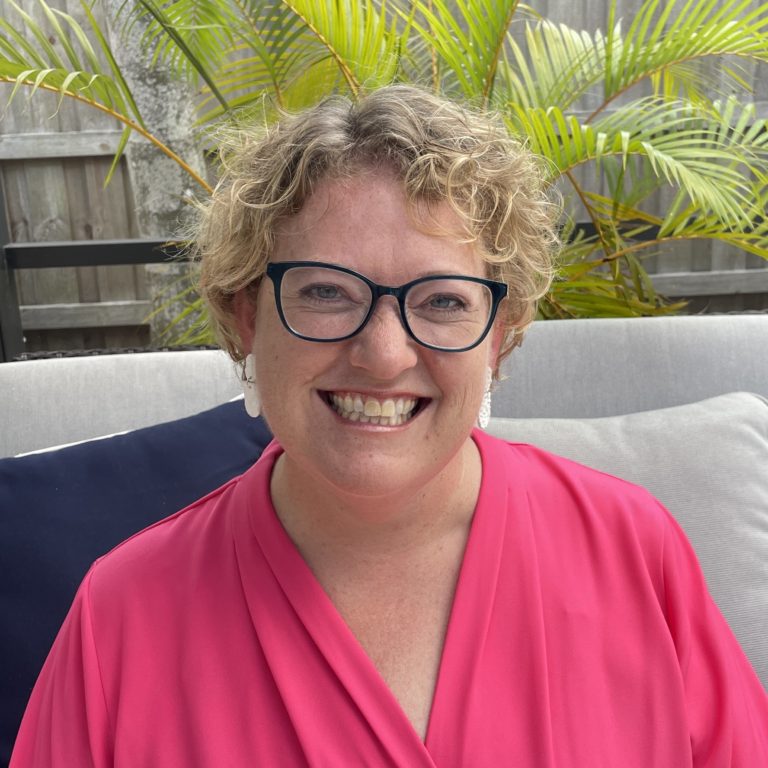
Executive Director Joy Mayer (she/her) founded Trusting News in 2016 after a 20-year career in newsrooms and teaching. She lives in Sarasota, Florida, and can be reached at joy@TrustingNews.org.