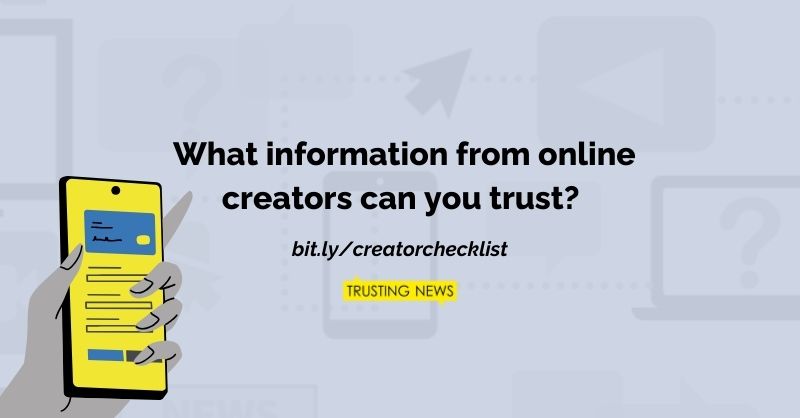
It’s becoming increasingly difficult for people to tell what is true online. As journalists, we have a responsibility to help our audience.
Republish this checklist for identifying credible creators
Want to get this Trust Tips newsletter in your inbox each Tuesday? Subscribe here.
You might remember late December when self-described independent journalist Nick Shirley posted a 43-minute YouTube video saying he was exposing alleged widespread fraud at Minneapolis daycares.
What he shared in this video was mostly unsubstantiated allegations, according to reporting from The Minnesota Star Tribune, The New York Times, NPR, and other journalism organizations of record that have done reporting to follow up on Shirley’s claims.
Yet, Shirley’s video has more than 141 million views on X and close to 4 million views on YouTube. And the video has had massive real-world impacts, which you can read more about in this Christian Science Monitor article and this New York Times profile.
This occurrence isn’t an anomaly. With the rise of influencers’ popularity and more and more people getting information on social media, it’s becoming increasingly difficult for people to decipher what information is actually credible and fair.
The answer is not, of course, to differentiate based on platform. There are many creator journalists sharing thoroughly reported, credible information on social media (to connect with some, check out this list from Project C or browse The Independent Journalism Atlas, which is launching soon!). However, these creators exist alongside informers who may also use journalism terms but who may actually be pushing propaganda, amplifying hidden agendas or sharing misinformation.
As it’s becoming harder for people to recognize fair, ethical, accurate information, our responsibility as credible journalists is increasing. Our job and public service duty as journalists is to help meet our community’s information needs. And in this moment, that need includes helping our audiences navigate news and make educated decisions about who to trust.
That’s why, as part of last week’s National News Literacy Week, we created a public-facing checklist journalists can share with their own audience to help educate them on what makes up a credible creator.
In today’s newsletter, we’re inviting journalists to share the checklist with their own audiences.
Checklist: Which informers are legit?
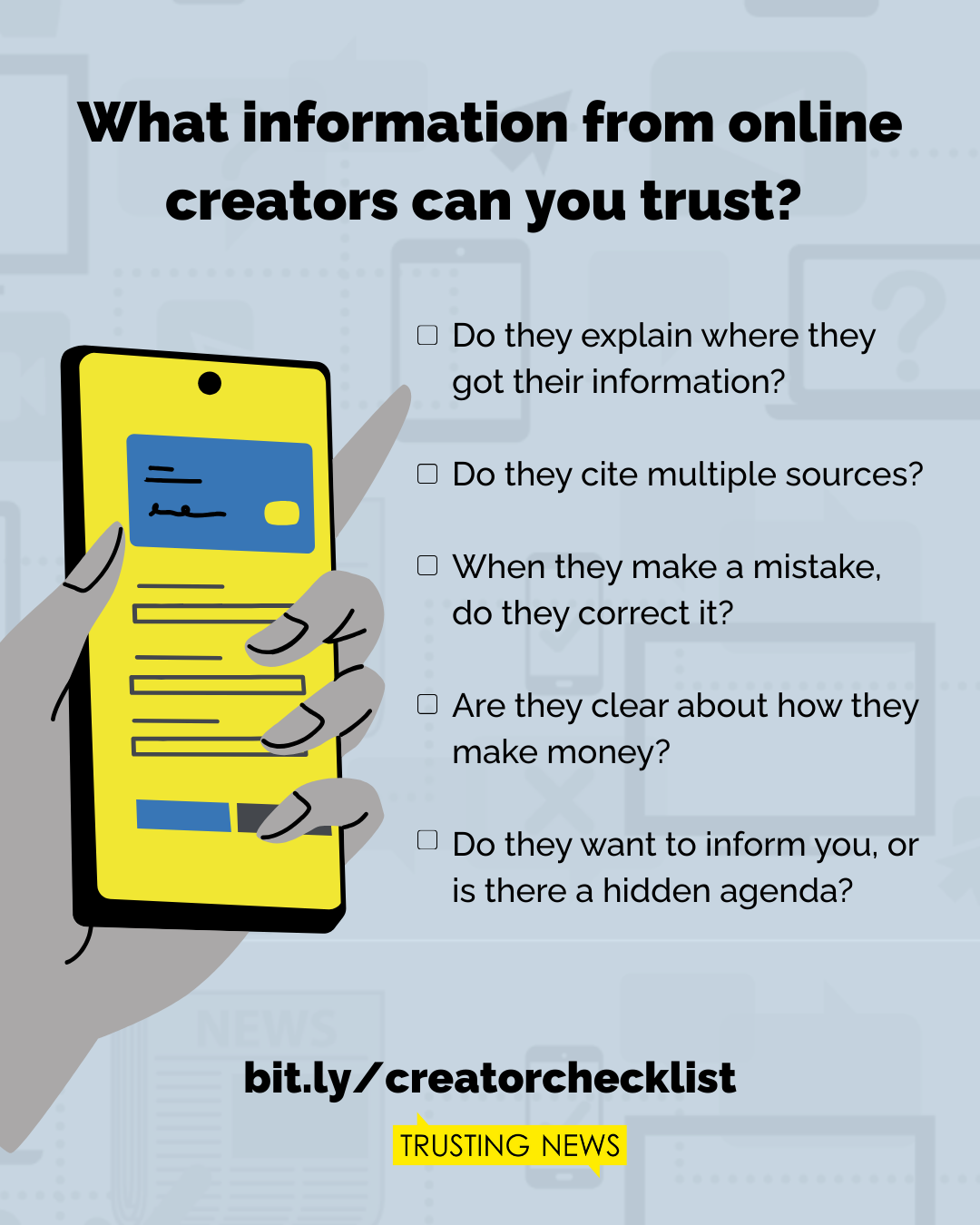
The checklist is a series of questions to help the public assess the credibility and accuracy of content they are seeing from independent creators online. Unlike the majority of resources we at Trusting News create, this one is specifically designed for the public (and pulled from this great resource from The News Literacy Project).
The guidelines and signals we included in the checklist are based on some of the most basic tenets of journalists’ ethics, but the focus here is on how these ethics and practices often appear in independent creator journalists’ work. While created with school-aged teens and parents in mind, it is really relevant to any news consumer.
It covers the basics, like:
- Are they citing sources?
- Are they corroborating information from multiple credible sources?
- Are they publicly correcting mistakes?
- Are they clear about their funding and how they make money?
- Is it clear that their goal is to inform?
You can see the whole checklist here, which also includes examples of what these look like in action with creator journalists across different platforms.
Here’s where you come in
In these times, we have a real opportunity to help our audience better navigate an increasingly confusing and overwhelming information landscape. We created this checklist with journalists in mind, hoping you’ll use it as a tool to share with your audience.
Three ways we imagine you sharing this:
- Republish our checklist as a standalone resource with your audience. Use it as an opportunity to explain that part of the value you offer your community is helping them navigate an increasingly confusing information ecosystem.
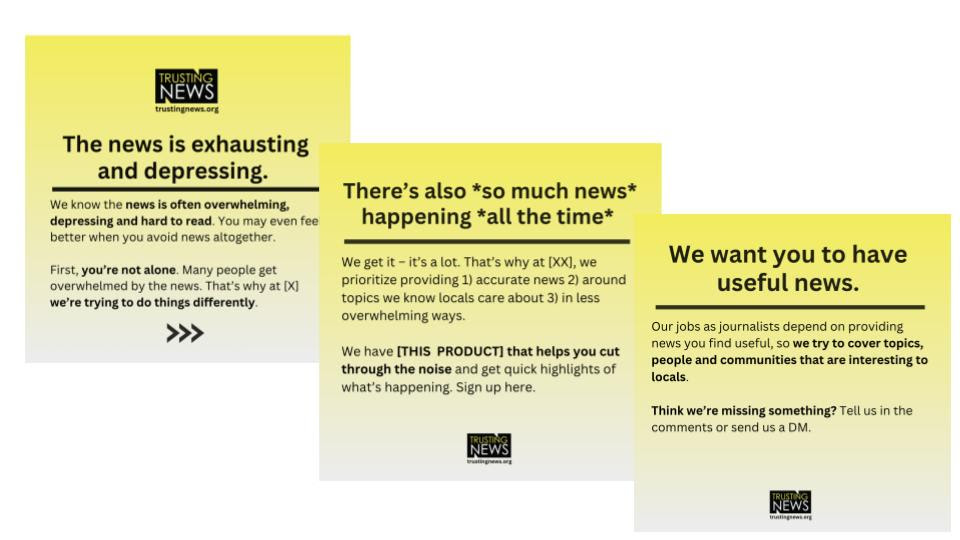
- Share the information on social media. We created a series of Canva cards you can edit and use to share this information with your audience. You can access the template here, where you can edit the cards to match your specific branding and link back to your own website if you share the checklist there.
- Bake these explainers into your reporting itself. When debunking false or misleading claims, or when walking audiences through how you reported a particularly complex or challenging story, use it as an opportunity to help people understand what credible journalism looks like. We have more tips on what that can look like here.
This is an open-source resource for you. We welcome you to use whatever pieces feel helpful in whichever formats will best reach your audience.
Reminder! Most people don’t understand the difference between you and any other media. That’s why it’s important you tell a different story about the value, integrity and ethics behind your reporting! We have more tips on this in our news literacy Trust Kit.
How we’ve been supporting creator journalists
Our goal at Trusting News is to ensure the public has access to ethical, accurate and helpful information. That’s why we’ve been investing in helping independent creator journalists clearly communicate their credibility and what sets them apart from other information online.
This past year:
- We created a toolkit in partnership with Lenfest and Project C to provide guidance to newsrooms and funders about how to identify credible independent journalists to support and partner with.
- As part of a great guide from the American Press Institute, we created an ethics checklist to help newsrooms determine who would be a good creator and community messenger to partner alongside.
- We’ve been coaching independent creator journalists — some with a journalism background and some without — on how to demonstrate their credibility. As part of this effort, we created a creator ethics checklist to help guide creators through ways they can get clear about the ethics behind their work. We’re excited to share some examples from this work soon!
We’re excited for even more of this work going forward — including a session and coaching at ONA around ethical standards for creators. Stay tuned!
At Trusting News, we learn how people decide what news to trust and turn that knowledge into actionable strategies for journalists. We train and empower journalists to take responsibility for demonstrating credibility and actively earning trust through transparency and engagement. Learn more about our work, vision and team. Subscribe to our Trust Tips newsletter. Follow us on Twitter, BlueSky and LinkedIn.
Project manager Mollie Muchna (she/her) has spent the last 10 years working in audience and engagement journalism in local newsrooms across the Southwest. She lives in Tucson, Arizona, where she is also an adjunct professor at the University of Arizona’s School of Journalism. She can be reached at mollie@trustingnews.org and on Twitter @molliemuchna.