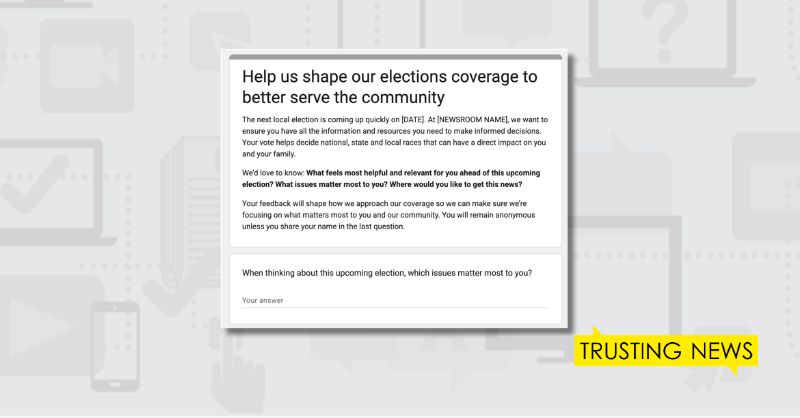
When journalists engage with their audiences and ask for input, it helps build trust. But the problem is that while more journalists are asking their communities for input, they’re not always acting on the feedback or sharing how that feedback is changing their coverage.
I’ve asked for feedback. What’s next?
Want to get this Trust Tips newsletter in your inbox each Tuesday? Subscribe here.
Raise your hand if you’ve been at an organization that gathered audience insights or feedback. Keep it up if you’ve gathered that audience data, and then … you never really did much with it.
This seems to happen a lot — at least, if my own experience is any indication. Even though on my own teams we’d set out with the very best intentions when gathering feedback from our audiences, we wouldn’t always have the capacity or systems in place to DO much with the data we’d gathered.
The thing is, we know that when journalists engage with their audiences and ask for input, it helps build trust. We also know this type of engagement can help journalists produce more impactful, useful, relatable and engaging coverage for their communities.
The problem is that while more journalists are asking their communities for input, they’re not always acting on the feedback or sharing how that feedback is changing their coverage. If you miss those two steps, you won’t be able to build trust. You might actually be hurting trust with your audience if you ask them for input and all they hear is crickets.
So, if you are currently sitting on a big pile of end-of-year audience data, or you just want ideas for how to more regularly act on feedback from your community in this new year, here are some simple tips.
How to act on what you hear
You’ve probably heard an iteration of the saying “goals fail with no system,” but it’s true. Good intentions won’t turn audience feedback into tangible changes in your coverage unless you have a system in place to both gather and evaluate what you’re hearing from your audience. Before gathering feedback, make a plan.
- Put someone in charge. Assign someone to keep an eye on the submissions and look for patterns. Set a cadence for how often they should be checking in on feedback forms, and then set up a way for them to regularly report what they are hearing back to the newsroom.
- Establish a feedback hub. Create a centralized place where people across the newsroom can add feedback they receive from the audience, whether that’s a Google Form, Slack channel, Teams chat — whatever works for you.
- Look for themes. Having feedback in a Google Form makes for easy tagging and sorting, but you can do this no matter where your insights are. Once you’ve started gathering feedback in a centralized place, it will make it a whole lot easier to spot trends and identify opportunities.
- Share with your colleagues. Share back whatever information you gather back with the rest of your colleagues. You could do this by setting up a dedicated Slack channel for this, or other newsroom-wide communication systems. You could also ask one person to elaborate on their encounter in each staff meeting. Or, have someone send out a monthly or quarterly summary of feedback and learnings from your audience.
- Share back with your audience. The last, but very important, step is to close the feedback loop. This can go a long way in fostering loyalty and building trust to let people know that you not only 1) heard what they had to say, but 2) valued their input enough to make changes based on it. If you don’t end up acting on their feedback, be sure to still follow up and say thanks and let them know they were heard. If you DO make changes based on what you heard from them, tell them! Or, if you publish a new story or implement an idea shaped by what you heard from them, note that in the content itself.
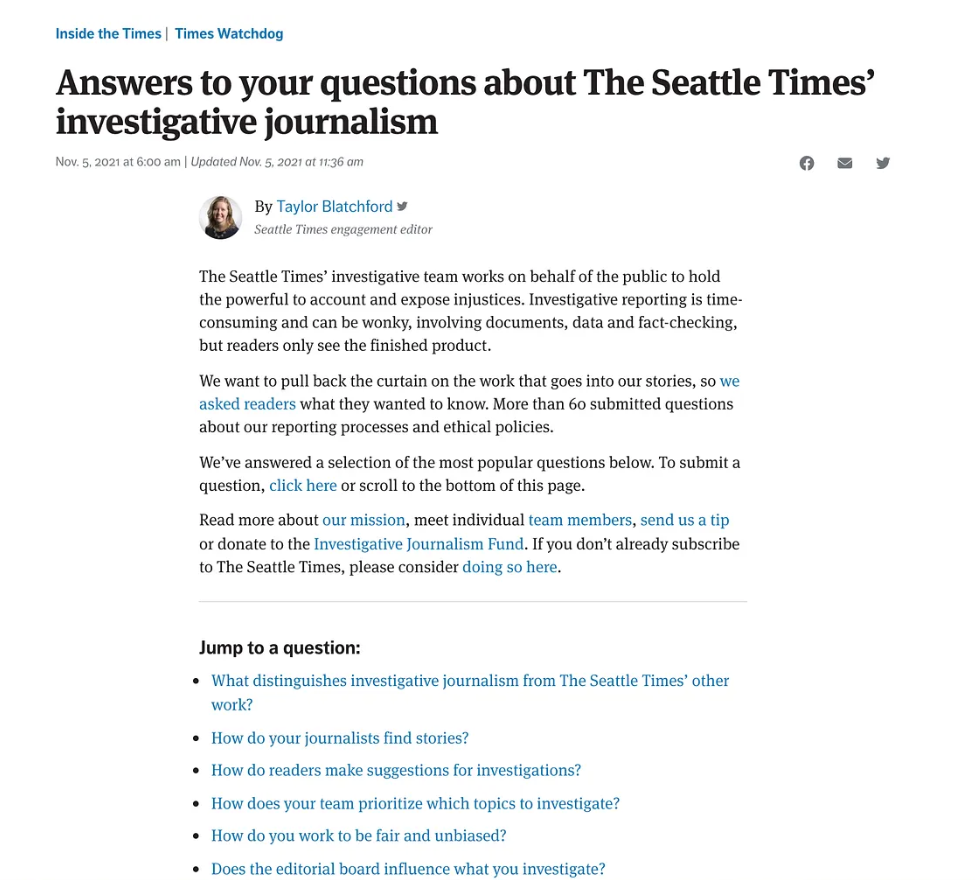
Example: Here’s how The Seattle Times’ investigative team followed up after asking for audience feedback. A few years ago, they decided to solicit feedback from their audience by asking what questions they had about how they conducted investigations. After asking their audience for input, they followed up by answering the questions and then shared the answers back with their audience with the framing: You had questions about this, so we answered them here.
Getting meaningful feedback
This Trust Tip is not focused on how to GET feedback from your audience, but I’ll go ahead and mention that it’s important to think about what type of feedback you’re gathering and if it’s actually meaningful feedback.
If you’re feeling like the feedback you’re getting is falling flat, we have tips in our Feedback Trust Kit on how to gather input more effectively from your audience. Plus, we have tips here for how to ask for feedback in a way that feels less generic and self-serving and more focused on your audience’s needs.
Pay attention to *subtle* feedback
You are likely getting feedback from your audience that isn’t coming from an official survey. It might not even seem like feedback at all. A lot of times, you might receive feedback in the form of complaints, criticisms or assumptions.
While it’s always tempting to write off people complaining, sometimes their complaints can be helpful clues into what they think about your coverage and what sort of assumptions they are making about your journalism.
Here’s an example:
- Assumption someone might make: You’re only writing about the health violations at this restaurant because you’re out to get them! Cut them a break!
- The information gap: Why do journalists find it important to share stories about public health even if they negatively affect a local business?
The feedback here is that people aren’t understanding your journalistic decisions and coverage process, and they aren’t understanding how you work on behalf of people in your community.
If you see the same complaint come up multiple times, it can be a great indicator that this is something about your reporting you should explain.
At Trusting News, we learn how people decide what news to trust and turn that knowledge into actionable strategies for journalists. We train and empower journalists to take responsibility for demonstrating credibility and actively earning trust through transparency and engagement. Learn more about our work, vision and team. Subscribe to our Trust Tips newsletter. Follow us on Twitter, BlueSky and LinkedIn.

Project manager Mollie Muchna (she/her) has spent the last 10 years working in audience and engagement journalism in local newsrooms across the Southwest. She lives in Tucson, Arizona, where she is also an adjunct professor at the University of Arizona’s School of Journalism. She can be reached at mollie@trustingnews.org and on Twitter @molliemuchna.