If someone has an incorrect assumption about your work, what’s your counter narrative? Where are you on the record about how you operate?
Copy this FAQ template to explain your reporting
Want to get this Trust Tips newsletter in your inbox each Tuesday? Subscribe here
If you’ve hung out in the Trusting News corner of the internet, you’ll know we’re big fans of journalists and newsrooms creating FAQs about their reporting.
These FAQs can be about how you operate and do journalism — your ethics, process and approach to coverage. They can also get more specific and explain how you cover certain topics, like elections or investigations.
But as one local journalist recently asked me … this sounds like a nice-to-have, but does it really do anything when it comes to building trust?
A few things to consider:
- There is a lot the public doesn’t know about how journalism works, and there’s a whole lot of research that shows a large percentage of the population doesn’t think journalists act with ethics and care. In other words … most people don’t assume you’re acting in good faith.
- As the information ecosystem gets more crowded, it’s becoming harder to know who you can and can’t trust. There are plenty of sources, even ones that seem legitimate, sharing bad or misguided information. How will people be able to easily differentiate that you’re a credible source and worth their attention?
- Research shows when journalists ARE transparent about their process and approach, it boosts people’s trust in the coverage and the journalist. That means the more transparent we are, the more likely we are to build trust.
Having an FAQ can be a great way to address all three of these points — counter misassumptions about your work, highlight your credibility and build confidence in your work.
Think of it this way: If someone has an incorrect assumption about your work, what’s your counter narrative? Where are you on the record about how you operate?
Here’s what an FAQ can look like
James Cave is a creator journalist behind The Jiffy, covering life in upstate New York. Since this area has no shortage of influencers and content creators, James wanted to explain his unique approach to coverage and highlight his brand’s deep investment in the community.
As part of Trusting News’ creator coaching, James developed an FAQ to articulate the mission behind The Jiffy and highlight some basics of how he operates — what you can expect from his coverage; what he will and won’t cover; how the project is funded; why he relies on reader support.
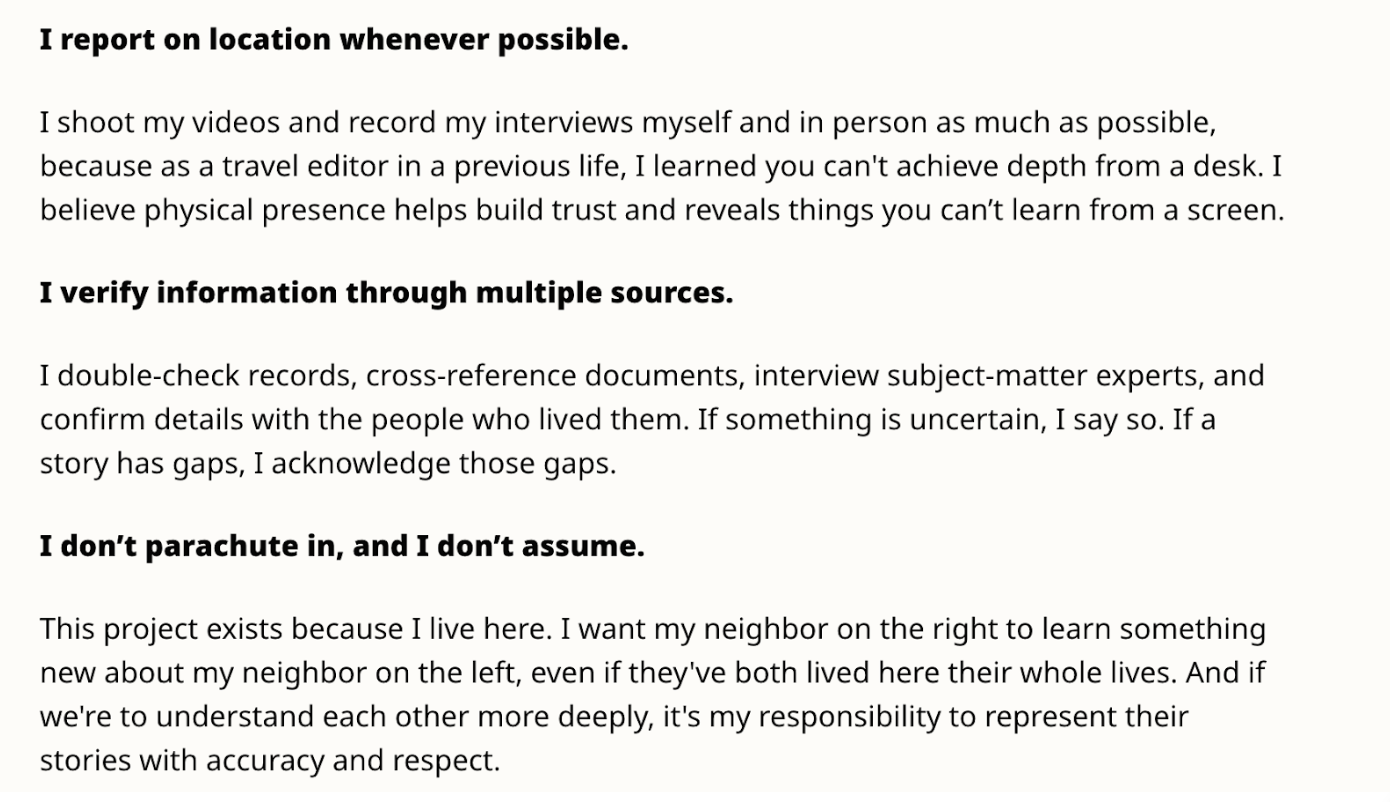
My favorite part of the FAQ is the “How I report” section, where he shares his approach toward coverage. It shows not only his process, but also highlights his values as a reporter.
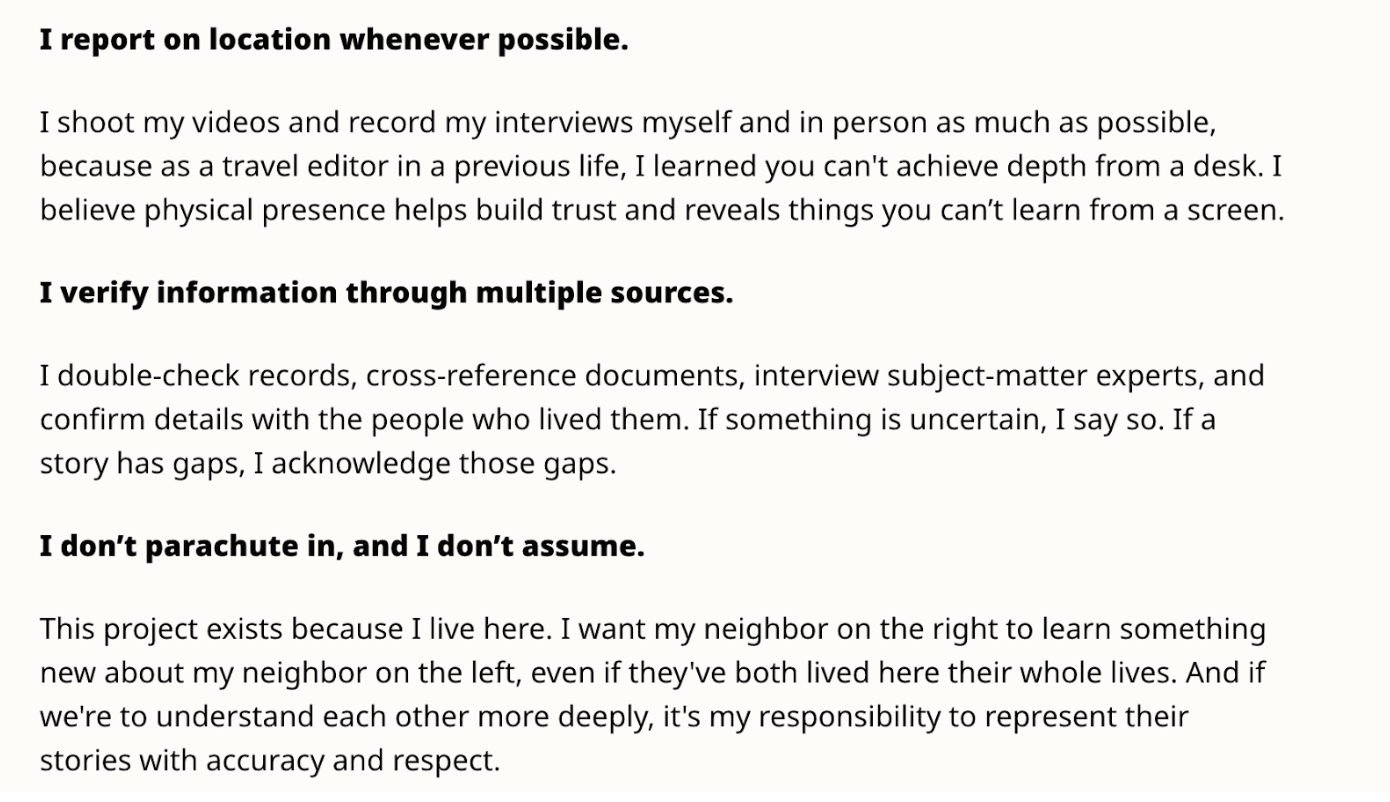
James also took pieces of this FAQ to social, where he made a social video introducing himself, his brand, and what people could expect from this reporting. (Related: We wrote last week about how creator Ashlyn Lipori-Russie used a social video to explain her background and credibility.)
What should you put in an FAQ?
A great place to start is the basics, answering questions like: Who are you? What do you cover? Do you have ethics? How are you funded? How do you work to be fair?
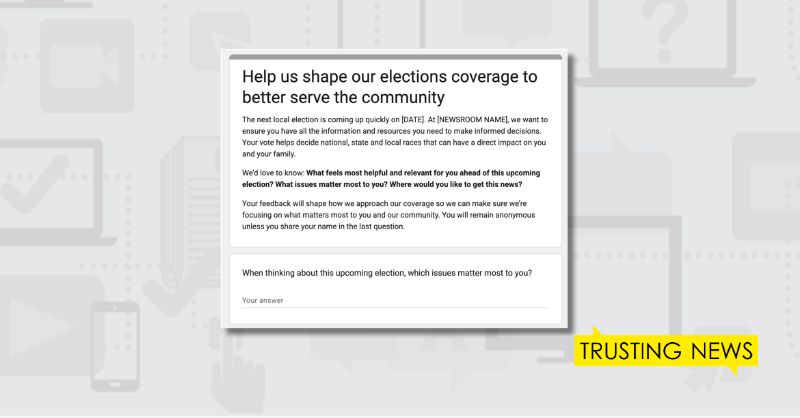
What’s most effective, though, is to base your transparency efforts on what people are curious about. What kind of questions do you get from your audience? What does your community wonder about how you decide what to cover? If you’re not sure what that might be, you can crowdsource questions, as the Seattle Times did, and use those to help guide what you include in your FAQ.
Another place to gather intel about what people are curious: Look at the misassumptions people make about you and how you operate. What complaints do you hear from your audience? Try reframing those misassumptions and accusations as questions to get to the core of what someone clearly does not know about your work.
You might hear: You’re not covering my candidate as much as the others because you (or your owners) don’t want him to win. The gap there might be: How do journalists decide which races and candidates to focus coverage on?
PolitiFact’s FAQ uses this strategy. They’ve gotten complaints about how they fact-check one political party more than the other. So they addressed that directly in their FAQ.
Copy this FAQ template
Here are some question prompts to help get you started.
- What do you cover? What are you best known for? Do you cover the whole state? Certain counties? Get specific about what people can expect from you and your coverage.
- Who is behind the work? Share a bit about yourself or your team of journalists. What are your credentials? What motivates you to do this work? How are you part of the community?
- What do you offer that’s unique? Get clear on why people should turn to you. What’s your unique value proposition? What’s different about what you offer — from other informants online or from “the media” overall?
- What are your ethics? How do you work to be fair? It’s hard for people to know whether what they’re reading or hearing is true. Why should they trust you? What ethics guide your decisions? Can you link to a policy and show examples of how you use it in your work?
- How are you funded? Do you have a paywall? Do you ask for support? Think about addressing the public assumption that advertisers or owners often sway what journalists report.
- __________: Then expand on this list. Think about how you can address any complaints you hear about your specific work, or address anything you know your audience is curious about.
Make it adaptable: Add and edit as your work evolves
Think of your FAQ as a living document, one that you can add to at any time when specific coverage decisions or questions arise.
Matt Kiser, the journalist behind the daily political newsletter WTF Just Happened Today, did this last year by adding an explainer to his FAQ about why he uses the term “genocide” when describing what’s happening in Gaza.
Adding something timely like this to an FAQ is smart because:
- It shows careful consideration. Getting on the record about it shows thoughtfulness and careful consideration behind the decision (whether people agree with the decision or not).
- It’s efficient. Anytime you get a complaint or question, you can easily copy and paste the response (or better yet, add an anchor link to your FAQ like Matt did that makes it easy to find).
- You can link to it in coverage. Now, anytime Matt uses the term “genocide” when talking about what’s happening in Gaza, there’s an opportunity to link to the FAQ and invite people to better understand how he operates.
Get the most bang for your buck
It’s a missed opportunity if you create an FAQ but never link back to it or show how your decisions and policies inform everyday coverage. (Remember, very few people are taking the time to search your website or dig to find information about who you are or how you operate. Instead, they are making snap judgements about you!)
Anywhere people encounter your journalism is an opportunity for them also to learn about how you operate. That’s true on your website, in your newsletters, on social platforms … the best opportunity to pique people’s curiosity about how you operate is within related coverage.
More examples and resources
- More details about how to create an FAQ
- Specific advice around applying the FAQ to election coverage
- Excerpts from two election FAQs we especially love (from WITF and Capital B)
Share your FAQs with us!
We’d love to highlight you or your newsroom’s FAQ — or other ways you’re working to build trust with your audience. Feel free to share examples with us here, on Bluesky, LinkedIn — or just respond to this email!
At Trusting News, we learn how people decide what news to trust and turn that knowledge into actionable strategies for journalists. We train and empower journalists to take responsibility for demonstrating credibility and actively earning trust through transparency and engagement. Learn more about our work, vision and team. Subscribe to our Trust Tips newsletter. Follow us on Twitter, BlueSky and LinkedIn.
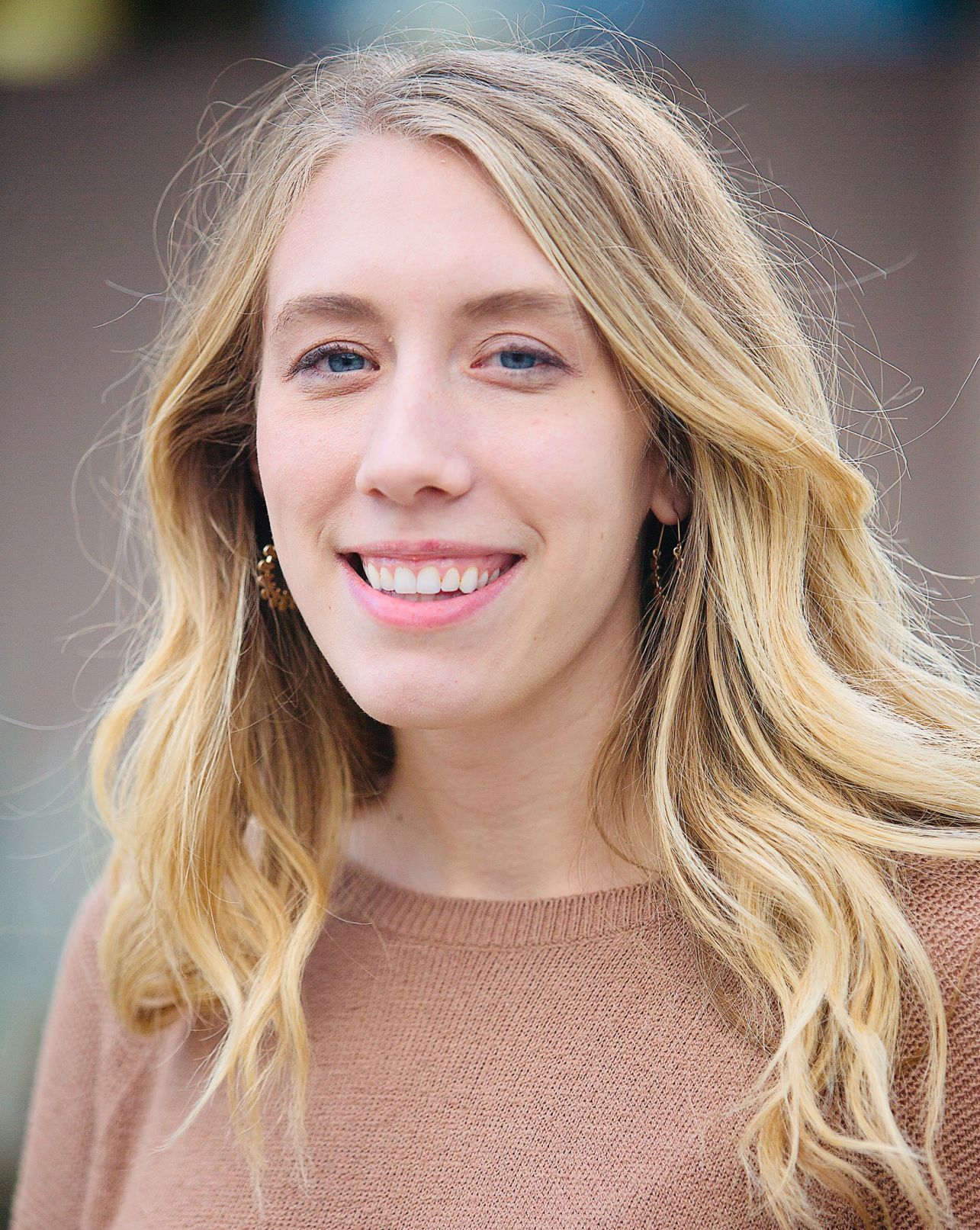
Project manager Mollie Muchna (she/her) has spent the last 10 years working in audience and engagement journalism in local newsrooms across the Southwest. She lives in Tucson, Arizona, where she is also an adjunct professor at the University of Arizona’s School of Journalism. She can be reached at mollie@trustingnews.org and on Twitter @molliemuchna.