People want journalists to teach them about AI: how it works, what it can help them with and how to spot it
Answer your community’s questions about AI
Want to get this Trust Tips newsletter in your inbox each Tuesday? Subscribe here.AI is already shaping how people search for information, communicate, learn, make decisions and interact with companies. But if people don’t understand how these systems work, or what their limits are, they can’t make decisions about how AI is being used around them.
People want to know more about AI: how it works, what it can help them with and how to spot it. And according to news consumers our partners have surveyed and talked to, they would welcome that education from journalists.
At Trusting News, we see this as an opportunity for journalists to serve their community. Who better to help provide accurate and fair information about AI than journalists? And also, what does it mean for journalists if people get even MORE confused about what’s real and factual and what messages are less reputable or even designed to trick them?
So, this News Literacy Week we are encouraging newsrooms to think about helping their community navigate and better understand AI. That will help them better understand and value our journalism as well.
So, what kind of information do people want?
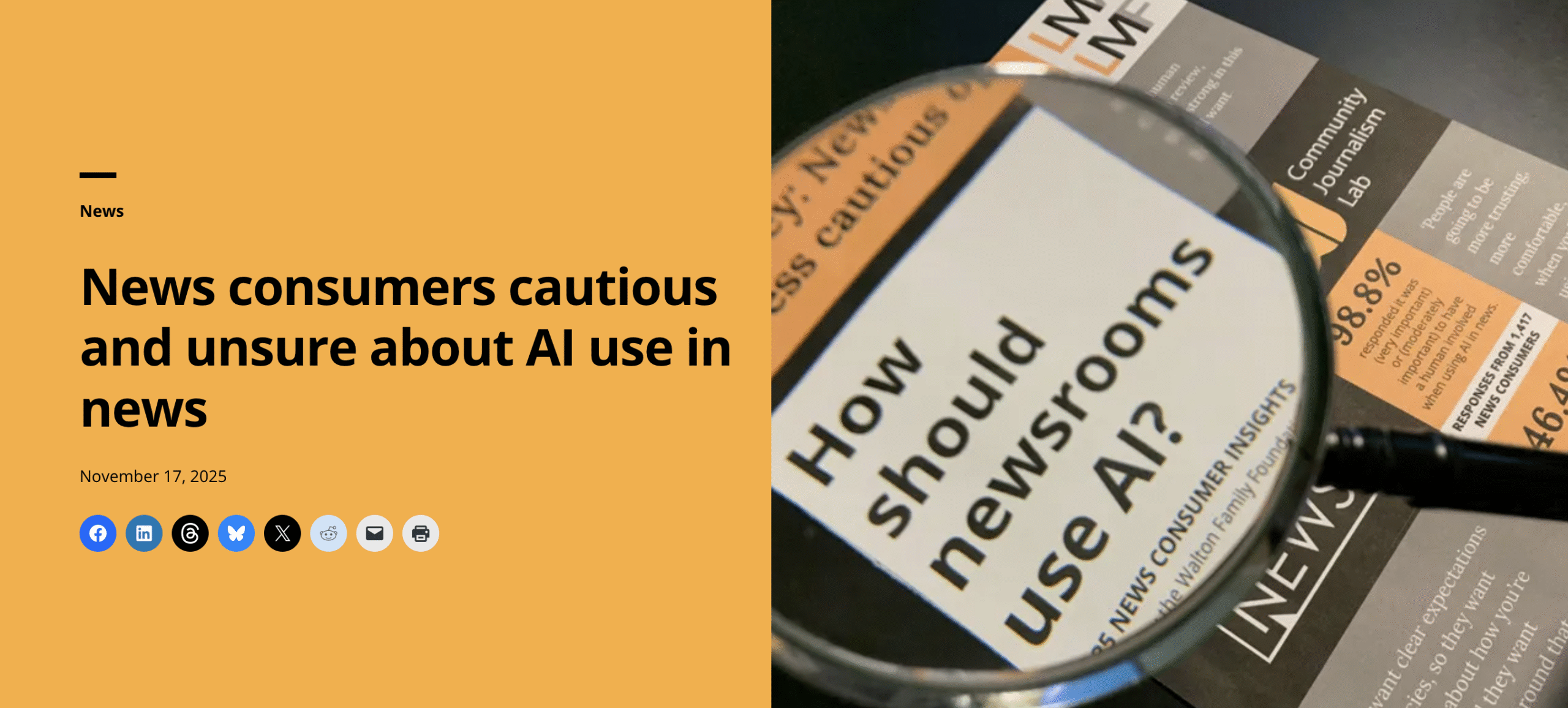
The newsrooms in our AI literacy cohort surveyed their audience, asking about people’s top questions about the technology, their biggest concerns, preferred learning formats and where they want to get this information.
Here are a few themes that emerged:
- The biggest areas of curiosity: Many respondents said they want practical, real-world understanding of how AI affects their lives — around topics like jobs, privacy, security and how it might lead to mis/disinformation.
- Top concerns people want addressed: Respondents pointed to specific worries like misinformation and deep fakes, bias, privacy risks, environmental impact and responsible oversight.
- How people prefer to learn: Audiences aren’t looking for jargon. They want practical, usable formats like explainers, step-by-step guides, expert Q&As and real-world examples.
- Where they want to get this information: Preferences vary, but trusted, direct channels like newsletters, news sites and certain social platforms remain important pathways for AI education. But participants also said they would be interested in events like webinars or workshops.
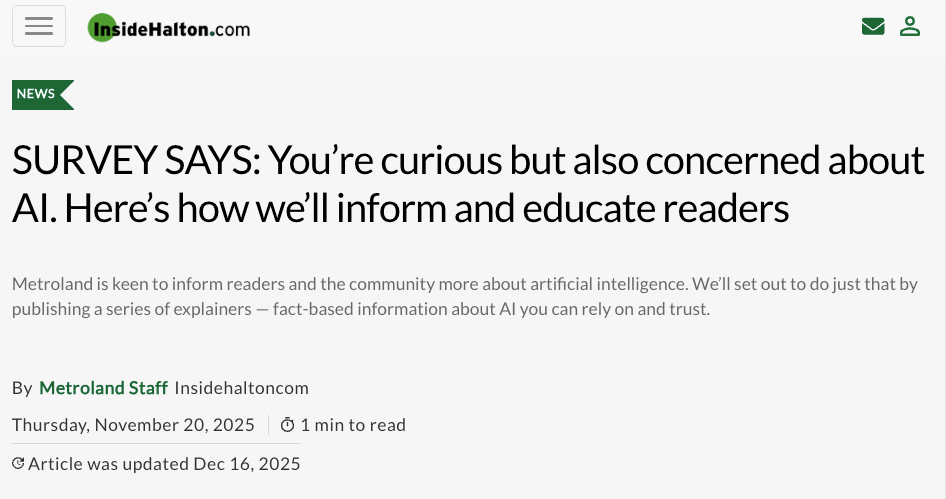
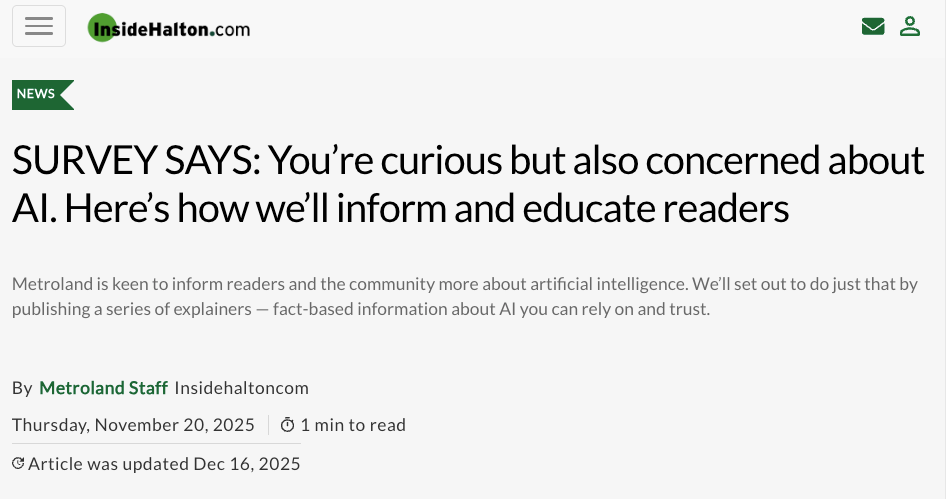
See an example of what our partner newsrooms are learning from these surveys in this story from Metroland.
We believe AI literacy is not separate from news literacy
When we explain how powerful technologies work, where they fall short and how they are being used around people, we help communities feel informed rather than overwhelmed. We build trust with them. By creating this content we show them we want to help them and they will turn to us when we need help again.
So, this News Literacy Week, we encourage news organizations to think beyond “how we use AI” and toward “how we help the public understand AI.”
The newsrooms in our cohort are now experimenting with what that content can look like, and we’ll share research results and examples in a few months. Our hope is that newsrooms will turn AI education into a new kind of news literacy and public service.
If your newsroom is working on AI transparency or literacy efforts, we’d love to hear about it. Contact me: lynn@TrustingNews.org.
At Trusting News, we learn how people decide what news to trust and turn that knowledge into actionable strategies for journalists. We train and empower journalists to take responsibility for demonstrating credibility and actively earning trust through transparency and engagement. Learn more about our work, vision and team. Subscribe to our Trust Tips newsletter. Follow us on Twitter, BlueSky and LinkedIn.

Assistant director Lynn Walsh (she/her) is an Emmy award-winning journalist who has worked in investigative journalism at the national level and locally in California, Ohio, Texas and Florida. She is the former Ethics Chair for the Society of Professional Journalists and a past national president for the organization. Based in San Diego, Lynn is also an adjunct professor and freelance journalist. She can be reached at lynn@TrustingNews.org and on Twitter @lwalsh.