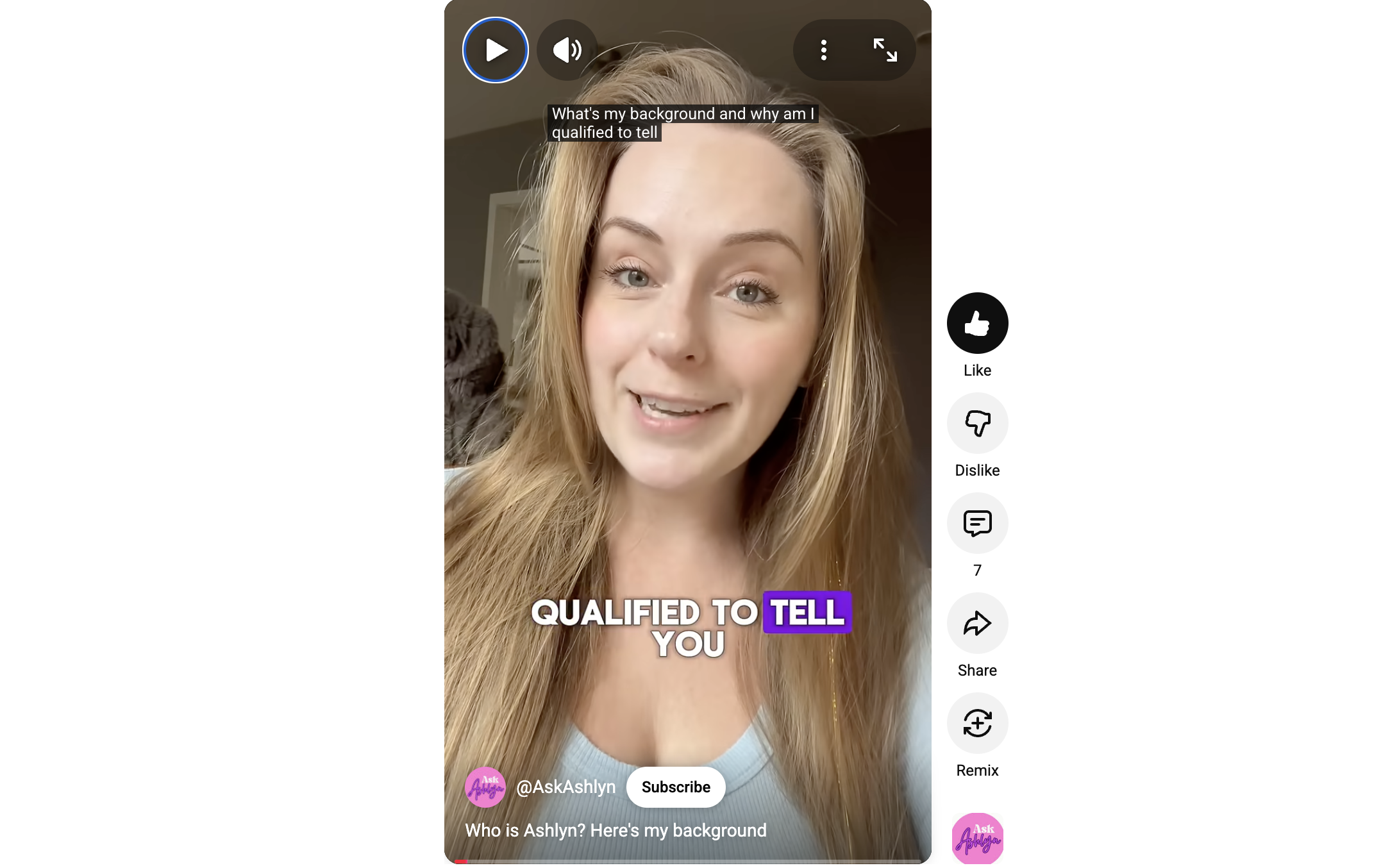
Sure, you should update your About page. But a more engaging way to get on the record about your credibility and qualifications could be a vertical video.
Use a quick video to show why you’re trustworthy
Want to get this Trust Tips newsletter in your inbox each Tuesday? Subscribe here
There is more content than ever. And now, with AI making it easier than ever to generate explainers and summaries, audiences are flooded with information.
So the real question is no longer: Can you produce content? It’s: Why should someone trust you over everything else in their feed?
At Trusting News, we have long stressed the importance of talking about who you are. Who you are as a journalist (including writing a reporter mission statement), who your news organization is and how you are different than the rest of “the media.” We continue to encourage and coach newsrooms and journalists to do this because we know that type of transparency can build trust.
Recently, we have been working with a small group of creator journalists to help them tell their stories: who they are, why they are a credible source and what their goals are. One of those creators is Ashlyn Lipori-Russie, the CEO and Founder of Ask Ashlyn.
In a recent video, she explained why she is a trustworthy source of information. What’s so great about the video is its authenticity, directness and honesty. She does not claim neutrality, she does not attack other news organizations and she does not throw around buzzwords of the moment. Watch the full video.
Instead, she includes information about her life and experience, including:
- Graduating early from UC Berkeley with a degree in political science
- Working in journalism for 10 years (from legacy corporate media to local news to running her own media company)
- Knowing how to vet sources and identify bias and misinformation
- Understanding how government works and how to translate it into real-life impact
But she doesn’t stop at credentials. She also shares real, human elements of herself, her work and her beliefs, including:
- She has struggled with anxiety and depression
- She values mindfulness and teaches yoga
- She believes extremism exists on both sides
- She wants to inform people without draining them
- She’s open to different perspectives
In the video, she doesn’t just establish expertise; she establishes motives. And that is honest, real and relatable. You don’t leave the audience guessing what you’re up to — you share it with them directly. That can build trust.
As Trusting News continues to work with journalists, newsrooms and creators on telling their stories, we are always asking how audiences respond. Ashlyn kept track of metrics for this video, which was posted on a variety of social platforms, and said the video performed similarly to other general news content she posted.
She also said: “This kind of transparency was well-received with my audience. It helped to establish both credibility and relatability, letting people know I’m a real person in addition to a qualified source of information. I think the humanity and personal context is what garnered the most enthusiasm. Journalism has always been about neutrality, but I’ve found being courageous and up front about your biases makes you more trustworthy in today’s media landscape.”
Why this matters now more than ever
We have seen newsrooms and journalists have success building relationships with their communities when they are transparent about who they are, how they are funded, how they work and what they care about. But, in the age of AI, I think this transparency becomes even more important.
Why? Well, AI can produce information. It can summarize a speech. It can rewrite a press release. It can mimic tone. But it cannot:
- Explain why it cares
- Share lived experience
- Be accountable to a community
- Clarify its values
It cannot say: “Here’s what guides my judgment.”
Journalism is not just information. It involves so much more than that, including personal judgment, context that comes from lived experiences and a mission that communities stand behind. In a crowded, AI-saturated environment, I believe the human element is a key competitive advantage.
What individual journalists can do
Consider creating your own “Why I’m a trustworthy source” post or video. You might include:
- Your background and training
- How you verify information
- What standards guide you
- What you believe about your role in the community and its information ecosystem
- What you are trying to help your audience do
- What you will not do
What newsrooms can do
This strategy isn’t just for solo creators. Newsrooms can:
- Publish short reporter-introduction videos
- Create “How we report this beat” explainers
- Clarify editorial standards in plain language
- Explain funding sources and incentives
- Share why certain stories are prioritized
If you don’t explain your motives, audiences will assume them. And remember, most of those assumptions will probably be negative (you don’t care about getting it right, you don’t fact-check, you are biased, etc.)
Don’t just create content. Highlight your journalism. Explain yourself, your values and what makes you and your work human.
At Trusting News, we learn how people decide what news to trust and turn that knowledge into actionable strategies for journalists. We train and empower journalists to take responsibility for demonstrating credibility and actively earning trust through transparency and engagement. Learn more about our work, vision and team. Subscribe to our Trust Tips newsletter. Follow us on Twitter, BlueSky and LinkedIn.

Assistant director Lynn Walsh (she/her) is an Emmy award-winning journalist who has worked in investigative journalism at the national level and locally in California, Ohio, Texas and Florida. She is the former Ethics Chair for the Society of Professional Journalists and a past national president for the organization. Based in San Diego, Lynn is also an adjunct professor and freelance journalist. She can be reached at lynn@TrustingNews.org and on Twitter @lwalsh.