AI Literacy
People have mixed feelings about artificial intelligence. Many are skeptical, worried or distrustful of AI — and journalists are increasingly working to use these tools without undermining audience trust.
Many audiences also still lack a clear understanding of how AI works — and say they would welcome journalists to help educate them about it.
Our recent research shows journalists sharing basic AI literacy content with their audience has real impact: Not only did people respond saying they found the content useful and wanted more of it, a slight majority reported increased trust in the news organization after viewing just one AI literacy example.
In this new AI Literacy Trust Kit, you’ll find resources to help you replicate this work by:
- Listening to what your audience wants to know about AI
- Sharing AI literacy content
- Hosting an AI literacy event
AI literacy content helps communities feel informed and it strengthens trust in your newsroom as a credible source on AI and everyday news.
This work was supported by a grant from the Patrick J. McGovern Foundation. Since 2024, Trusting News has been exploring how journalists can use AI in ways that maintain or even build trust with their audiences. What we found is the public overwhelmingly wants journalists to disclosure the use of AI. Check out more about how journalists can do this in our AI Trust Kit on disclosures.
Quick AI literacy resources
In this Trust Kit, you’ll find resources to help you:
- Listen. A survey to ask your audience about their AI literacy needs.
- Share AI literacy content. We have templates of AI literacy content for you to copy and share including social video scripts, customizable social cards and questions for an AI literacy quiz. We also have examples from newsrooms that shared this content.
- Host an AI literacy event. Learn best practices for hosting, see examples of how other newsrooms did this, view sample event agendas to help you duplicate this work in your community and survey questions to help you measure the impact of this work.

Goals
This Trust Kit helps you:
- Use ready-made AI literacy templates to share content with your audience.
- See real newsroom examples of AI literacy content.
- Understand your audience’s AI literacy needs through a ready-to-share survey.
- Host AI literacy events with guidance and sample agendas.
- Measure the impact of your AI literacy efforts.


Ask what your community wants to know about AI
At Trusting News, we’ve consistently found that journalism is stronger when it starts with audience needs. The best way for journalists to understand those needs is simply to ask. This is especially important when it comes to AI, an evolving technology that people encounter in different ways and with varying levels of knowledge, comfort and concern.
Also, through our AI work, we’ve learned that transparency and disclosure alone are not enough to build trust in AI being used in journalism. At the same time, we know that journalists will continue to use these tools — and that there are plenty of ethical and responsible ways for them to do so.
That creates an important challenge: How can newsrooms use AI in ways that are ethical, responsible and still trusted by the public? At Trusting News we believe the only way to meaningfully answer that question is by going directly to news consumers and asking them what they need to feel comfortable with AI use in news.
When audiences told us they wanted more AI education, we recruited newsrooms to share AI literacy content to see how news consumers would respond. The first part of this work involved sharing a survey with their audience to help them understand what their community wants to know about AI.
What people want
The newsrooms in the Trusting News AI literacy cohort surveyed their audience, asking about people’s top questions about the technology, their biggest concerns and where they want to get this information. Below are the themes that emerged from those responses.
The biggest areas of curiosity.
Many respondents said they are less interested in technical definitions of AI and more interested in practical, real-world explanations of how AI could affect their daily lives. People wanted help understanding how AI may shape jobs and employment, affect personal privacy and security, and contribute to misinformation or scams online. The news consumers were especially interested in understanding how AI tools are already being used in products and services they interact with every day.
Top concerns people want addressed.
Concerns about misinformation and deepfakes appeared repeatedly throughout survey responses. People also raised questions about bias in AI systems, data privacy, surveillance concerns, and transparency and accountability for AI companies. Some respondents worried about the environmental impact of AI systems and the speed at which the technology is developing without clear oversight or regulation. Overall, audiences expressed a desire for journalism that helps them better understand both the risks and limitations of AI.
How people prefer to learn.
Audiences are not looking for highly technical explanations. Instead, respondents said they preferred practical, accessible formats that help them apply the information to their own lives. Popular formats included explainers, FAQs, short videos, step-by-step guides and real-world examples showing how AI works in everyday situations.
Where they want to get this information.
Preferences varied, but respondents said they would welcome AI literacy content in places they already turn to for trusted information, including news websites, newsletters and social media platforms. Many also expressed interest in more interactive opportunities to learn, such as webinars, workshops and live events where they could ask questions directly and engage with journalists or experts.
Use this survey
You should base your AI literacy coverage on the needs of your own community. What do the people you serve already understand about AI? What confuses or concerns them? What questions are they hoping journalists can answer?
Understanding your audience’s needs can help you create AI literacy content that feels useful, relevant and responsive to your community. To help newsrooms ask their audience about what they would like to know about AI, we developed a Trusting News AI Literacy Resource: AI literacy user needs survey. Trusting News is making the full survey available so other newsrooms can replicate it in their own communities. Click here to make a copy of our survey for your own use.
Trusting News created this survey using insights from previous audience research on AI understanding and information gaps. We also gathered feedback from experts in media literacy, AI literacy and artificial intelligence to strengthen the survey questions. The survey is designed to help newsrooms better understand what audiences want to know about AI, what concerns they have and what types of content would help their community feel more informed.
Some of the questions from the survey include:
- How would you describe your current understanding of AI?
- What would you most like to understand about how AI works?
- What concerns or fears about AI would you most want explained or explored?
- Which of the following formats would be the most useful for you to learn about AI?
When Trusting News asked newsrooms to use the survey in a cohort, most of the newsrooms used the provided Google form to collect data, while a few opted for their own survey platforms. For editing and customization purposes, you can view all of the questions in this Google Doc.
Several newsrooms also made small adjustments based on their audience needs. For example, some removed an early open-ended question because it felt repetitive and they felt it could contribute to survey drop-off. Others added questions to better understand who was engaging with the survey. Two questions added include:
- Are you currently a subscriber to [Newsroom Name]?
- Yes, I’m a paying subscriber; No, I’m not a subscriber
- Which of the following best describes your relationship with [Newsroom Name]?
- I’m a paying subscriber; I read for free (no subscription); I donate or support in another way
How to share this survey
To share the survey with their audiences, newsrooms shared the survey link within stories, newsletters and on social media.
Some language you can use to invite your audience to take the survey is below. Use this language when sharing the link on social media, newsletters, etc.:
- Help us shape our AI coverage by sharing what questions, concerns and curiosities you have about AI in this quick survey.
- We want to better understand what our community wants to know about AI. Take our short survey to share your thoughts.
- What would help you feel more informed about AI? Tell us in this brief survey.
- Share your questions and concerns about AI so we can create journalism that better serves your needs.
- Help guide our AI literacy reporting by telling us what topics you want explained or explored.
- Help us better understand how our community feels about AI and what kinds of information would be most helpful.
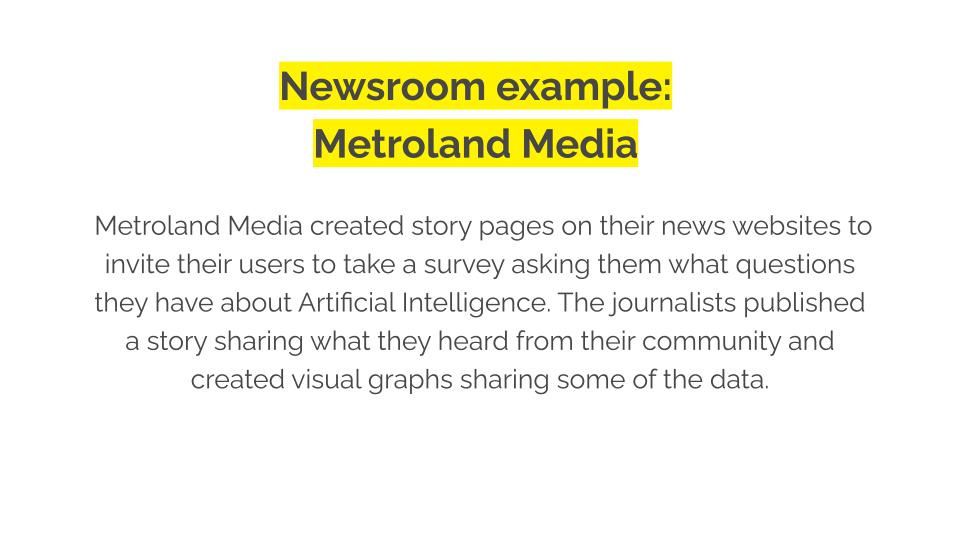
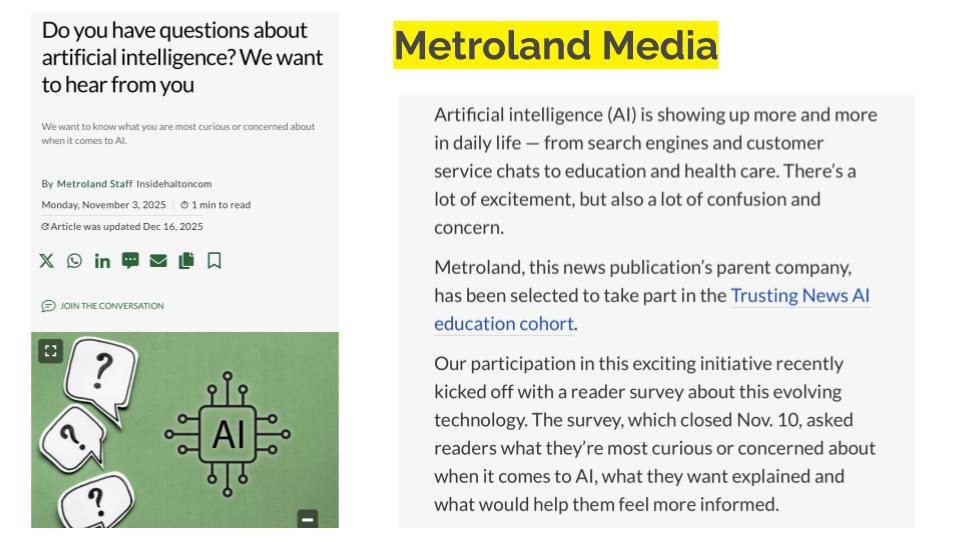
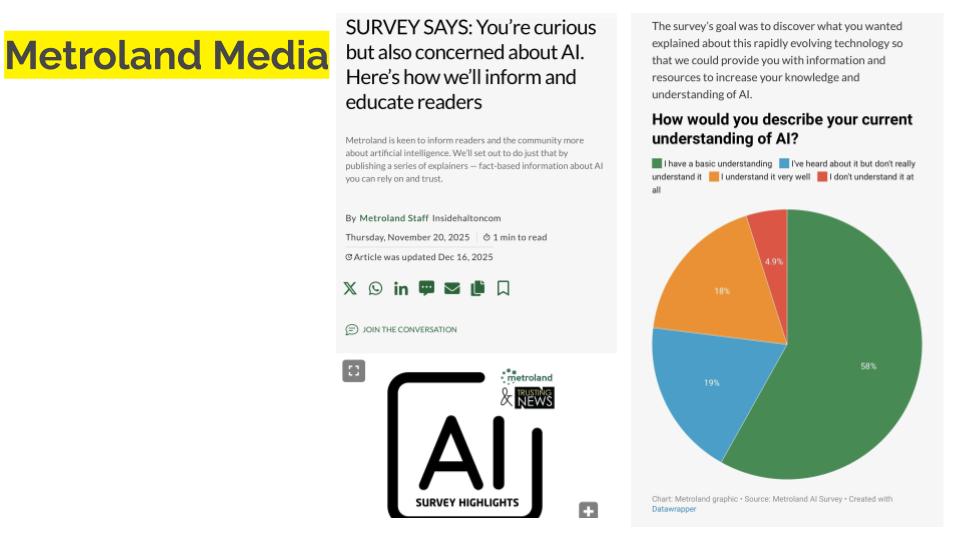
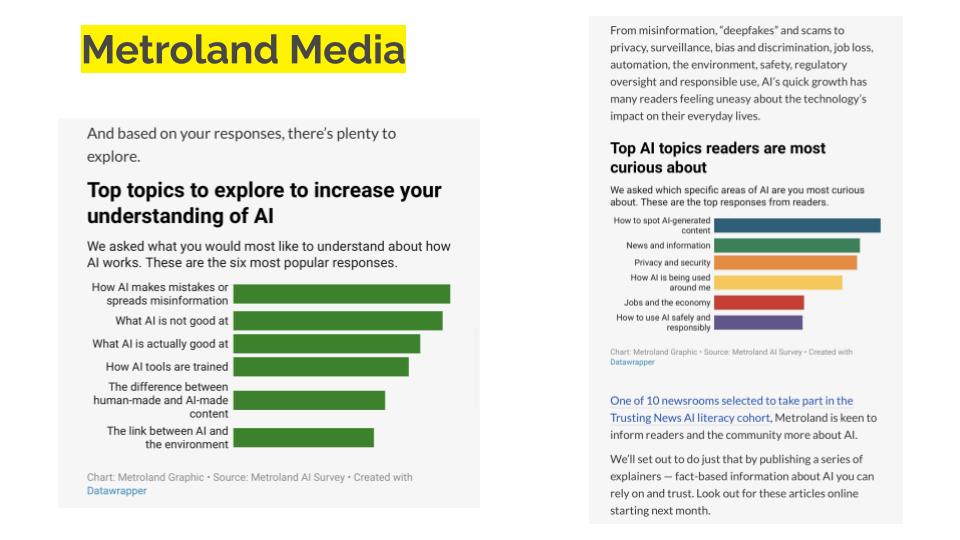
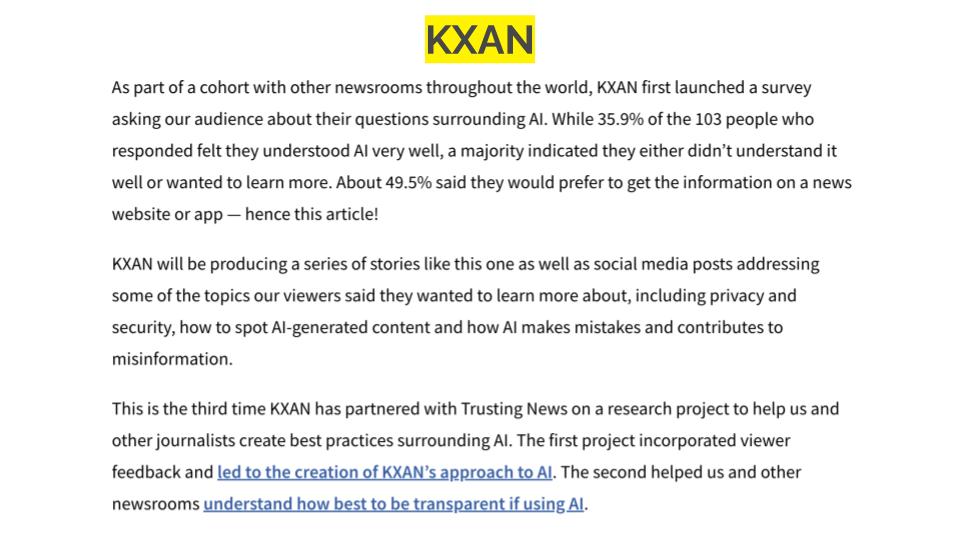
Metroland Media wrote separate stories about their involvement in the Trusting News AI Literacy cohort and included a link to this survey in the story. The journalists also published a story sharing what they heard from their community and created visual graphs sharing some of the data.
Click or swipe through the image carousel below to see how they did it.
Examples: Click or swipe through the below examples of how newsrooms shared this AI survey with their audience. If you have an example of AI use or AI literacy you’d like to share with us, use this form to share it with us. Keep scrolling to see the rest of the Trust Kit.

Share AI literacy content
Instead of asking only how newsrooms should disclose their own AI use, we wanted to understand what happens when journalists help the public better understand AI itself. Could sharing AI literacy content serve as a form of public service journalism? Could it help audiences feel more informed? And most importantly, could it help strengthen trust in news organizations?
To explore those questions, our AI literacy newsroom cohort brought together news organizations to create, customize and share AI literacy content with their audiences.
This project focused on answering two central questions:
- Did people learn something from AI literacy content shared by journalists?
- Did that content improve trust in news organizations?
What we learned:
- Most people who saw the AI literacy content said the content was useful and relevant to their daily life.
- Most people were interested in seeing more AI literacy content like it.
- Close to half (48%) said they had more trust in the news organization after viewing just one single sample of AI literacy content (which has us imagining what might be possible if they saw similar content regularly!).
- Close to half (47%) of respondents said they were “more likely to turn to this organization” for future information on AI.
- Among respondents with little or no trust in news, close to one-third said they would return to the news organization for information (AI-related topics and general news), and 35% reported that engaging with the one piece of content increased their trust in the organization.
- People continue to expect journalists to have guardrails (AI use policies) around their use of AI. Across both surveys, respondents signaled that transparency and ethical standards matter. Audiences might appreciate AI literacy efforts, but they also expect newsrooms to communicate what guardrails they have in place guiding their use of AI.
Read more about what we learned in this research post.
What AI content to share
Trusting News created the AI literacy content and designed it in a way to help the public better understand artificial intelligence in practical, accessible ways. At Trusting News, we believe if audiences feel we are genuinely trying to help them make sense of complex changes, they are more likely to return to us when they need information again. In doing so, we don’t just provide information, we build trust.
This content was not primarily focused on how a newsroom uses AI. Instead, it focused on helping the public understand AI itself: how AI works, what AI can and cannot do, practical implications of AI, questions people are asking, and information focused on “how to use this” and “how to protect yourself.”
The content focused on three main topics:
- How AI works
- Consumer concerns
- Mis/disinformation
The newsrooms shared the content primarily on social media platforms, including Instagram, TikTok, WhatsApp, Nextdoor, LinkedIn and Facebook. Some newsrooms shared the content on their own websites, and some created additional content in the form of FAQ’s and in-depth video interviews. In addition, Trusting News created an AI literacy quiz for newsrooms to share.
In terms of format, most newsrooms shared social cards. Some created videos.
Copy these social card templates
To make sharing AI literacy content as easy as possible for newsrooms, Trusting News researched and wrote the language for the content and added it to customizable social card templates using Canva.
The full list of available social cards for you to share is below. Most cards are available to share in both English and Spanish.
Read more about what each contains and click on the links below to make a copy of these social assets in your own Canva account. Once you make a copy you can personalize them and adjust them for your organization’s needs (branding, content changes, etc.).
How AI works
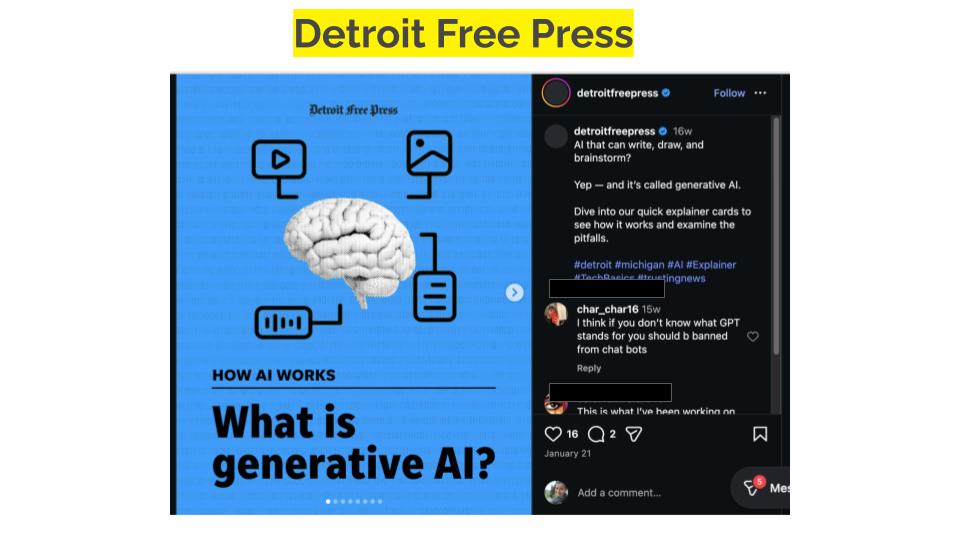
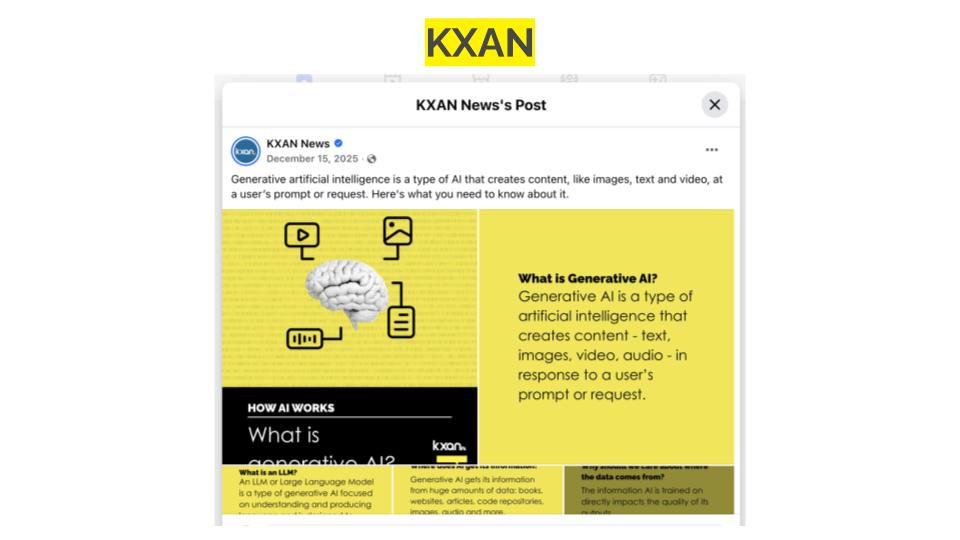
What is generative AI? These social cards explain how AI works .
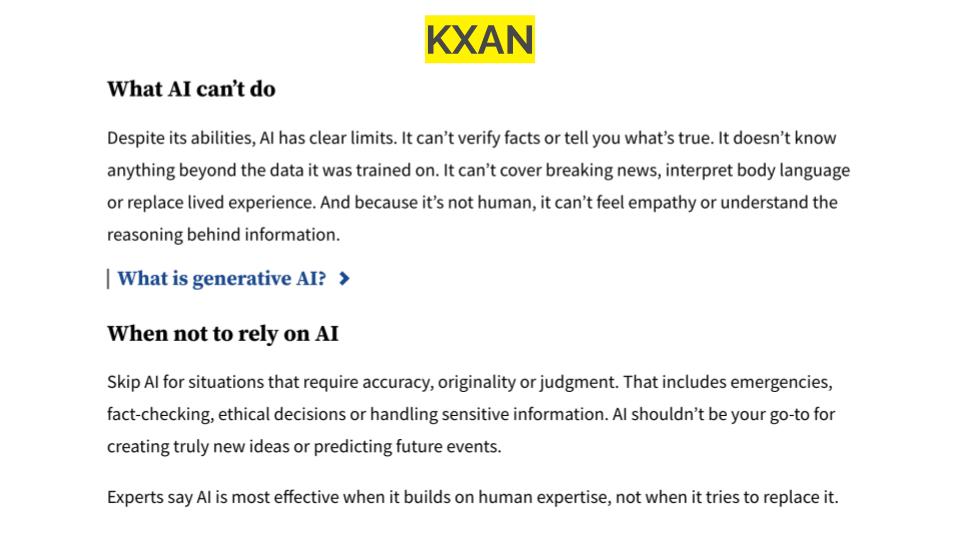
What can AI do and what can’t it do? These social cards explain the limitations of AI and where the technology excels.
- What AI can do and what it can’t
- What AI can do and what it can’t (No graphics)
- Lo que la IA puede (y no puede hacer)
Is AI bad for the environment? These social cards explain AI’s impact on the environment and how people can limit its negative effects.
Is AI new? These social cards explain how long AI has been around and where the technology started.
Consumer concerns
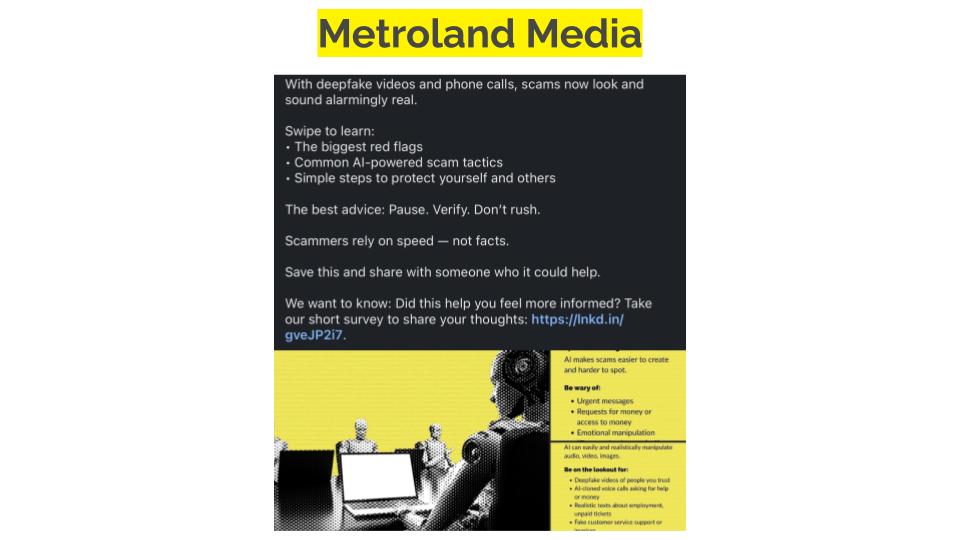
How to avoid AI scams. These social cards provide tips for how to avoid scams created with the help of AI.
Protecting your privacy in the age of AI. These social cards provide tips on how to protect your privacy in the age of AI.
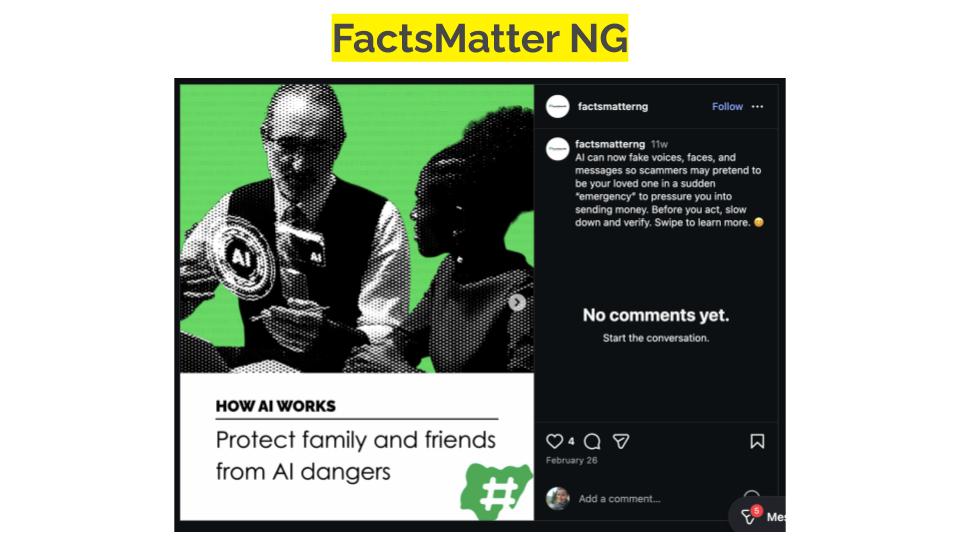
Protect family and friends from AI dangers. These social cards provide tips for protecting family and friends from AI scams.
Mis/disinformation
How to spot AI content. These social cards help people learn how to detect possible AI in videos, images and text.
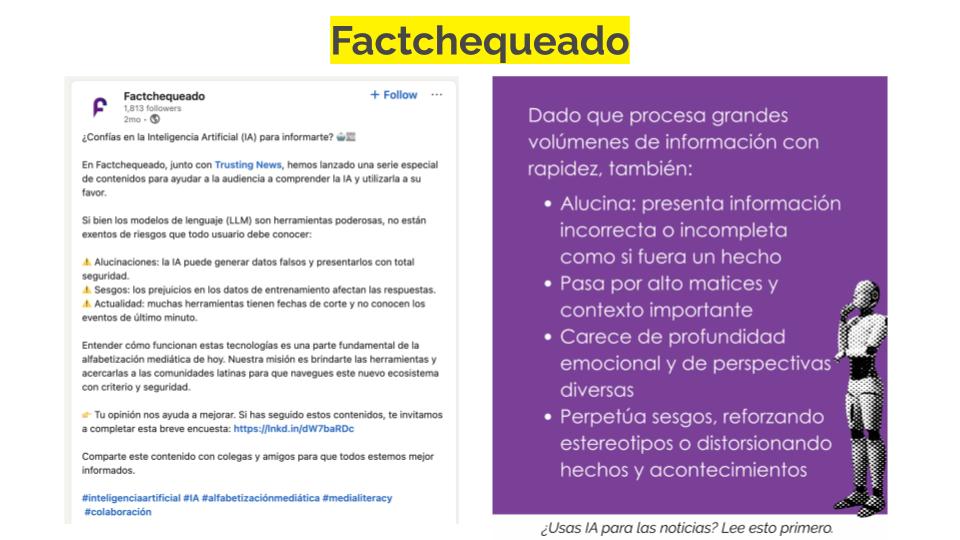
Using AI for news? Read this first. These social cards provides tips on how to use AI for consuming news and the limitations that come with that use case.
The Canva templates were designed by Gabriela A. Rivera, a Philadelphia-based bilingual communications strategist focused on audience engagement, digital media, and public understanding of information access. She holds a Master’s in Communication for Development and Social Change from Temple University and brings six years of experience supporting mission-driven organizations through English and Spanish outreach, strategic communications, and community-centered storytelling. Follow her on Instagram for AI educational content.
Use these social video scripts
We have created Trusting News AI Literacy Resource: Draft scripts for social videos to make it easier for you to create social videos that will help your audience better understand AI.
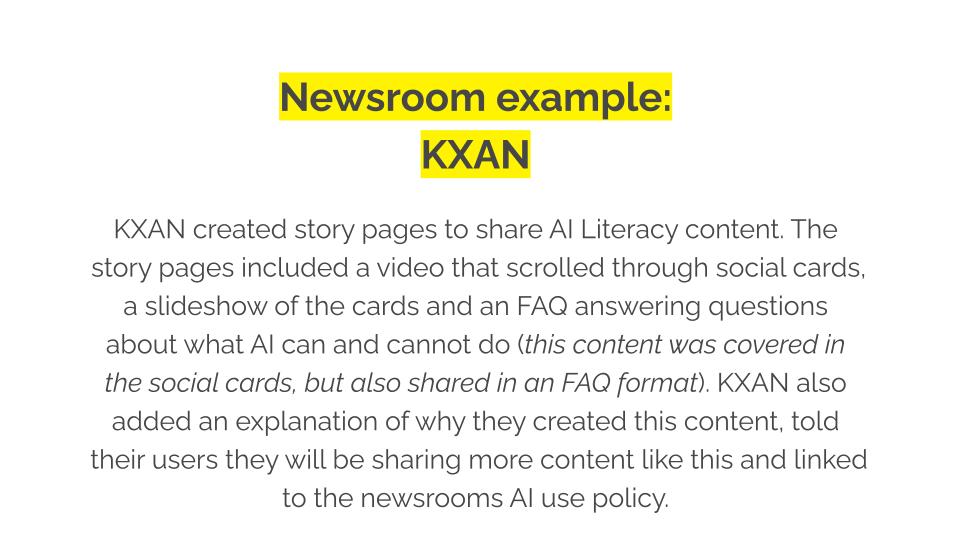
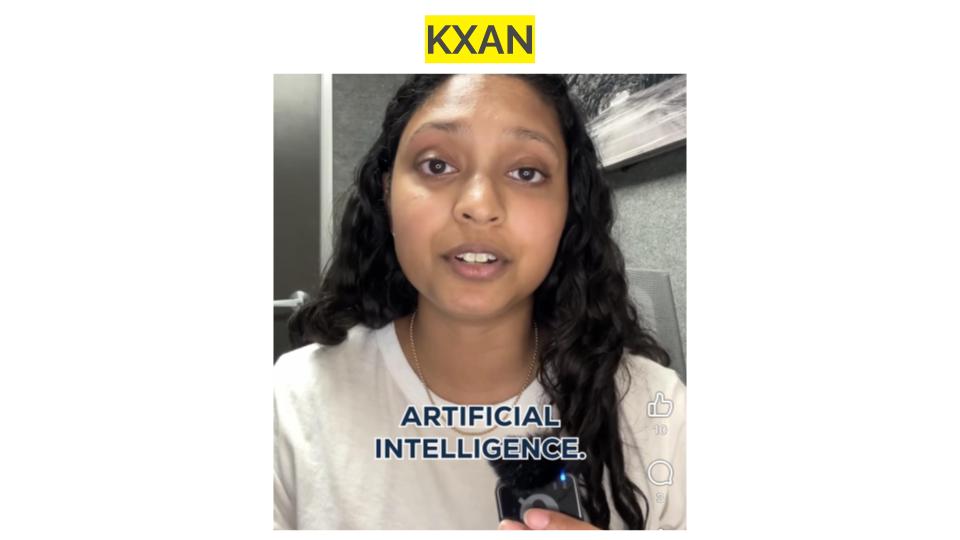
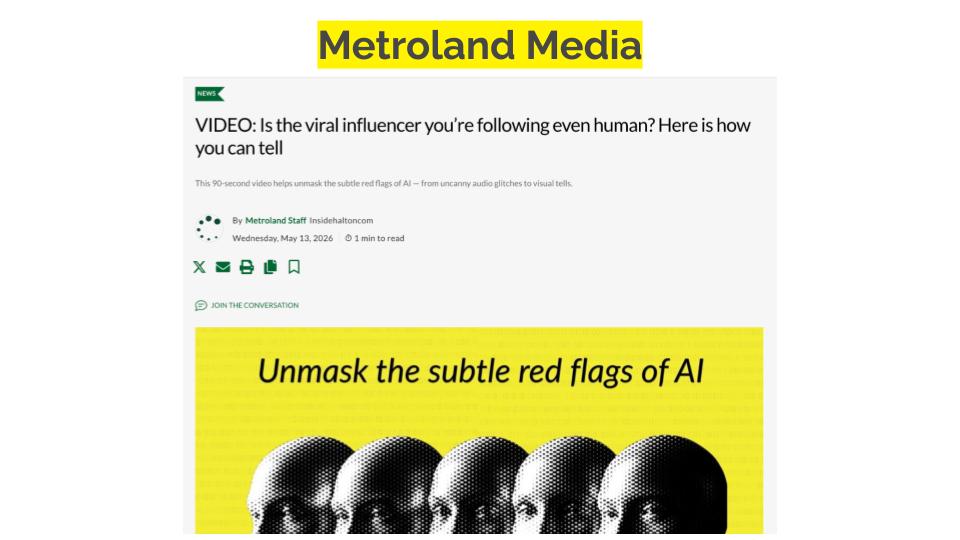
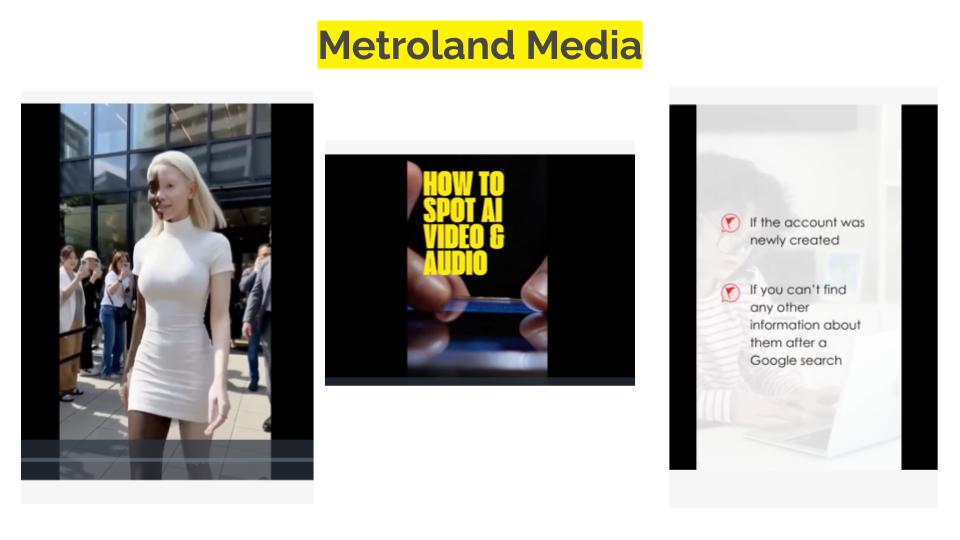
KXAN used the scripts to create a reel on Facebook. offering tips on how to spot AI-generated images and videos. Using a conversational creator-style format, a journalist spoke directly to the camera with minimal editing and on-screen text throughout the video.
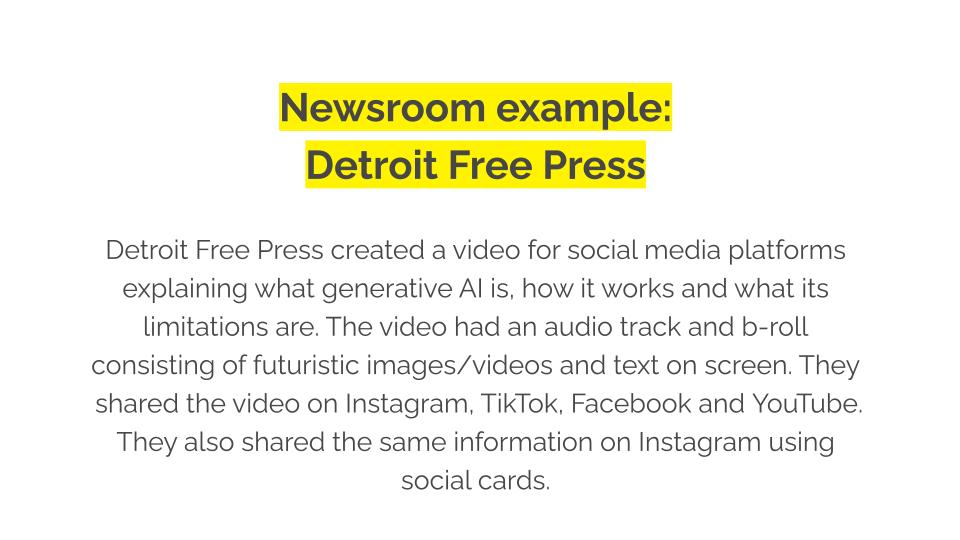
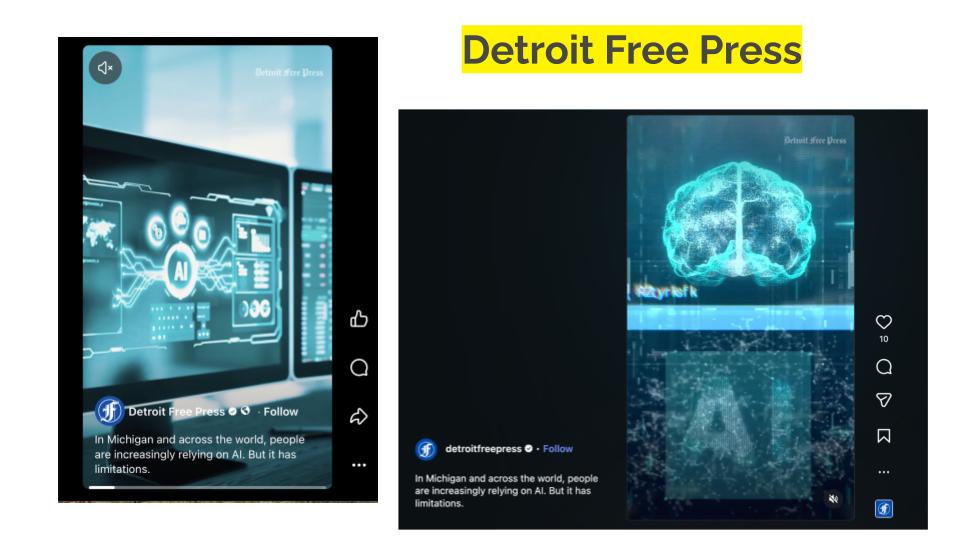
The Detroit Free Press used the scripts to create a video on Instagram. explaining what generative AI is, how it works and its limitations. The video combined narration, futuristic b-roll and on-screen text, and was shared across Instagram, TikTok, Facebook and YouTube. The newsroom also repurposed the information into Instagram social cards.
In the Trusting News AI Literacy Resource: Draft scripts for social videos, you will find social video scripts to address the following topics:
Use these questions for an AI literacy quiz
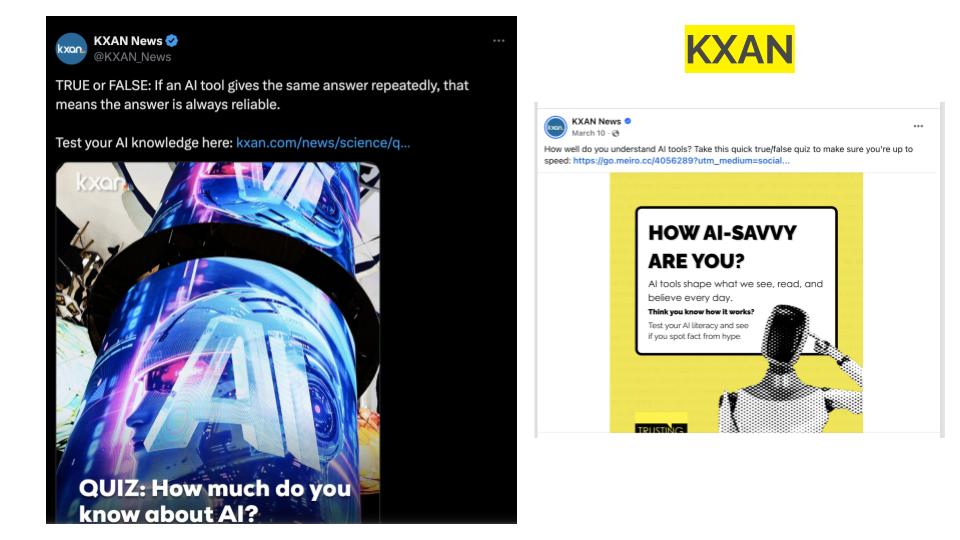
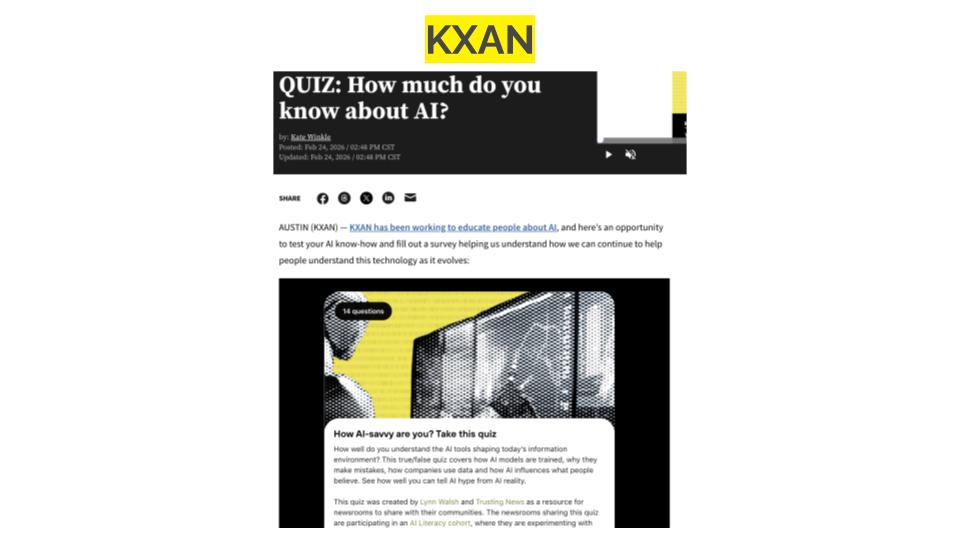
One way newsrooms can engage with their audience about how AI works is through a quiz. When shared by our cohort newsrooms, the quiz received almost 10,000 views and more than 2,800 completions. You can watch this video to see what the quiz experience was like.
The quiz contained a total of 14 true or false questions. When the user answered each question they had an option to view more information about their correct or incorrect answer. In both cases, the user learned a little bit more context about why their answer was incorrect/correct. In some cases, there are links provided where the user can get even more information.
Some of the questions include:
Question: All AI systems are designed to make decisions without any human input. (False)
- Incorrect Answer description: Not quite. AI systems depend on human design, training data and oversight. They aren’t fully autonomous.
- Correct Answer description: Right. Most AI systems are built, trained and monitored by humans. They don’t operate completely independently.
Question: AI developers check every training source for errors or bias. (False)
- Incorrect Answer description: Actually, it’s impossible to review every data source at scale, so errors and bias can remain in training data. Learn about how AI amplifies age and gender bias.
- Correct Answer description: Correct. Developers can’t realistically check every training source, which is why bias and mistakes can persist. Learn about how AI amplifies age and gender bias.
Since the newsroom received positive feedback after sharing the quiz, Trusting News is making the questions and answers we used available to you to help you build a quiz to share with your audience: Trusting News AI Literacy Resource: AI Quiz questions. Find a version of these questions in Spanish here. The questions were adapted from questions other researchers have used to measure an individual’s AI literacy knowledge. The answers were written by Trusting News.
In the document linked above you will also find social card templates to help you share the quiz on social platforms for increased engagement. Trusting News also created personas based on the number of questions people answered correctly. The descriptions for those personas are also included in the document.
Go analog
Not all AI literacy work has to live exclusively online. In some communities, especially those where digital access or trust might vary, offline and analog formats can be a powerful way to reach people where they are.
Thanks to the Patrick J. McGovern Foundation Trusting News was able to provide a grant and support to MLK50: Justice Through Journalism, to help them explore this approach through a print-first comic focused on environmental justice in Memphis, Tennessee. The project, “The Wrong Kind of Air,” responds to growing community conversations about xAI’s large supercomputer located in Southwest Memphis, alongside broader concerns about the expansion of data centers in the area.
Rather than presenting this information solely as a digital story, the MLK50 team created an illustrated comic to make complex environmental and technological issues more accessible and locally grounded. The comic combines maps and portraits of residents to show how local waterways are affected, and how people in the community live alongside and interact with them.
At the end of the comic the newsroom included an FAQ about data centers, answering questions like:
- What is a data center?
- Why and how do data centers consume water?
- What are the local air impacts of data centers and what are the sources of unhealthy emissions?
Newsroom case study coming soon: Stay tuned for a deeper dive into the MLK50: The Wrong Kind of Air.
Examples: Click or swipe through the below examples of how newsrooms shared AI literacy content with their audiences. If you have an example of AI use transparency, use this form to share it with us. Keep scrolling to see the rest of the Trust Kit.


Host AI literacy events
In audience feedback and survey responses, many people told us they wanted opportunities to learn about AI in more interactive ways, including through events, workshops and webinars. People were not just looking for articles or social posts. They wanted spaces where they could ask questions, hear from experts and have conversations about how AI is affecting their lives.
Thanks to the Patrick J. McGovern Foundation, Trusting News was able to provide grants and support to help newsrooms to explore different types of events designed to reach different audiences and communities. Some events focused on general AI literacy, while others explored specific topics like journalism and misinformation.
Through this work, we wanted to better understand whether creating opportunities for direct engagement and conversation could help audiences feel more informed and strengthen trust in news organizations.
How to host an event
When planning events like AI literacy workshops, it’s important to start with a clear sense of purpose and goal.
What problem are you trying to solve for your community? Are you helping people better understand how AI works, addressing specific concerns like misinformation or creating space for people to learn from one another?
Strong events are not just about delivering information; they’re about creating opportunities for mutual learning, where journalists hear directly from the community as well.
Logistics also play a major role in whether people show up and feel welcome. Some things to consider:
- Choose a time that works for working people and families, not just newsroom schedules.
- Consider access needs like transportation, childcare, language and physical accessibility.
- The location should feel familiar and trusted, whether that’s a library, school, community center or partner organization already embedded in the community.
- Partnerships can also significantly expand reach and trust. Working with local organizations helps connect with audiences who may not normally attend a newsroom-led event. These partners can also help shape the conversation so it reflects real community concerns.
Ultimately, the most effective events are those designed not just to inform, but to listen, build relationships and create ongoing dialogue between journalists and the people they serve.
Events to inform
Events create opportunities for direct engagement between journalists and the public. Rather than simply publishing information, newsrooms can create spaces where people ask questions, share concerns and learn together.
Two recipients of our AI literacy innovation grants centered their projects on community education and spotting mis/disinformation.
Newtral: Helping Students Become “AI Detectives”
Newtral developed “AI Detectives,” an interactive learning experience designed to help high school students in Spain identify AI-generated misinformation and strengthen critical thinking skills. Newtral journalists led the workshops and visited the schools in person. The program used game-like activities, real-world examples and guided discussion to teach students how AI-generated content spreads and how fact-checking works. The workshops focused not only on the risks of AI tools but also on the importance of reliable news sources. The project was designed to help students become better consumers of information as they approach their first elections in 2027.
We Talk Weekly: Building AI Literacy Through Community Conversation
We Talk Weekly approached AI literacy through community-centered discussion and storytelling. The newsroom hosted a panel discussion and created video segments focused on making AI more understandable and accessible for everyday residents in the Philadelphia area. Their event explored how AI intersects with media, civic life and culture. By focusing on hyperlocal concerns and lived experiences, the newsroom aimed to make conversations about AI feel relevant and approachable rather than abstract or overly technical. We Talk Weekly also supported the event with AI literacy content shared across social media before and after the discussion.
Across workshops conducted between November and March, Newtral found that students significantly improved their ability to identify AI-generated misinformation after completing the training. The newsroom also saw increased trust and confidence in Newtral itself following the workshops. At the same time, the newsroom’s findings highlighted how difficult it can still be for people to distinguish real content from synthetic content, especially when emotional, cultural or contextual factors influence how information is interpreted.
Newsroom case study coming soon: Stay tuned for a deeper dive into Newtral: AI Detectives and We Talk Weekly’s event.
Want to host an event like this in your community? Below is a sample agenda we created to help get you started.
Events to inform (sample agenda)
Want to host an event like this in your community? Below is a sample agenda we created to help get you started.
Community AI literacy event agenda (60 minutes)
Welcome/pre-event survey (5 minutes)
Invite attendees to complete a short pre-event survey to help understand their current knowledge, concerns and questions about AI.
Opening remarks/why this conversation matters (5 minutes)
Introduce the newsroom, event goals and the importance of helping communities better understand how AI affects everyday life.
AI literacy video/explainer content (10 minutes)
Play short educational videos or social content explaining key AI concepts, common misconceptions and real-world examples of AI use.
Panel discussion: AI in our communities (20 minutes)
Host a moderated discussion with journalists, community leaders, educators or technology experts focused on things like:
- How AI is shaping media, work and daily life in your community
- Risks like misinformation, scams and deepfakes
- How communities can navigate AI responsibly
- What trustworthy information about AI looks like
Audience Q&A/community discussion (15 minutes)
Open the conversation to audience questions and discussion. Encourage attendees to share concerns, experiences and topics they want newsrooms to cover in the future.
Closing/post-event survey (5 minutes)
Ask attendees to complete a short post-event survey measuring what they learned, what was most useful and whether the event changed how they think about AI or the newsroom.
Events to collaborate
Not every AI literacy event needs to be built around presentations or expert panels. Some of the most valuable conversations happen when journalists create space for communities to participate, share experiences and actively work through challenges together.
In these settings, the role of the journalist shifts from lecturer to facilitator, someone who is guiding discussion, asking questions and helping communities collaboratively explore how AI is affecting their lives. One newsroom Trusting News worked with explored this model through an interactive event with students.
LINK nky designed an event that encouraged students to actively engage with questions about AI rather than simply receive information. Through guided discussions and collaborative activities, students explored how AI tools are used in everyday life and in school life, the risks and opportunities associated with AI-generated content and how to critically evaluate information online.
Newsroom case study coming soon: Stay tuned for a deeper dive into LINK nky’s events.
Want to host an event like this in your community? Below is a sample agenda to help get you started.
Events to collaborate (sample agenda)
Interactive workshop agenda (60 minutes)
Pre-survey (3 minutes)
Students complete a brief survey to understand their baseline knowledge of AI and digital literacy.
Introduction (7 minutes)
Newsroom team introduces how AI shows up in everyday life — especially in news and social media. Topics include AI-generated content, misinformation, algorithms and how AI tools are used in journalism.
Interactive small group stations (35–45 minutes)
Students rotate through hands-on activity stations in small groups. Each station explores a real-world AI scenario, including:
- AI as a writing coach: Using AI for feedback vs. cheating on schoolwork
- Spotting misinformation: Identifying fake news and AI-generated images
- Deepfakes & responsibility: Understanding how fake images spread and when sharing becomes harmful
- Everyday AI use: Budgeting, homework help, recipes, and brainstorming ideas
- Algorithms & social media: How AI shapes what people see online
At each station, students discuss, respond to prompts, and practice decision-making around AI use.
Group reflection/Q&A (10–15 minutes)
Students come together to share insights, ask questions and reflect on how AI shows up in their own lives.
Post-survey (3 minutes)
Students complete a final survey to measure what they learned and how their understanding changed.
Events to explain how journalists use AI
Another approach to AI literacy events is showing audiences how journalists actually use AI in their work. When newsrooms open up their process and make the role of AI visible, it can help demystify the technology and reduce uncertainty or skepticism.
USA TODAY explored this approach by hosting an event focused on how AI tools actually work in journalism. Journalists demonstrated AI tools in real time and invited community members to ask questions about the tools and the process. The focus was on showing what the tools do, how they support reporting tasks and where human editorial judgment remains essential.
USA TODAY saw a meaningful increase in trust following the event. Participants were asked to rate their agreement with statements about journalists’ use of AI before and after the event. One statement was, “I trust news organizations to use AI in ethical and responsible ways.” People’s agreement with that statement increased from a pre-score of 3.27 to a post-score of 4.42, a gain of 1.14 points.
Newsroom case study coming soon: Stay tuned for a deeper dive into USA Today’s events.
Want to host an event like this in your community? Below is a sample agenda to help get you started.
Events to explain how journalists use AI (sample agenda)
How journalists use AI agenda (60 minutes)
Pre-event survey (5 minutes)
Attendees complete a short survey to capture baseline understanding and trust in how journalists use AI.
Welcome (5 minutes)
Journalists introduce the newsroom, explain why they are using AI in their work and set expectations for a transparent, hands-on session.
Live AI demonstration (15 minutes)
Journalists show real newsroom AI tools in action (e.g., transcription, organizing notes, summarizing information, or assisting with research). Attendees can ask questions throughout and see how outputs are reviewed and verified.
Interactive “Ask Us Anything” and tool exploration (20 minutes)
Participants ask questions about how AI is used in journalism, what it can and cannot do and how editors ensure accuracy. Journalists continue demonstrating tools in response to audience questions in real time.
Ethics/guardrails discussion (10 minutes)
Short facilitated discussion on how the newsroom uses AI responsibly, including transparency, human oversight, fact-checking and editorial decision-making.
Post-event survey (5 minutes)
Attendees complete a brief survey to reflect on what they learned and whether their trust or understanding of AI in journalism has changed.
Measure impact
Measuring the impact of any event helps you better understand what participants learned and whether the event influenced trust or engagement.
One of the easiest ways or newsrooms to measure the impact of events without hiring a researcher is to use short pre/post-event surveys. This works well because you can print them out for people to complete (which requires hand-entering the data) or create the survey in a Google Form and have people scan a QR code to complete it.
For events like this we are trying to answer two main questions:
- Did people learn something about AI?
- Did their opinion of the news organization/journalist change after the event?
Obviously, event goals will probably be more specific than that. Yes, you want to know if someone learned something but you may really want to know if they learned something about how you/your newsroom used AI. Or you specifically want to know if the public will turn to you for more information or if they trust you more after attending the event.
We created a resource to help you get started with measurement: Trusting News AI Literacy Resource: Pre/Post-event survey questions
These questions should be customized to the purpose and goal of your event. For example, if the goal of your event is to help your community better understand how you or other journalists use AI, you may consider adding questions like:
- Artificial intelligence (AI) can be used in journalism and news production. How much have you heard or read about using AI in journalism and news production?
- A lot
- A little
- Nothing at all
- How much would you say you know about how [Newsroom/journalist] uses AI in its work?
- A lot
- A little
- Nothing at all
If the goal of your event is to help your community better use AI tools or understand how to use them or how they are being used around them, consider adding questions like:
- If I wanted help organizing my money or budgeting, I would know how to ask AI for help making a simple plan.
- Strongly agree
- Somewhat agree
- Neither agree nor disagree
- Somewhat disagree
- Strongly disagree
- If I saw an image or video online, I would know some ways to check whether it might have been created or changed using AI.
- Strongly agree
- Somewhat agree
- Neither agree nor disagree
- Somewhat disagree
- Strongly disagree
- I would know how to use AI to help me understand a news story or topic without relying on it as my only source of information.
- Strongly agree
- Somewhat agree
- Neither agree nor disagree
- Somewhat disagree
- Strongly disagree